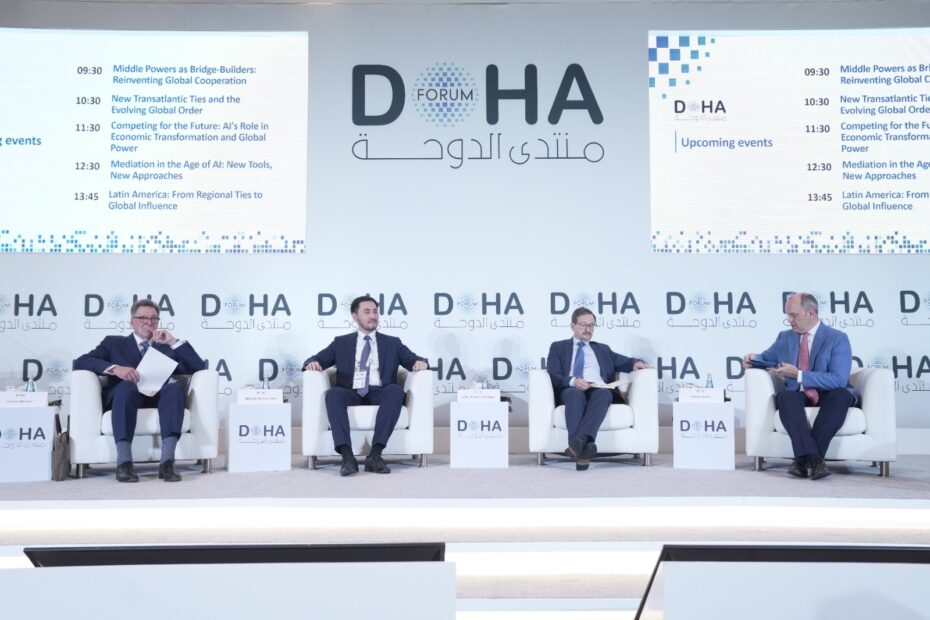
On December 6–7, the 23rd Doha Forum, one of the leading global platforms on international politics and security, was held in the capital of Qatar.
The forum, held under the patronage of the Emir of Qatar, Sheikh Tamim bin Hamad Al Thani, brought together world leaders, representatives of international organizations, and the expert community. This year’s discussions focused on geopolitical challenges, the humanitarian agenda, digital transformation, and the prospects for new global cooperation. The event was held under the motto “Justice in Action: Beyond Promises to Progress,” emphasizing the need to move from discussion to practical solutions.
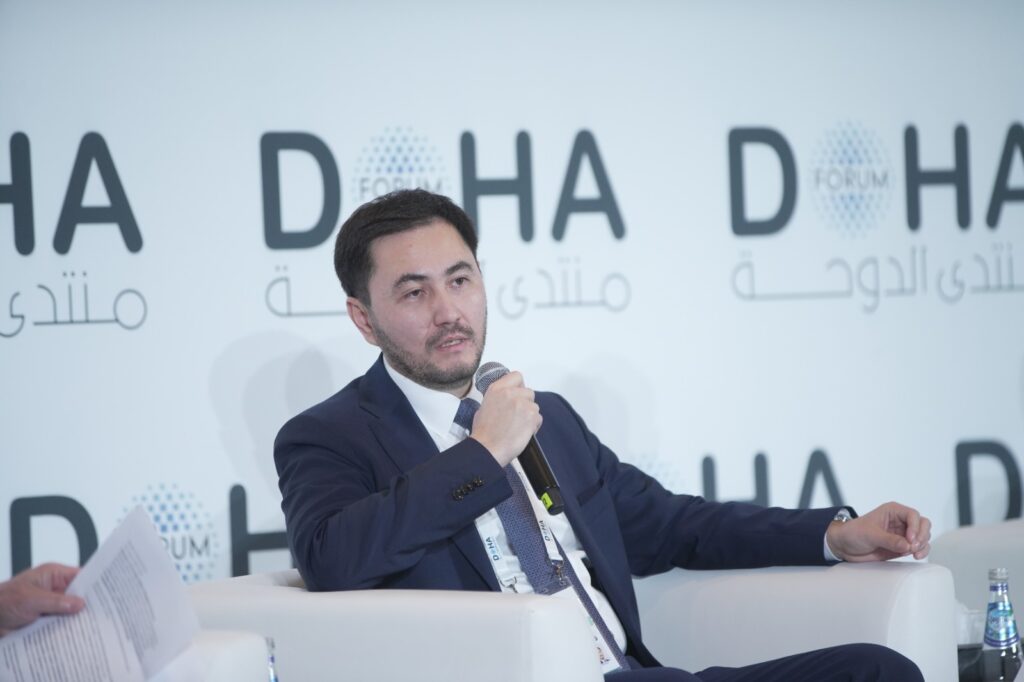
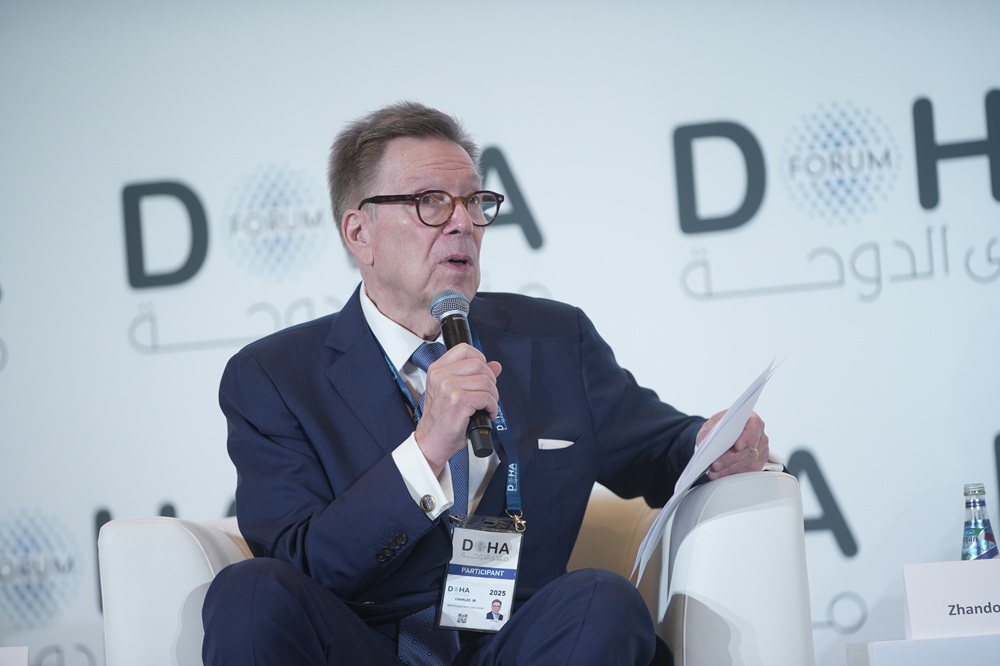
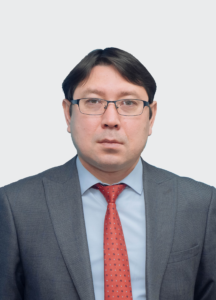
On the second day of the forum, during the session “Middle Powers as Bridge-Builders: Reinventing Global Cooperation,” the Director of the Kazakhstan Institute for Strategic Studies under the President of the Republic of Kazakhstan, Zhandos Shaimardanov, delivered a speech.
He noted that strategic autonomy is a key element of Kazakhstan’s foreign policy, especially considering the country’s location between major global centers of power: “Kazakhstan strengthens its independence through the diversification of partnerships and the development of its own regional cooperation mechanisms, including the C5+1 format.”
Speaking about practical cooperation, the Director of KazISS emphasized that joint work on issues of water, transit, food security, and climate helps reduce tensions and increase regional resilience. In this context, the Middle Corridor is a good example of how joint infrastructure projects simultaneously support economic growth and strengthen stability.
Z. Shaimardanov also highlighted the role of middle powers in a changing world, noting that knowledge exchange, the development of interconnectedness, and “talent diplomacy” can become tools that help countries build strong long-term connections. He also added that Kazakhstan is ready to explore new formats of international engagement – clear, practical, and capable of evolving along with the needs of the time.
Summarizing the session, participants emphasized that effective solutions are possible only through collective efforts, principled leadership, and an inclusive approach. Under these conditions, middle powers can become drivers of practical reforms of international institutions and creators of sustainable cooperation mechanisms, offering solutions that work in real life and help countries better understand one another.