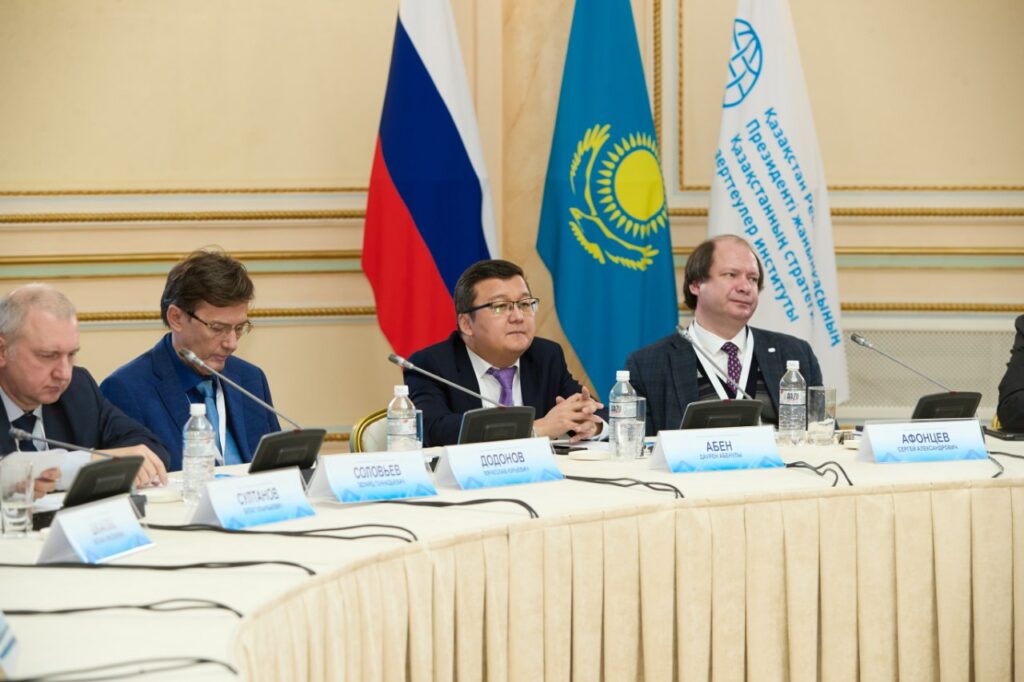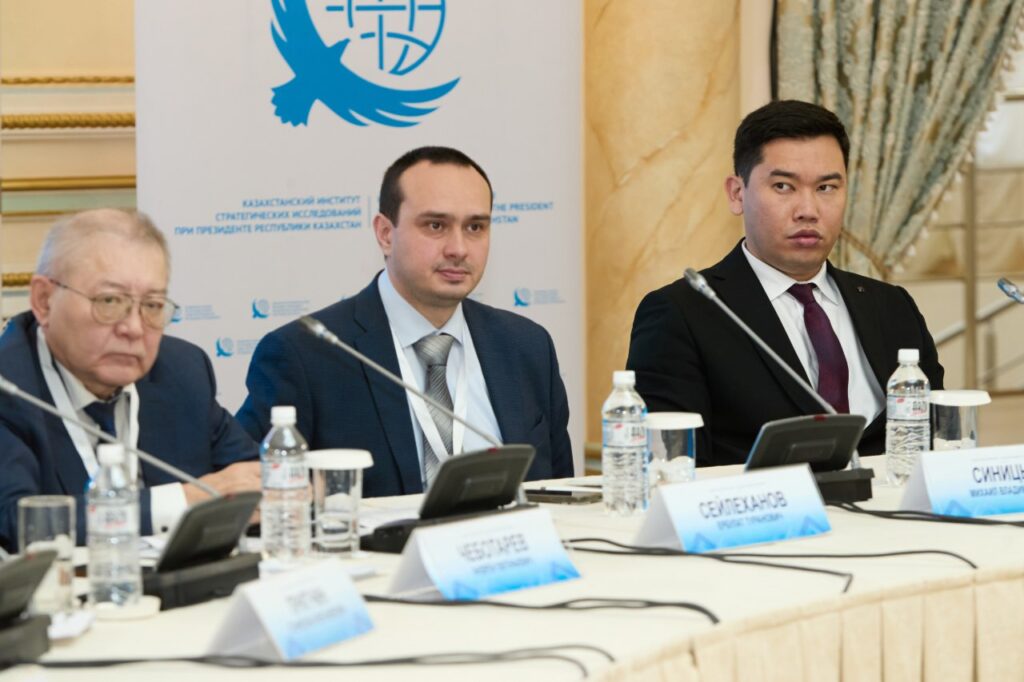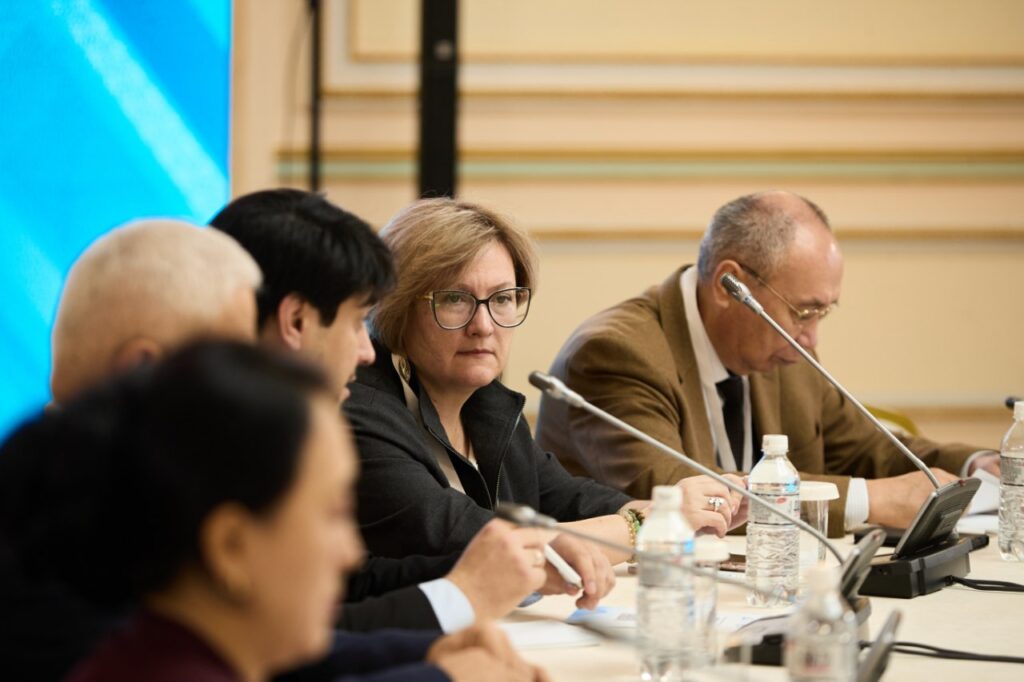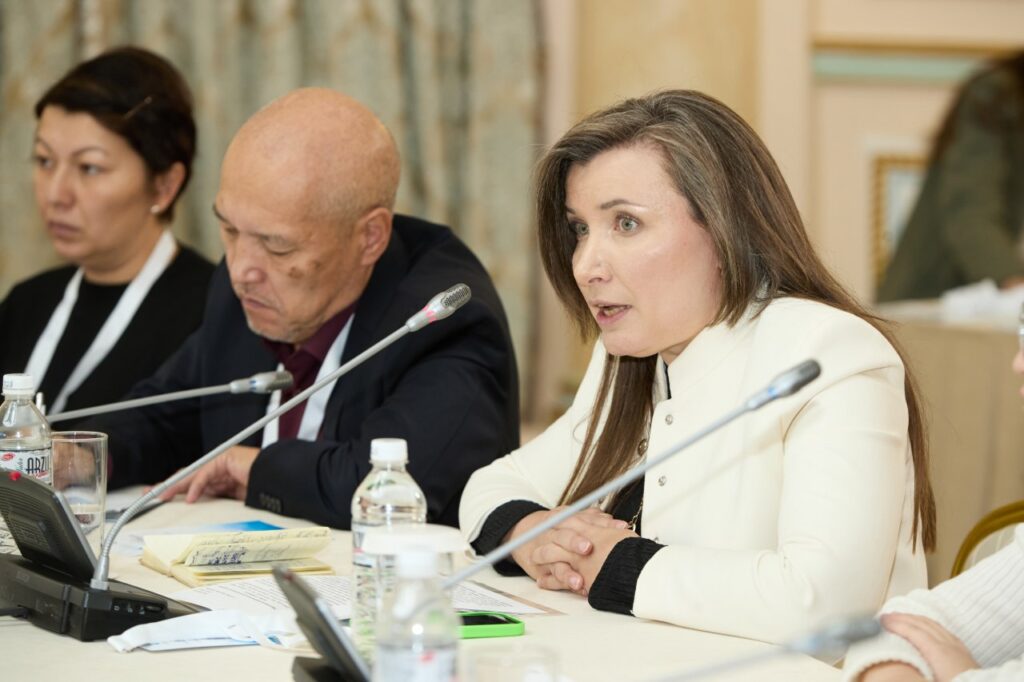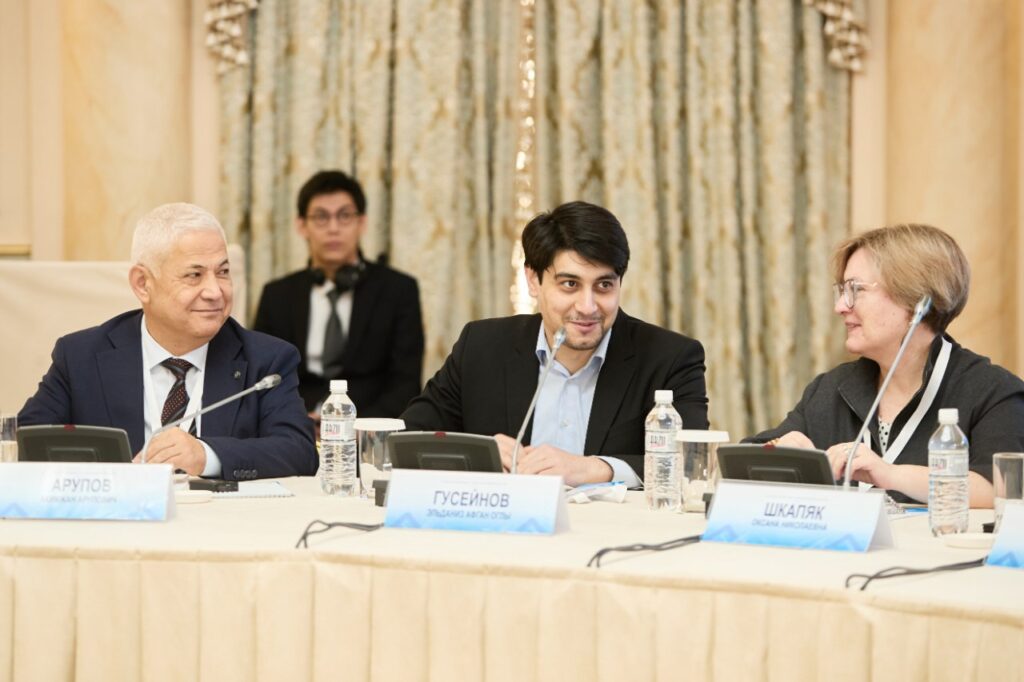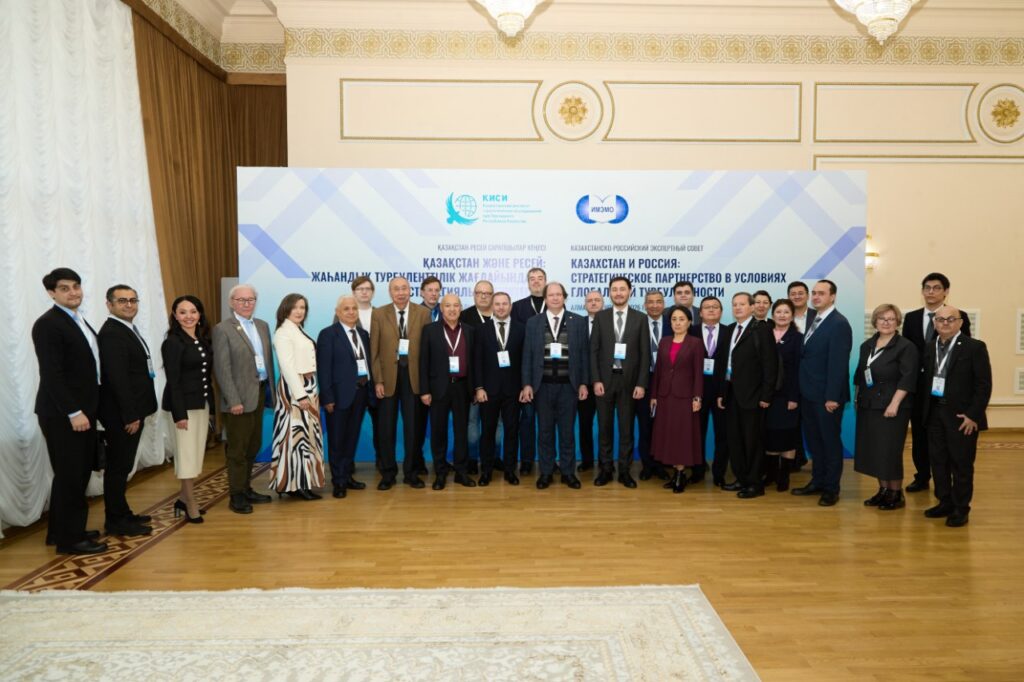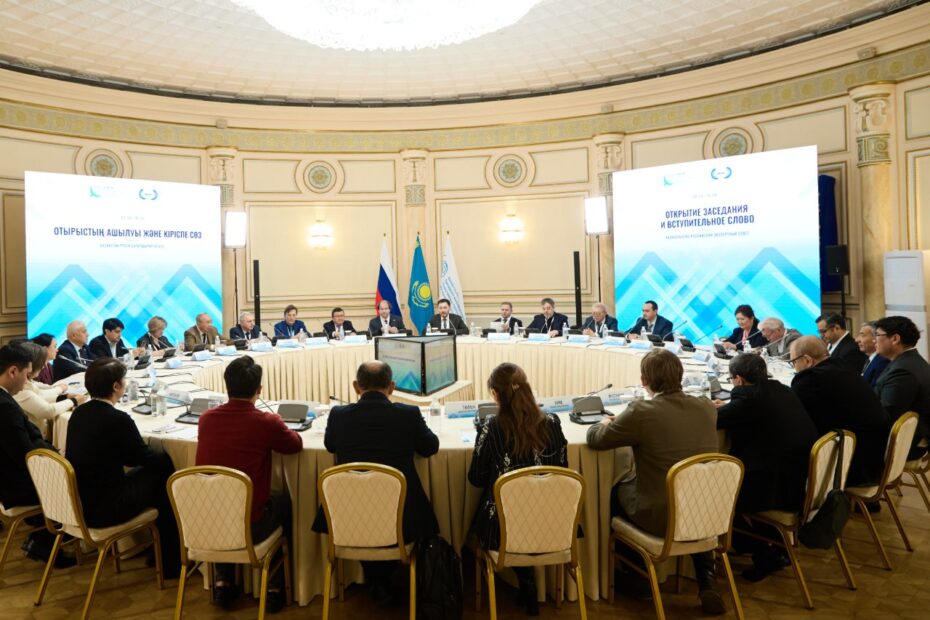
On November 20, 2026, Almaty hosted the third meeting of the Kazakhstan–Russia Expert Council (KREC), entitled “Kazakhstan and Russia: Strategic Partnership amid Global Turbulence.”
The event was organized by the Kazakhstan Institute for Strategic Studies under the President of the Republic of Kazakhstan (KazISS), jointly with the Primakov National Research Institute of World Economy and International Relations of the Russian Academy of Sciences (IMEMO RAS).
The meeting brought together representatives of leading think tanks, research organizations and universities from Kazakhstan and Russia. Participants focused on prospects for bilateral cooperation amid the transformation of the global economy, changes in energy markets and growing international instability.
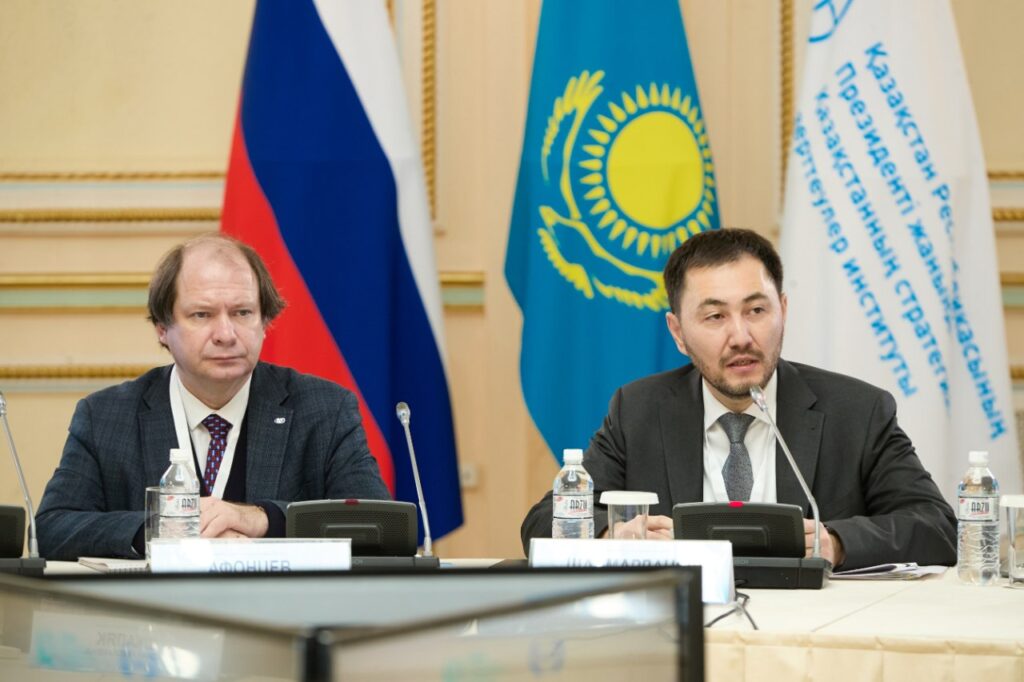
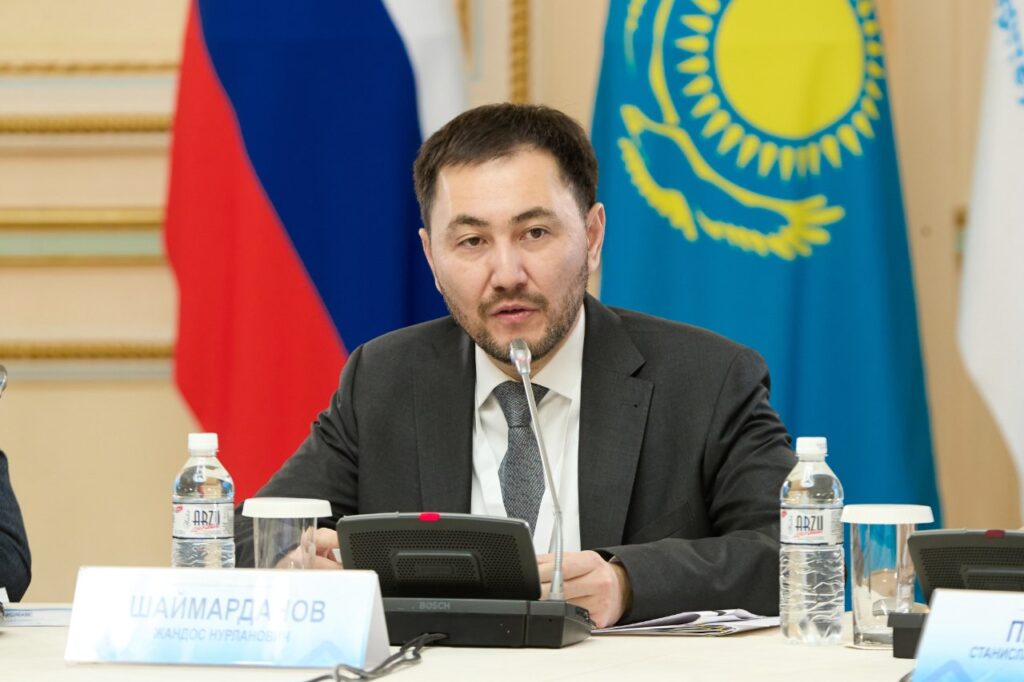
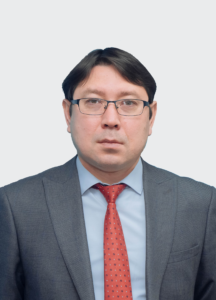
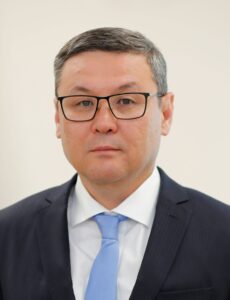
Opening the meeting, KazISS Director Zhandos Shaimardanov and IMEMO RAS Deputy Director for Research Sergey Afontsev delivered welcoming remarks.
The meeting programme comprised four thematic sessions addressing key areas of cooperation between Kazakhstan and Russia.
The first session focused on the positions of Kazakhstan and Russia in the global economy, sources of instability and the potential for bilateral cooperation. Participants examined the impact of global economic processes on the development of the two countries, as well as opportunities to expand cooperation in a changing international environment.
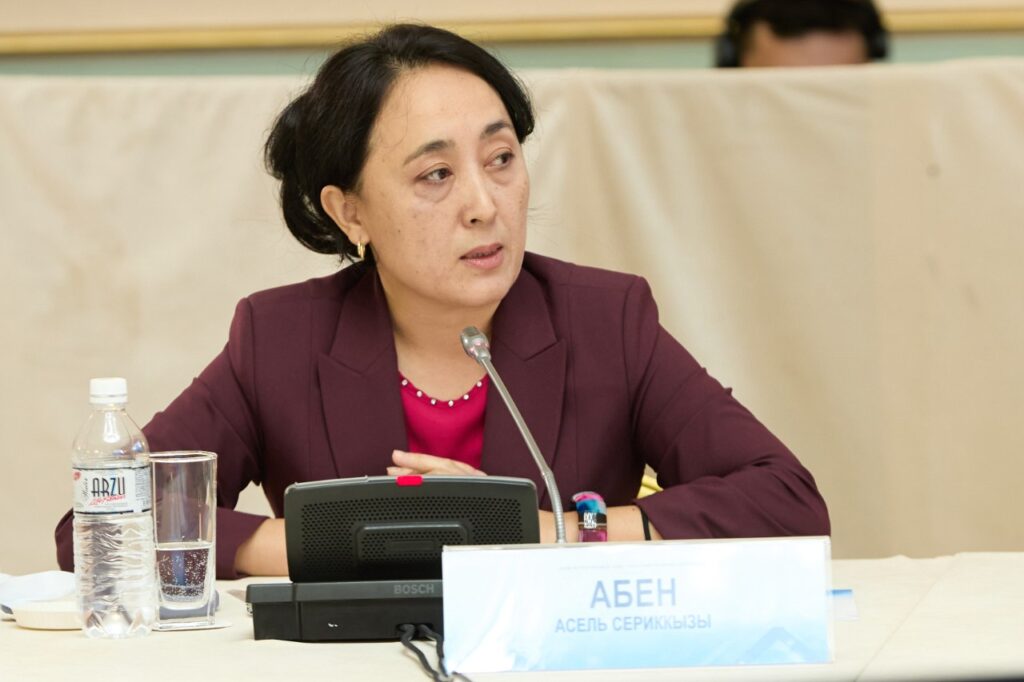
The discussion featured Assel Aben, Chief Expert in the Economic Policy Analysis Department at KazISS; Sergey Afontsev, Deputy Director of IMEMO RAS; and Akimzhan Arupov, Director of the Institute of World Economy and International Relations at Turan University. The session was moderated by KazISS Director Zhandos Shaimardanov.
The second session addressed the transformation of global energy markets and the associated risks and opportunities for Kazakhstan and Russia. The discussion focused on changes in the global energy landscape, prospects for energy cooperation and the two countries’ adaptation to emerging global market trends.
Presentations were delivered by Yerbulat Seilekhanov, Chief Research Fellow at KazISS; Mikhail Sinitsyn, Senior Research Fellow at the IMEMO RAS Centre for Energy Research; and Lidiya Parkhomchik, Chief Expert at the Institute of World Economics and Politics. The discussion was moderated by Stanislav Pritchin, Head of the Central Asia Section at IMEMO RAS.
Participants paid particular attention to the development of human capital, education and science. The third session explored the potential for cooperation between Kazakhstan and Russia in these areas.
The discussion featured Aisha Mukasheva, Head of the Department of European and American Studies at KazISS; Stanislav Pritchin, Head of the Central Asia Section at IMEMO RAS; and Andrey Chebotarev, Director of the Alternativa Centre for Current Studies. The session was moderated by Eduard Solovyov, Head of the Centre for Post-Soviet Studies at IMEMO RAS.
The final thematic session addressed regional security challenges and the consequences of crises outside the region. Participants examined international and regional stability, the impact of foreign policy developments on Central Asia, and current priorities for expert cooperation on security.
Speakers included Sanat Kushkumbayev, Chief Research Fellow at KazISS; Eduard Solovyov, Head of the Centre for Post-Soviet Studies at IMEMO RAS; and Eldaniz Huseynov, Co-founder of the political foresight agency Nightingale Int. The session was moderated by KazISS Deputy Director Dauren Aben.
The meeting of the Kazakhstan–Russia Expert Council continued the systematic dialogue between the research and analytical communities of the two countries.
This format of cooperation enables joint analysis of international developments, the exchange of research approaches and the formulation of expert assessments on issues of mutual interest.
The Kazakhstan–Russia Expert Council was established by KazISS and IMEMO RAS in October 2022 as a platform for cooperation between leading think tanks in Kazakhstan and Russia.
The meeting in Almaty continued the Council’s work to develop professional expert dialogue and discuss current issues on the bilateral and international agendas.