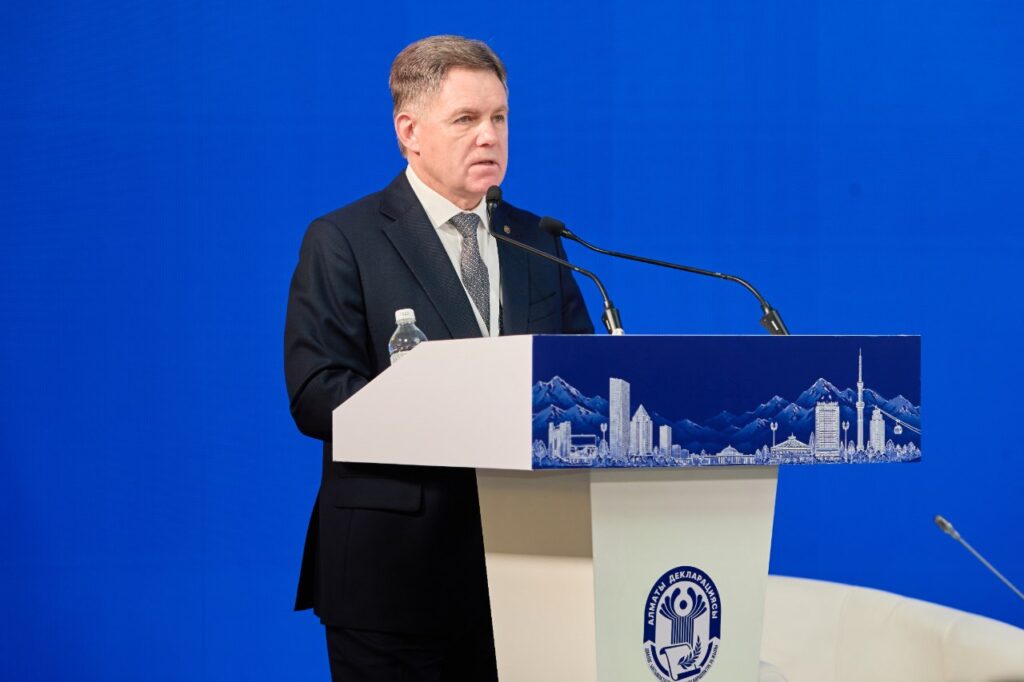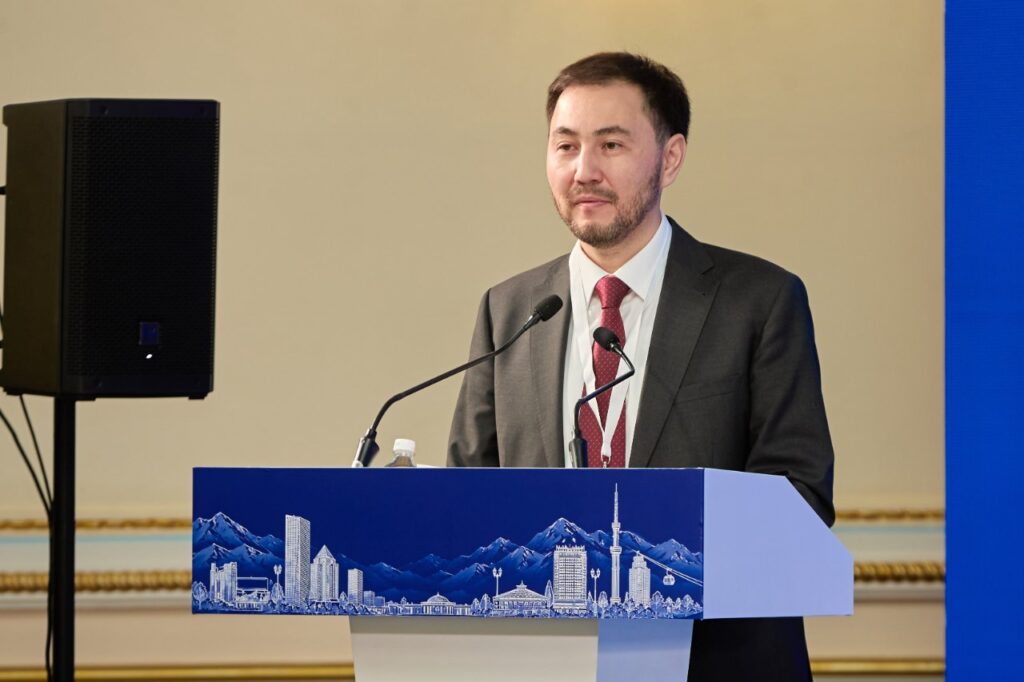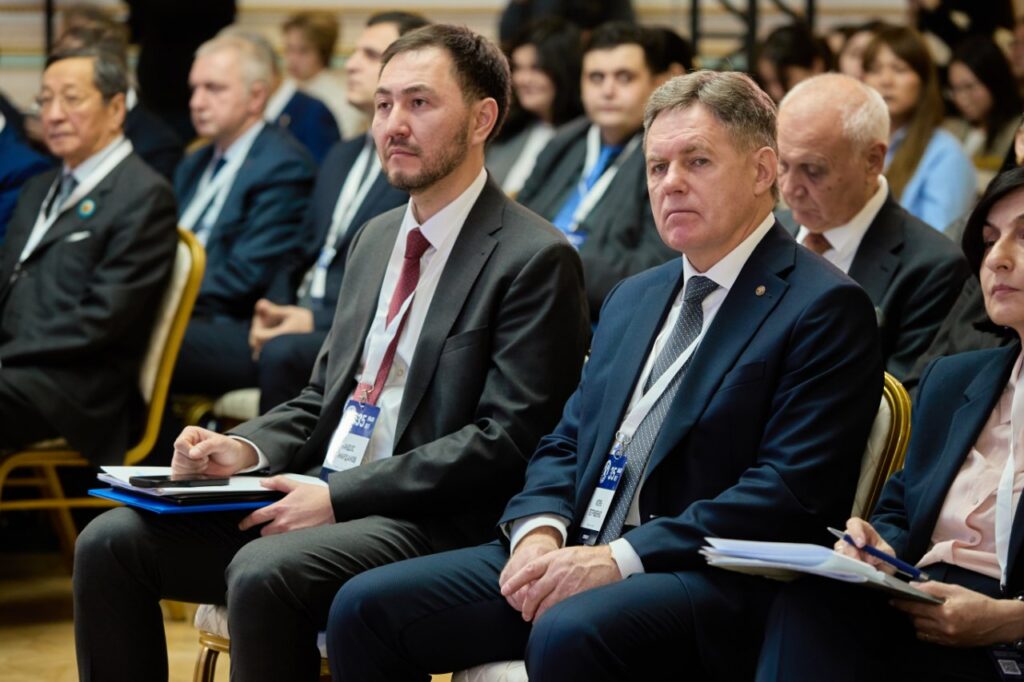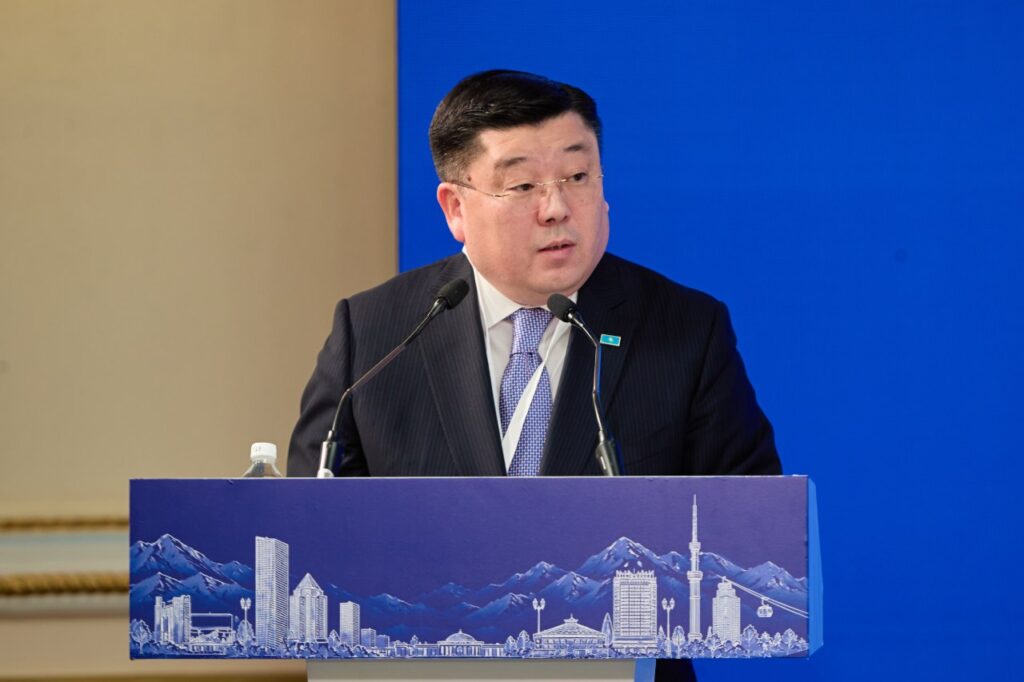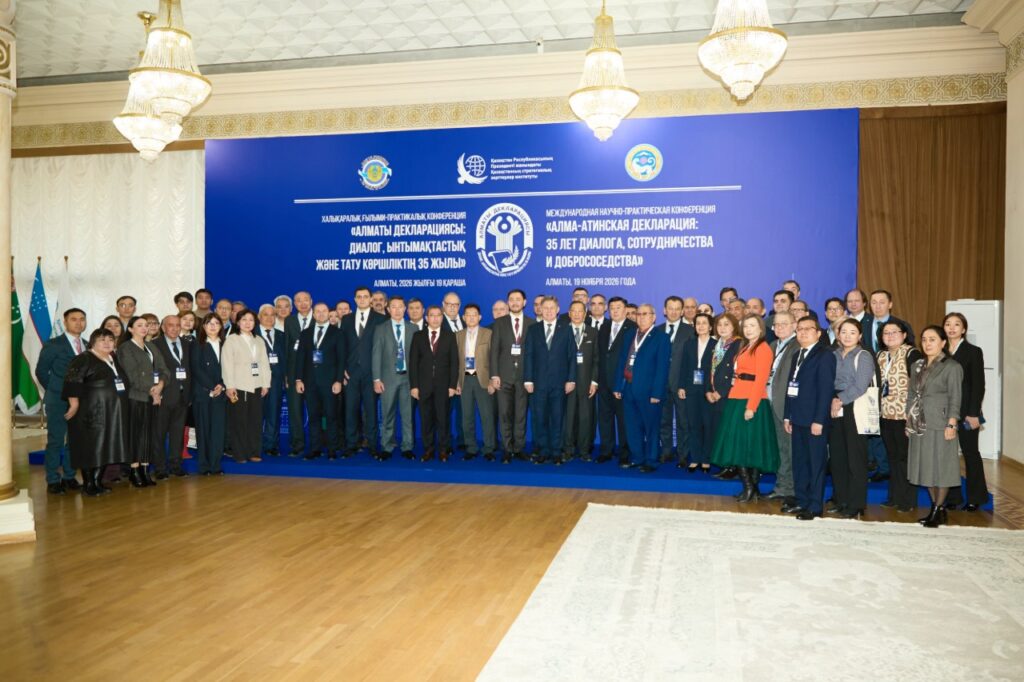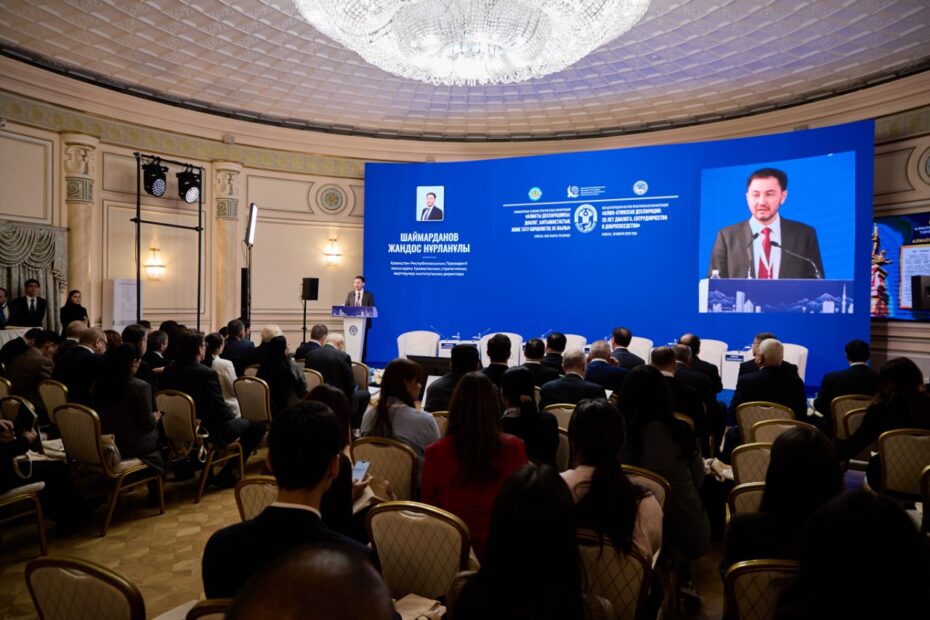
On November 19, 2026, Almaty hosted the international scientific and practical conference “The Alma-Ata Declaration: 35 Years of Dialogue, Cooperation and Good-Neighbourliness.” Participants discussed the historical significance of the Declaration, the development of the Commonwealth of Independent States, and prospects for cooperation in the economy, transport, energy and humanitarian affairs.
The conference was organized by the Kazakhstan Institute for Strategic Studies under the President of the Republic of Kazakhstan (KazISS), the Ministry of Foreign Affairs of the Republic of Kazakhstan (MFA) and the Almaty City Administration. Participants included representatives of the CIS Executive Committee, government bodies, research centres and universities, as well as scholars, experts and public figures.
Opening the conference, KazISS Director Zhandos Shaimardanov noted that it was being held on the instructions of President of Kazakhstan Kassym-Jomart Tokayev. He recalled that, at the meeting of the CIS Council of Heads of State in Avaza in October 2026, the President described the friendship of the peoples and their shared cultural and spiritual heritage as the Commonwealth’s greatest asset, and highlighted the organization’s role as a mechanism for multilateral cooperation and confidence-building.
According to Zhandos Shaimardanov, the choice of venue was particularly significant. It was at the House of Friendship that the Alma-Ata Declaration was signed on December 21, 1991. Thirty-five years later, conference participants gathered there to reflect on the experience of cooperation within the CIS and identify priorities for its further development.
“The Alma-Ata Declaration enshrined the fundamental principles of interstate relations: respect for sovereignty and sovereign equality, territorial integrity and the inviolability of borders, non-interference in internal affairs, and the peaceful settlement of disputes. These principles remain relevant. Indeed, amid growing international tensions and profound geopolitical changes, adherence to them is becoming particularly important for maintaining stability, trust and good-neighbourly relations. That is why our conference addresses not only the past, but also the present and the future,” the KazISS Director emphasized.
At the opening of the conference, a message from CIS Secretary General Sergey Lebedev to the organizers and participants was read out. In it, he highlighted the historical significance of the Alma-Ata Declaration for the establishment of the Commonwealth.
“December 1991 marked a turning point in the recent history of our peoples. With the adoption of the Declaration, the establishment of the Commonwealth of Independent States as an interstate association with a broad membership became a reality,” the message stated.
Assessing the role of the CIS today, Sergey Lebedev emphasized: “Today, we can state with confidence that the Commonwealth of Independent States has established itself as a viable, respected and effective international organization, playing a key role in ensuring stability, security and sustainable development across Eurasia.”
Zhanibek Abdrashov, Head of the Representative Office of the Ministry of Foreign Affairs of the Republic of Kazakhstan in Almaty, read out a welcoming message to conference participants from Mukhtar Tleuberdi, Minister of Foreign Affairs of the Republic of Kazakhstan.
In his message, the Minister emphasized the particular historical significance of the Alma-Ata Declaration for Kazakhstan, which was among the founding states of the CIS.
“Amid profound historical transformations, the leaders of our countries made a fundamentally important choice: to build relations on the basis of sovereign equality, mutual respect, good-neighbourliness and cooperation,” the message stated.
Speaking about the future work of the CIS, Mukhtar Tleuberdi highlighted the importance of open dialogue and jointly agreed decisions. “Within the CIS, we believe it is important to give cooperation a qualitatively new substance, focused above all on the specific interests of our citizens and economies,” the welcoming message emphasized.
The first session, “The Historical Significance of the Alma-Ata Declaration: The Emergence of a New Model of Interstate Relations across Eurasia,” examined the circumstances leading to the adoption of the Declaration and its role in the transition from a single state to relations among sovereign countries following the dissolution of the USSR. Participants considered how the principles of sovereign equality, territorial integrity and good-neighbourliness shaped the establishment of the CIS and its cooperation mechanisms, and discussed the significance of these principles in the current international environment. The discussion was moderated by Aigul Sadvokassova, Director General of the Institute of Philosophy, Political Science and Religious Studies of the Science Committee of the Ministry of Science and Higher Education of the Republic of Kazakhstan.
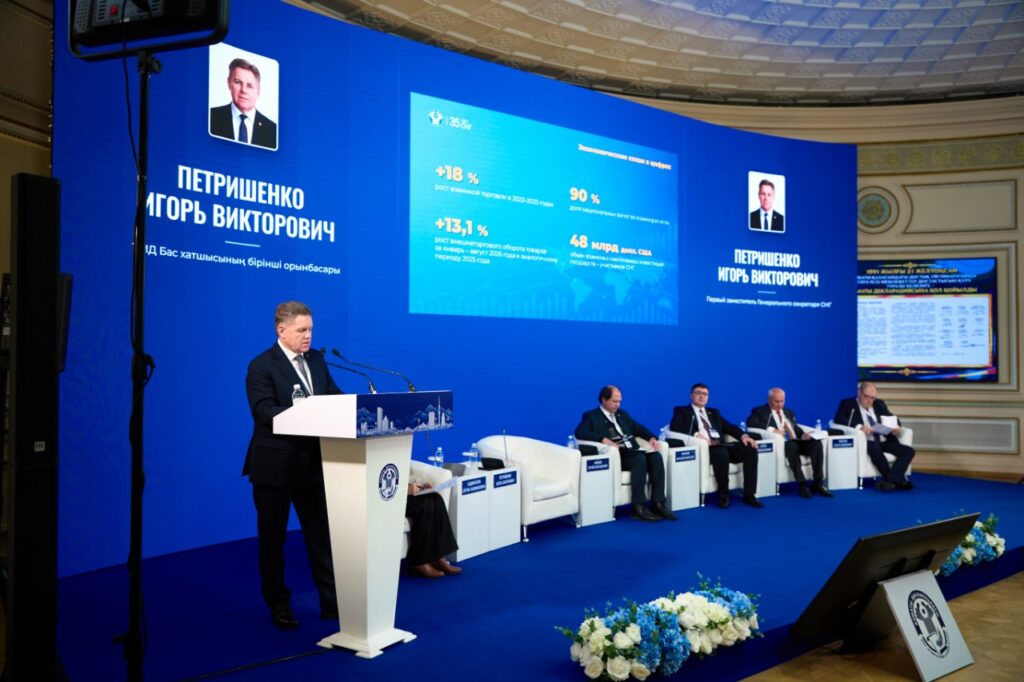
Speaking at the first session, CIS First Deputy Secretary General Igor Petrishenko reviewed the institutional development of the Commonwealth since the adoption of the Alma-Ata Declaration. He noted that, in the early years following the dissolution of the USSR, CIS sectoral councils ensured continuity in cross-border cooperation in transport, energy and communications. According to Petrishenko, the Commonwealth now has 65 sectoral cooperation bodies, while mutual trade among its member states increased by 18% between 2022 and 2025. He identified the development of transport corridors, digitalization and industrial cooperation as priorities for further economic cooperation.
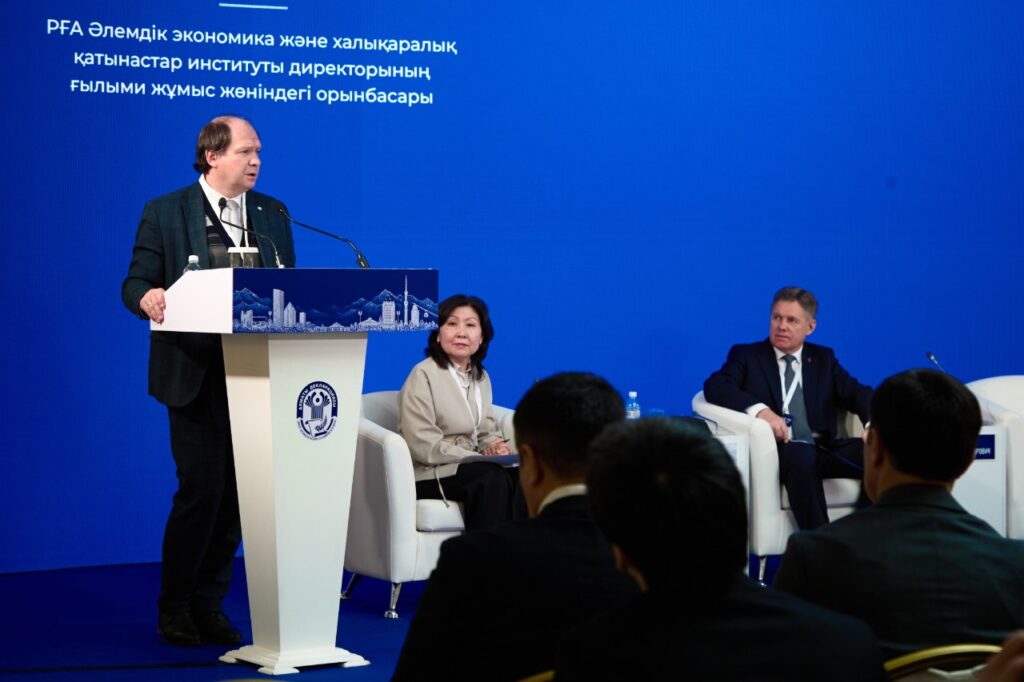
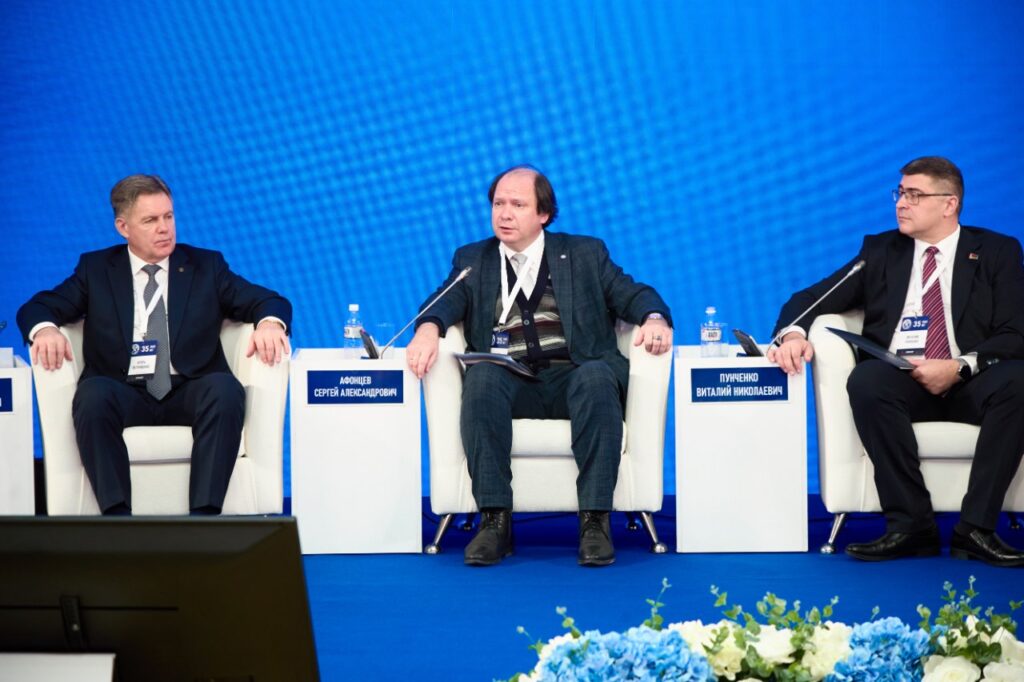
Sergey Afontsev, Deputy Director for Research at the Primakov National Research Institute of World Economy and International Relations of the Russian Academy of Sciences (IMEMO RAS), presented a report on the role of the Declaration in shaping the political and economic landscape of the modern world. Vitaly Punchenko, Deputy Director of the Belarusian Institute for Strategic Research, examined the evolution of state-building values across Eurasia from the perspective of Belarus. Mikhail Krotov, Head of the Department of Foreign Policy of Russia and the CIS Countries at Lomonosov Moscow State University, presented a report on the implementation of the Declaration’s principles in the process of Eurasian integration. Eduard Poletayev, President of the World of Eurasia Public Foundation, also spoke at the session.
The second session, “The CIS in a Changing World Order: The Evolution of Multilateral Cooperation and Institutional Adaptation,” focused on how the Commonwealth is responding to changes in international relations, intensifying geopolitical competition and the emergence of new centres of power. Participants discussed how to adapt CIS institutions and mechanisms to these changes and make cooperation more effective in the economy, security, transport, digitalization and humanitarian affairs. The session was moderated by KazISS Deputy Director Dauren Aben.
Eduard Solovyov, Head of the Centre for Post-Soviet Studies at IMEMO RAS, addressed the adaptation of the CIS to new challenges originating outside the region. Gevorg Melikyan, Founder and Director of the Armenian Institute for Resilience and Statecraft, examined the evolution of multilateral cooperation since the adoption of the Declaration. Andrey Chebotarev, Director of the Alternativa Centre for Current Studies, presented a report on prospects for transport connectivity across the CIS. Elena Dostanko, Dean of the Faculty of International Relations at Belarusian State University, also spoke at the session.
Ilgar Velizade, Head of the South Caucasus Political Scientists’ Club, noted that the future role of the CIS depends on the extent to which its mechanisms help resolve practical issues in trade, employment and transport. As an example, he cited the “CIS Plus” format proposed by Kazakhstan, which enables the Commonwealth to broaden its circle of partners.
The third session, “Economic Connectivity and Sustainable Development of the CIS amid Global Fragmentation,” focused on cooperation among Commonwealth countries against the backdrop of geoeconomic competition and the restructuring of global value chains. Participants examined opportunities to develop transport and logistics infrastructure, expand investment ties, make joint use of the countries’ energy and resource potential, and advance the digital transformation of the economy. The discussion centred on how these areas could contribute to sustainable growth and enhance the region’s competitiveness. The session was moderated by Akimzhan Arupov, Director of the Institute of World Economy and International Relations at Turan University.
Sergey Melkonyan, Research Fellow at the Applied Policy Research Institute of Armenia (APRI Armenia), examined prospects for developing North–South and West–East transport links. In his assessment, freight volumes on existing routes could be increased by coordinating tariffs, simplifying transit procedures and expanding the range of goods transported.
Milana Bazarova, Head of the CIS Department at the Institute for Strategic and Regional Studies under the President of the Republic of Uzbekistan, presented a report on human capital as a resource for economic connectivity and sustainable development in the CIS. Mikhail Sinitsyn, Senior Research Fellow at the IMEMO RAS Centre for Energy Research, discussed the role of renewable energy sources in the transformation of the electric power sector. Vyacheslav Dodonov, Chief Research Fellow at the Institute of Philosophy, Political Science and Religious Studies of the Science Committee of the Ministry of Science and Higher Education of the Republic of Kazakhstan, presented a report on prospects for strengthening economic ties amid global and regional fragmentation. Timur Abylayev, Deputy Director of the National Institute for Strategic Initiatives under the President of the Kyrgyz Republic, also spoke at the session.
The fourth session, “Central Asia: Regional Cooperation as a Factor in Sustainable Development and Good-Neighbourliness,” addressed practical cooperation among the countries of the region in trade, transport, water and energy, environmental affairs, education, science and humanitarian exchanges. Participants discussed how the principles of the Alma-Ata Declaration are reflected in current regional initiatives and which joint projects could strengthen trust and contribute to the sustainable development of Central Asia. The session was moderated by Sanat Kushkumbayev, Chief Research Fellow at KazISS.
Discussing the development of the Middle Corridor, Gulshan Pashayeva, Member of the Milli Majlis of the Republic of Azerbaijan and Deputy Chair of the Board of the Centre for Analysis of International Relations and Multiculturalism, highlighted the roles of Kazakhstan and Azerbaijan and proposed simplifying border and customs procedures, introducing unified digital consignment notes and agreeing on a through tariff.
Stanislav Pritchin, Head of the Central Asia Section at IMEMO RAS, addressed the prospects and limitations of regional integration among Central Asian countries. Other speakers at the session included Javlon Vakhabov, Director of the International Institute for Central Asia; Begimai Maksat kyzy, Head of the Analytical Department at the National Institute for Strategic Initiatives under the President of the Kyrgyz Republic; Faizullo Barotzoda, Chief Specialist in the Department for Foreign Policy Analysis and Forecasting at the Centre for Strategic Research under the President of the Republic of Tajikistan; Shokhrat Divankuliyev, Senior Lecturer at the Institute of International Relations of the Ministry of Foreign Affairs of Turkmenistan; and Aidar Amrebayev, Head of the Centre for Comparative Political Studies at the Institute of Philosophy, Political Science and Religious Studies of the Science Committee of the Ministry of Science and Higher Education.
At the closing meeting, participants summarized the outcomes of the four sessions and discussed proposals for developing practical cooperation within the CIS and strengthening regional ties.