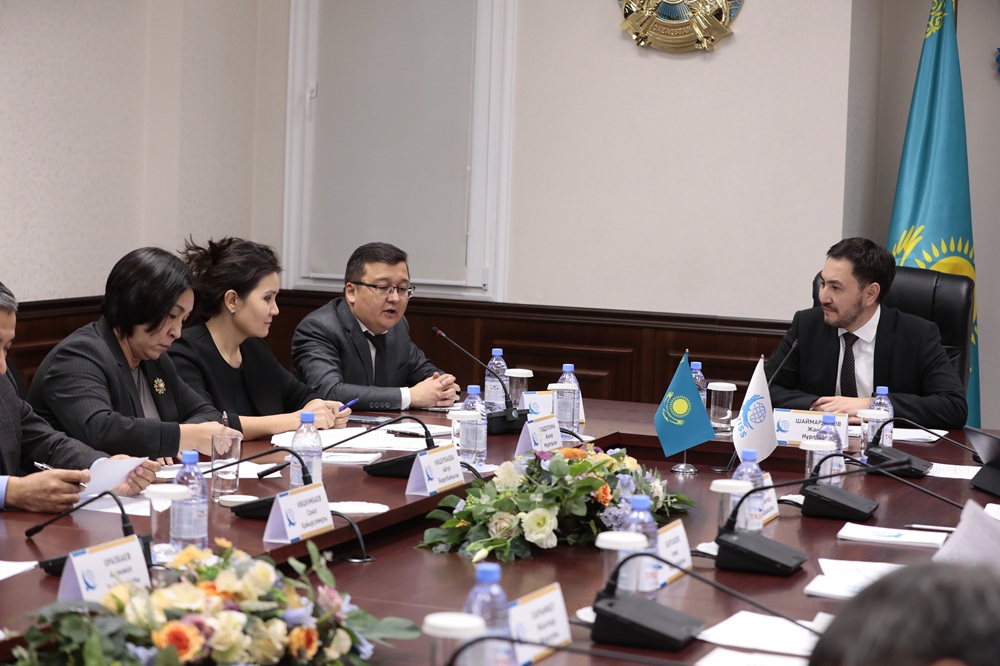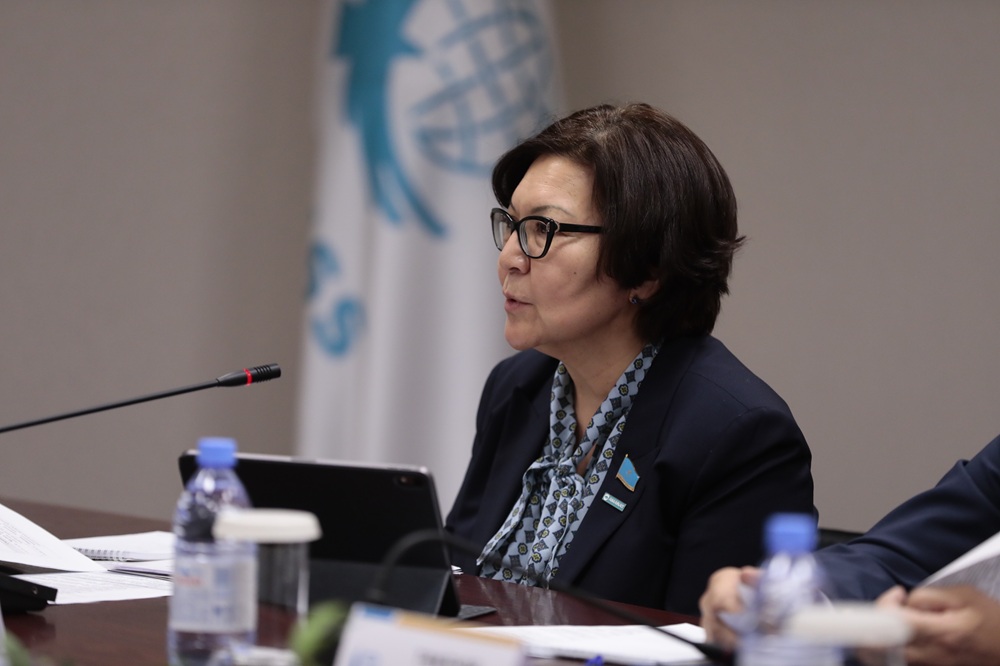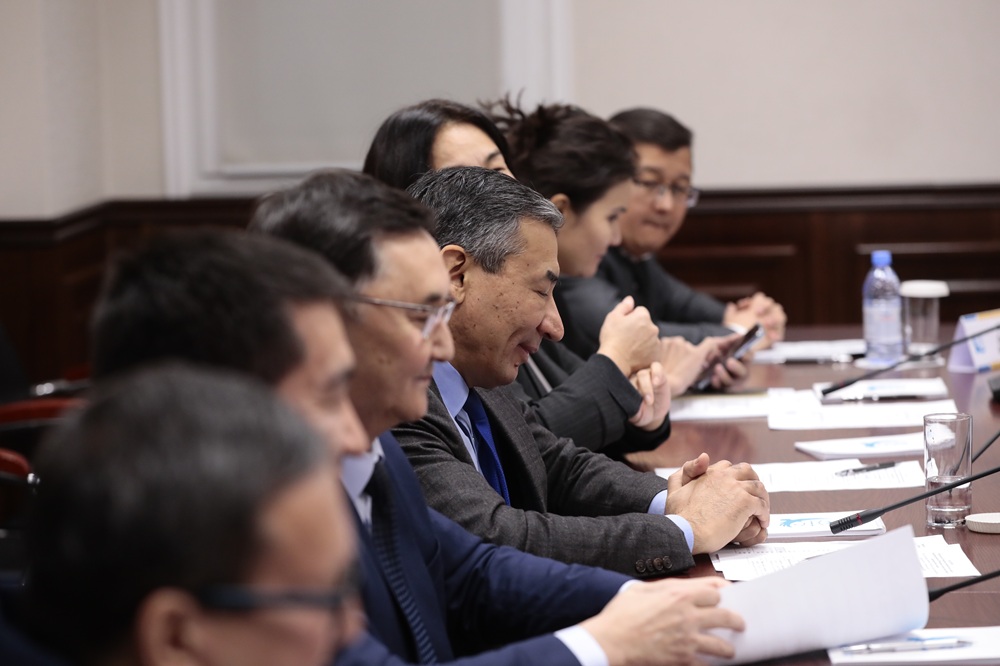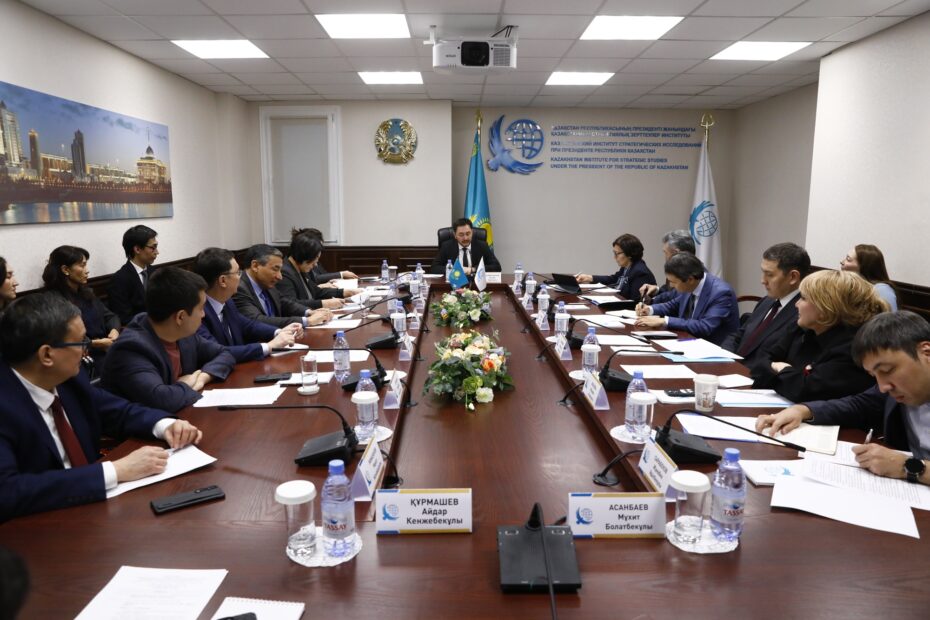
On December 3, 2025, the Kazakhstan Institute for Strategic Studies under the President of the Republic of Kazakhstan (KazISS) hosted a meeting of the Foreign Policy Expert Council dedicated to the topic “Expanding Cooperation between Kazakhstan and the European Union.” The event was timed to mark the 10th anniversary of the signing of the Enhanced Partnership and Cooperation Agreement (EPCA) between the Republic of Kazakhstan and the EU – a document that laid a solid foundation for the modern stage of Kazakhstan–EU relations.
Opening the meeting, KazISS Director Zhandos Shaimardanov noted that the European vector remains one of the key priorities of Kazakhstan’s foreign policy. He emphasized that strengthening partnership with the EU is gaining particular importance amid global turbulence and requires high-quality expert support and open dialogue.
Deputy Director of KazISS Dauren Aben, who moderated the meeting, stressed that over three decades of cooperation Kazakhstan and the European Union have built a stable architecture of strategic interaction, while the EPCA became the first agreement of such a level signed by the EU with a Central Asian country.
The European Union remains Kazakhstan’s largest trade and investment partner: in 2024, bilateral trade reached nearly USD 50 billion – a record figure in the history of relations – while total EU investments exceeded USD 200 billion. Further deepening of cooperation is possible through the Global Gateway initiative, partnership in critical raw materials, development of green energy, introduction of advanced technologies, and strengthening expert ties. KazISS already maintains sustainable contacts with more than 25 European think tanks, conducts joint research projects, and expands institutional cooperation.
The discussion was attended by Aigul Kuspan, Member of the Mazhilis of the Parliament of the Republic of Kazakhstan and Chair of the Mazhilis Committee on International Affairs, Defense and Security; Amangeldy Tazhenov, Deputy Chairman of the Board of the Institute for Foreign Policy Studies under the MFA of Kazakhstan; Ilyas Karsakov, Deputy Director of the Department of Foreign Policy Analysis and Strategic Forecasting of the MFA of Kazakhstan; Zhangeldy Syrymbet, Deputy Director of the Europe Department of the MFA of Kazakhstan; Marian Abisheva, Deputy Director of the Presidential Center of Kazakhstan; Zhumabek Sarabekov, Director of the Institute of World Economy and Politics; Zhanibek Arynov, Assistant Professor at the Graduate School of Public Policy of Nazarbayev University; and Amanzhol Urazbayev, Chairman of the Counter-Terrorism Committee, National Expert and EU ACT Project Coordinator on Countering Organized Crime and Terrorism.
Experts reviewed Kazakhstan’s foreign policy priorities in the European direction, discussed key achievements of the ten-year EPCA implementation period, the impact of the geopolitical and sanctions environment on interaction between Astana and Brussels, as well as prospects for developing expert cooperation between analytical centers of Kazakhstan and EU member states.
In conclusion, participants noted that Kazakhstan and the European Union possess significant potential for further expansion of partnership in the economy, science, technology, climate policy, and humanitarian sphere. Special attention was paid to the importance of regular expert dialogue, which contributes to the development of practical recommendations and to deeper mutual understanding in the context of a changing world order.