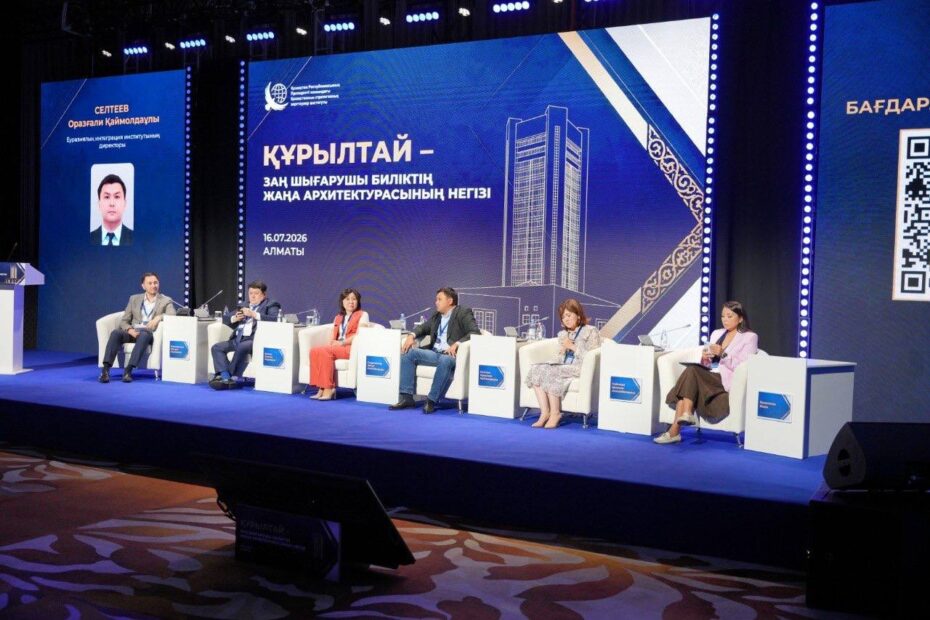
Today, the expert platform “Kurultai as the Foundation of a New Architecture of Legislative Power,” organized by the Kazakhstan Institute for Strategic Studies under the President of the Republic of Kazakhstan, was held in Almaty.
The event brought together representatives of government agencies, leading analytical centers, the academic community, higher education institutions, public organizations and the expert community.
Opening the expert platform, Zhandos Shaimardanov, Director of the Kazakhstan Institute for Strategic Studies under the President of the Republic of Kazakhstan, noted that the establishment of the Kurultai marks the transition to a new model of legislative power based on the principles of openness, professionalism and broad public participation. According to him, the first elections to the Kurultai will constitute a practical stage in implementing the constitutional reform and ensure the full launch of the renewed system of representative government. This will make it possible to transition to a new model of interaction between the state and society, in which strong political institutions, expert support and broad citizen participation will play a key role.
The first session focused on the constitutional transformation of the Kurultai, the development of its legislative powers, improvement of legislative drafting mechanisms and enhancement of expert and analytical support for legislative activities.
Daniel Vaisov, Vice Minister of Justice of the Republic of Kazakhstan, presented the main areas of the constitutional transformation of legislative power, elaborating on the powers of the Kurultai and its place in the public administration system.
According to the Vice Minister, the elections will be held under the updated legislation: all 145 members of the Kurultai will be elected through party lists in a single nationwide constituency. This approach strengthens the role of political parties, shifting competition toward programs, ideas and teams that bear collective responsibility for the implementation of public policy.
Aigul Sadvakasova, Director of the Institute of Philosophy, Political Science and Religious Studies, noted that the Kurultai could become a platform for aligning party values with national interests. According to her, the modern development of the state requires continuous interaction among the state, political parties, the expert community, civil society and the regions.
The expert emphasized that elections are a practical mechanism for implementing the constitutional principle that the people are the sole source of state power. Therefore, a high level of citizen participation in voting directly affects the public legitimacy of the new representative body.
Urazgali Selteyev, Director of the Institute of Eurasian Integration, presented the results of a sociological study of electoral attitudes among Kazakhstanis. According to the survey, 72.1% of citizens stated that they were ready to participate in the upcoming elections of members of the Kurultai.
The expert noted that such a high figure demonstrates considerable public interest in the new model of legislative power and makes it possible to predict a higher turnout than in previous parliamentary elections. According to him, high electoral participation will be an important factor in ensuring the public legitimacy of the future Kurultai and confirms citizens’ willingness to participate in the further development of the country’s political system.
During the discussion, experts noted that sociological data demonstrate how the current activities of political parties influence public sentiment. For example, surveys conducted by the Kazakhstan Institute for Strategic Studies under the President of the Republic of Kazakhstan and the Institute of Eurasian Integration show that the Ak Zhol and Respublica parties are competing for the same right-wing electorate and currently have equal chances.
At the same time, the ratings of the Nationwide Social Democratic Party and the People’s Party of Kazakhstan, which are seeking to represent the left wing, are approximately equal, at 3.6% and 3.5%, respectively. The experts concluded that this may be partly due to the substantial overlap in their social agendas, while the differences between them are not yet always apparent to a broad range of voters.
Sholpan Saimova, Head of the Center for Public Legislation and Public Administration at the Institute of Parliamentarism, emphasized the importance of scientific and analytical support for the legislative process.
Assem Bolatzhan, Head of Women in Tech Kazakhstan, devoted her presentation to gender representation in the Kurultai. According to the expert, the new model of legislative power and the renewal of the party system create additional opportunities to form a professional talent pool. At the same time, political parties must already begin creating equal opportunities for women’s professional growth and participation in party activities, maslikhats, public councils and expert platforms. The representation of women in positions where the legislative agenda is shaped will be one of the indicators of the maturity of Kazakhstan’s new political system.
During the second session, participants in the expert platform discussed international experience in parliamentary engagement with society, mechanisms for public participation in the activities of the Kurultai, the development of digital services and new institutional formats for continuous dialogue between the state and citizens. The session was moderated by Aidar Amrebayev, Head of the Center for Comparative Political Studies at the Institute of Philosophy, Political Science and Religious Studies.
Zhenisbek Tolen, Head of the Center for Education Sciences and Social Development at the National Academy of Sciences of the Republic of Kazakhstan, presented an overview of international practices of parliamentary engagement with society. Drawing on the examples of Switzerland, Finland, the United Kingdom and South Korea, he demonstrated that trust in legislative institutions is directly linked to citizens’ opportunities to participate in discussions of government decisions.
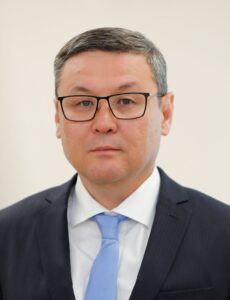
Azamat Baigaliyev, Deputy Chairman of the Management Board of the Kazakhstan Institute of Public Development, presented the results of a study on the formation of party lists for the Kurultai elections. He noted the importance of assessing not only candidates’ media visibility but also their competence and regional representation.
The expert noted that the parties had been given almost five months to prepare for the election campaign, allowing them to update their programs, conduct internal candidate selection and form teams in line with the new requirements of the political system. In his opinion, the current campaign demonstrates a high level of political competition and indicates the further development of Kazakhstan’s party system.
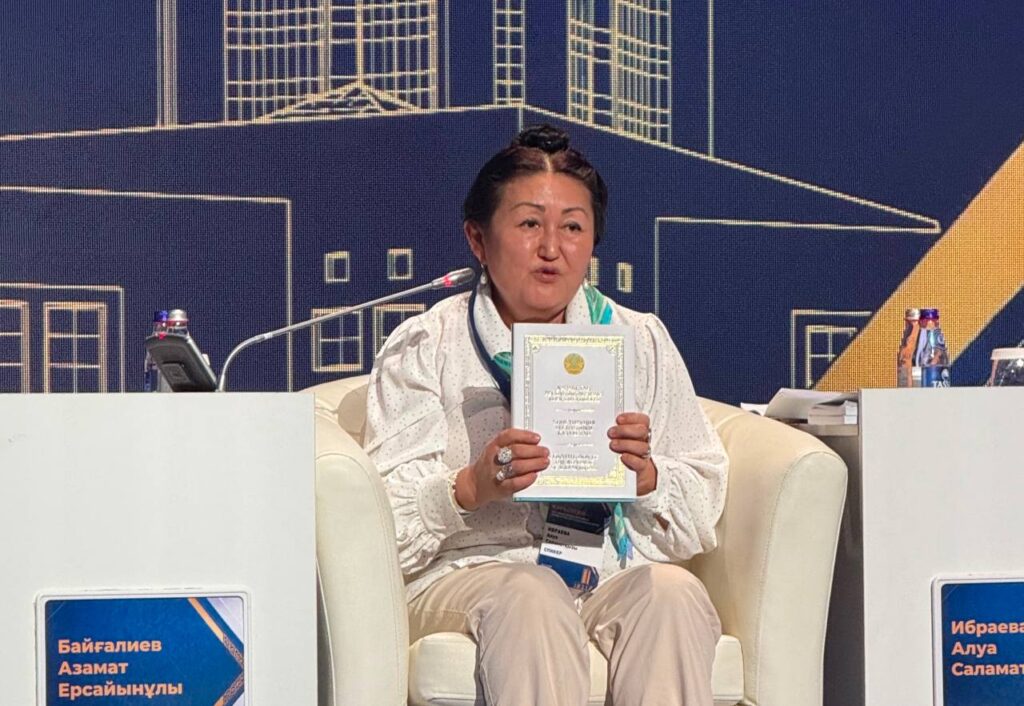
Alua Ibrayeva, Professor at Al-Farabi Kazakh National University, emphasized the need to institutionalize legal mechanisms for public participation in the activities of the Kurultai.
According to the expert, the modern Kurultai should become a permanent platform for interaction between the state and society, where citizens can not only express their proposals but also understand how those proposals are taken into account in decision-making. The broader the opportunities for public participation, the greater citizens’ trust in representative institutions and the quality of adopted laws.
Kaiyrzhan Abdykalykov, Chairman of the Civil Alliance of Almaty, noted that sustainable public dialogue is impossible without regular consultations with the population and the active involvement of non-governmental organizations, young people, the academic community and representatives of the regions.
He emphasized that continuous public feedback, transparency in discussing legislative initiatives and broad citizen participation in decision-making are important prerequisites for strengthening public trust and further developing democratic institutions.
Aigerim Zhunusova, Senior Lecturer at Al-Farabi Kazakh National University, presented the concept of a digital Kurultai and the implementation of an e-Parliament model. She proposed creating a unified digital system for supporting draft legislation, ensuring transparency at every stage of the legislative process, developing digital citizen participation and using artificial intelligence technologies to analyze legislative initiatives and public proposals.
Summing up the expert platform, the participants noted that the establishment of the Kurultai marks the transition to the practical implementation of the constitutional reform and opens a new stage in the development of representative government in Kazakhstan. According to the experts, the upcoming elections will be an important step in the country’s consistent political modernization and the further strengthening of the “Strong President – Influential Kurultai – Accountable Government” model.
The experts emphasized that the new system, based on competition among party programs, transparency of the legislative process, broad citizen participation, professional expert support and modern digital technologies, will contribute to strengthening public trust in state institutions. Active citizen participation in voting is of particular importance, since high turnout ensures the public legitimacy of the new representative body and reflects society’s willingness to participate in the country’s further development.