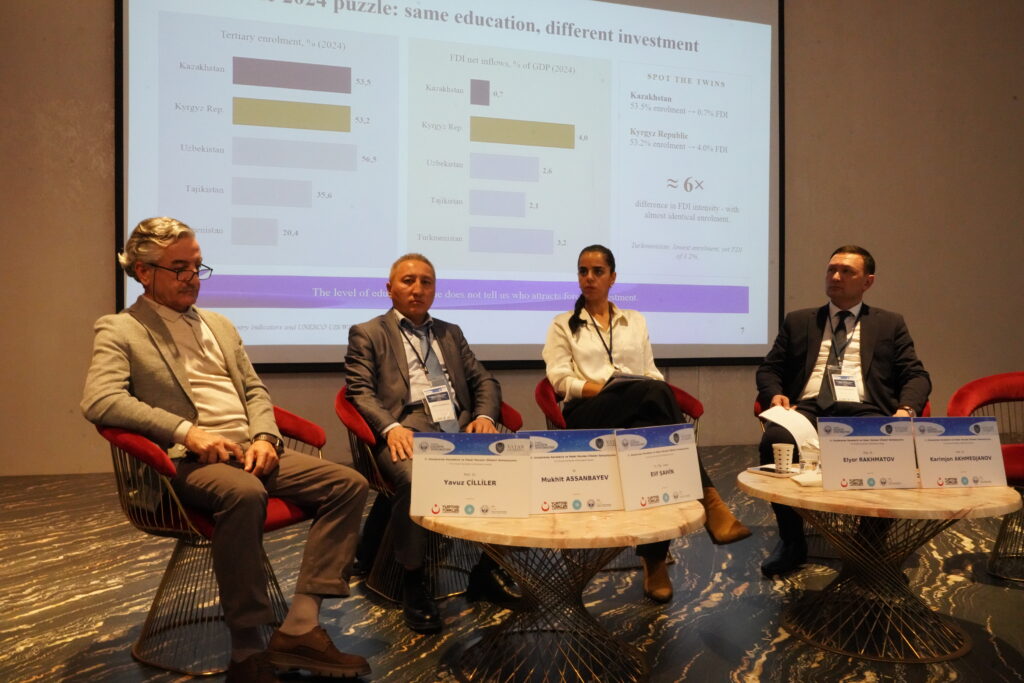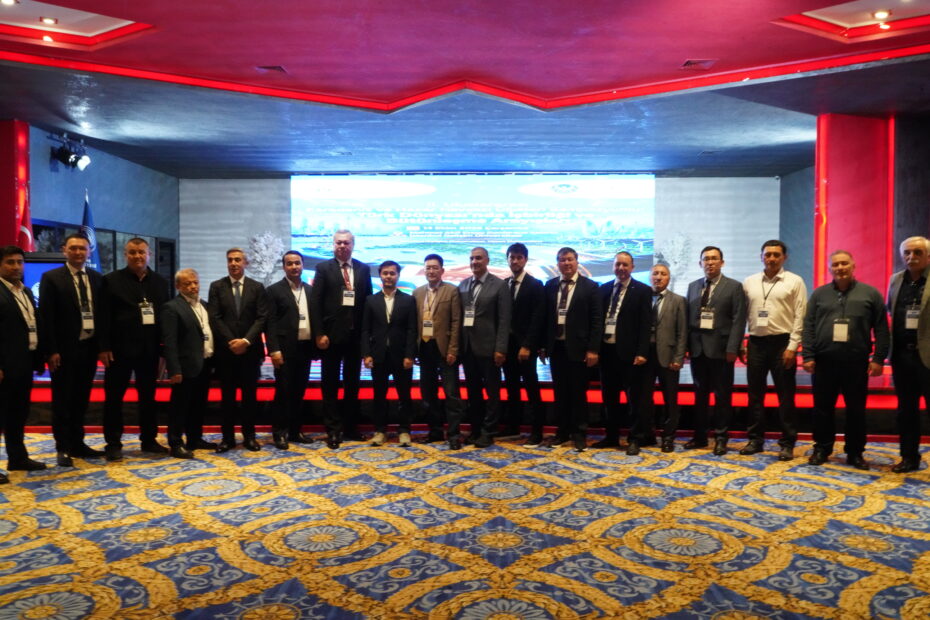
On October 14, 2026, the 2nd International Symposium of the Black Sea–Caspian Basin Countries, titled “Exploring Cooperation and Integration in the Turkic World,” was held in Istanbul. The event was organized by Istanbul Gelisim University (Türkiye) in cooperation with Vatan University (Uzbekistan).
The symposium focused on strengthening academic cooperation and developing new areas of research among scholars and experts from countries of the Turkic world. Participants included representatives of academic and expert communities from Türkiye, Azerbaijan, Kazakhstan, Kyrgyzstan, Uzbekistan, Russia, and Syria.
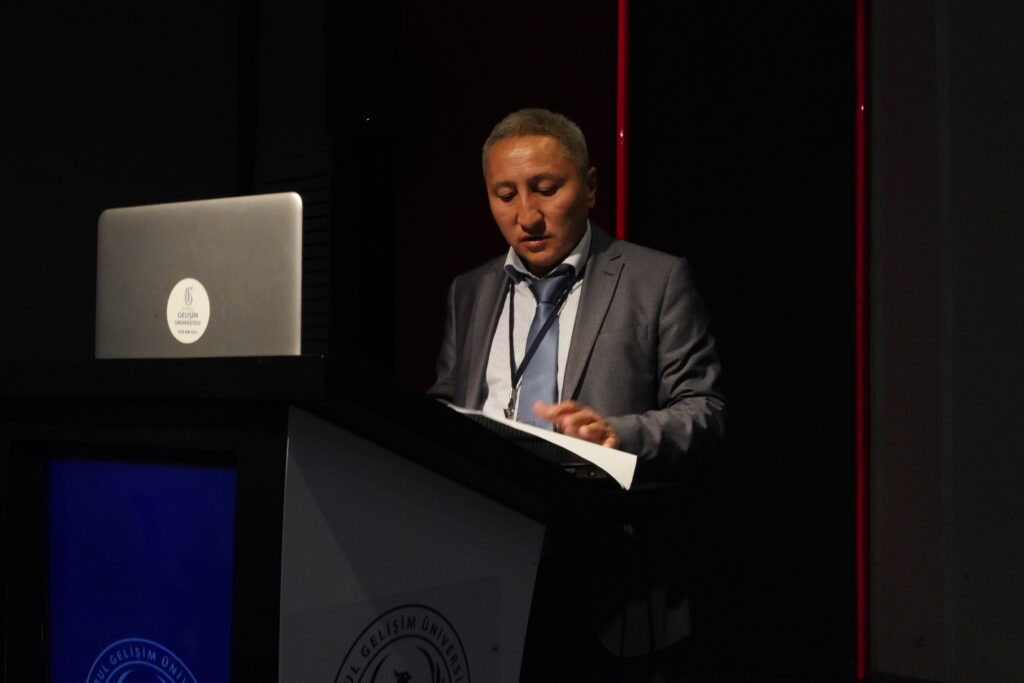
Mukhit Assanbayev, Chief Expert of the Department of International Security at the Kazakhstan Institute for Strategic Studies under the President of the Republic of Kazakhstan (KazISS), participated in the symposium as a speaker. Addressing the session on “Investment, Economic Security and Geopolitics,” he emphasized that Kazakhstan, Türkiye, Uzbekistan, and other member states of the Organization of Turkic States (OTS) are actively adapting to global challenges, shifts in the balance of power, and security crises. In the global context, this has enabled them to position themselves as an integral part of the global security architecture, taking into account their relations with the EU, NATO, China, Russia, and the United States.
Particular attention was paid to the OTS as a platform for political, economic, and transport and logistics coordination among countries of the Black Sea–Caspian Basin. This economy-centered approach allows the OTS to complement the existing security architecture organically, without seeking rigid institutional dominance. According to M. Asanbayev, Kazakhstan, as an active supporter and initiator of numerous regional integration processes, now plays a special role within the OTS, providing the organization with resources, an agenda, and legitimacy. The organization’s own contribution lies in preventive diplomacy, transport resilience, and digital and industrial cooperation.