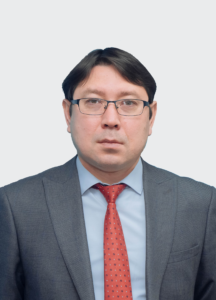
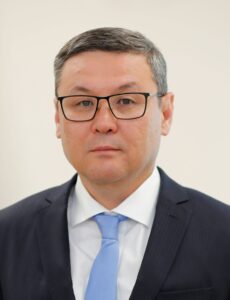
On September 7–8, 2026, Zhandos Shaimardanov, Director of the Kazakhstan Institute for Strategic Studies under the President of the Republic of Kazakhstan, participated in the International Hili Forum 2026 in Abu Dhabi. The forum brought together more than 1,000 participants and over 55 speakers from more than 35 countries.
The forum, held under the overarching theme “Gulf at Crossroads: Conflict, Consequences, and Course Correction,” was organized by the Emirates Center for Strategic Studies and Research (ECSSR) in collaboration with the Anwar Gargash Diplomatic Academy (AGDA).
The main agenda focused on the transformation of the international order and security architecture amid intensifying great-power rivalry, conflicts in the Middle East, and the growing vulnerability of global transportation, energy, and technology systems. The discussion centered on issues of strategic autonomy, regional security, geo-economic stability, transport connectivity, and the growing role of middle powers. The organizers structured the discussions around three main themes: geopolitics, geo-economics, and geo-technology.
The KazISS Director spoke at a session alongside Former Prime Minister and Former Foreign Minister of Sweden Carl Bildt, as well as Former Minister of Foreign Affairs of Serbia and former President of the UN General Assembly Vuk Jeremić. The discussion focused on how middle powers can maintain strategic autonomy amid competition among major centers of power and make a practical contribution to regional and global stability.
In his speech, Zhandos Shaimardanov referred to the approach articulated by President Kassym-Jomart Tokayev: “Kazakhstan is a responsible middle power.” The head of state also emphasized that the country’s foreign policy must be as balanced as possible and aimed at protecting and promoting the state’s strategic interests.
“The key word here is ‘responsible.’ This is not about claiming special status, but about the ability to pursue an independent foreign policy and make a practical contribution to international stability. As competition among the great powers intensifies, the importance of countries capable of maintaining freedom of choice and engaging with different centres of power is growing.”
Separate attention was devoted by the KazISS Director to the concept of strategic autonomy. According to him, for Kazakhstan, this does not mean neutrality or equal distance from its partners, but rather having sufficient space for independent decision-making.
“Kazakhstan’s strategic autonomy has three interrelated dimensions. The first is resilient domestic institutions: political modernization, a new Constitution, and a revamped architecture of state institutions strengthen the state’s capacity to adapt to contemporary challenges. The second is diversified external partnerships: Kazakhstan is developing relations with various centers of power while maintaining the independence of its foreign policy course. The third is connectivity and alternative routes: the development of transportation, energy, and economic ties reduces vulnerability and broadens the range of options. Institutional resilience, diversified partnerships, and connectivity together form the foundation of genuine strategic autonomy.”
This approach is in line with the logic underlying Kazakhstan’s political modernization. President Kassym-Jomart Tokayev defined its main goal as “strengthening Kazakhstan’s potential and enhancing our state’s readiness to face modern challenges,” emphasizing the need for a substantive transformation of state institutions and improved coordination among them.
At the conclusion of the discussion, the KazISS Director highlighted the potential for closer horizontal cooperation among middle powers, including between the countries of Central Asia and the Gulf. Such cooperation could encompass regional security, transport connectivity, energy, investment, new technologies, and the development of multilateral mechanisms for cooperation.