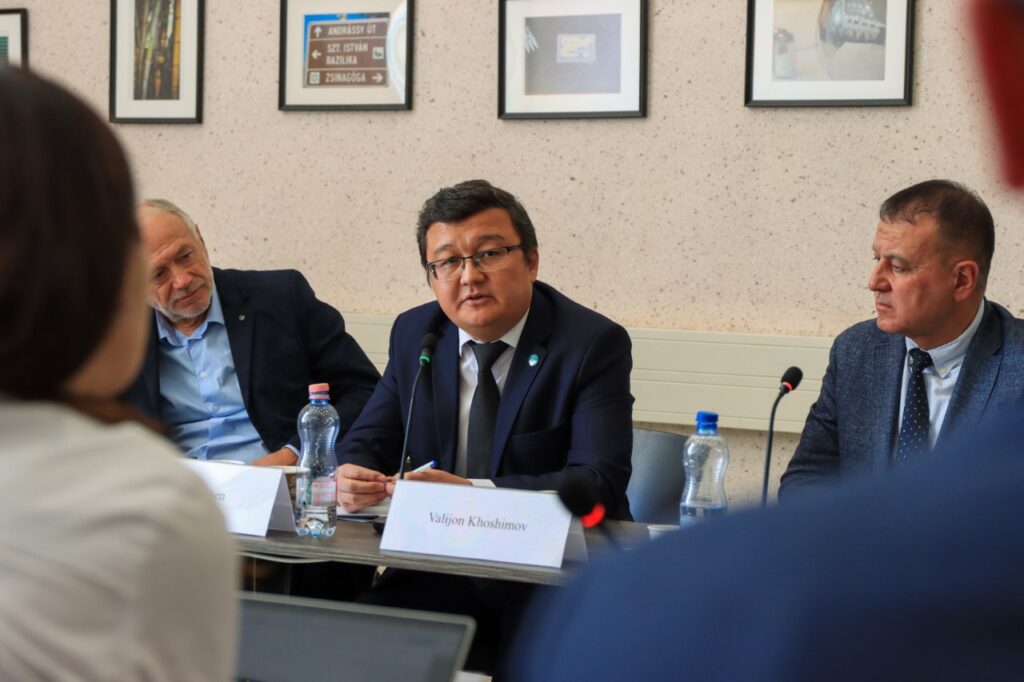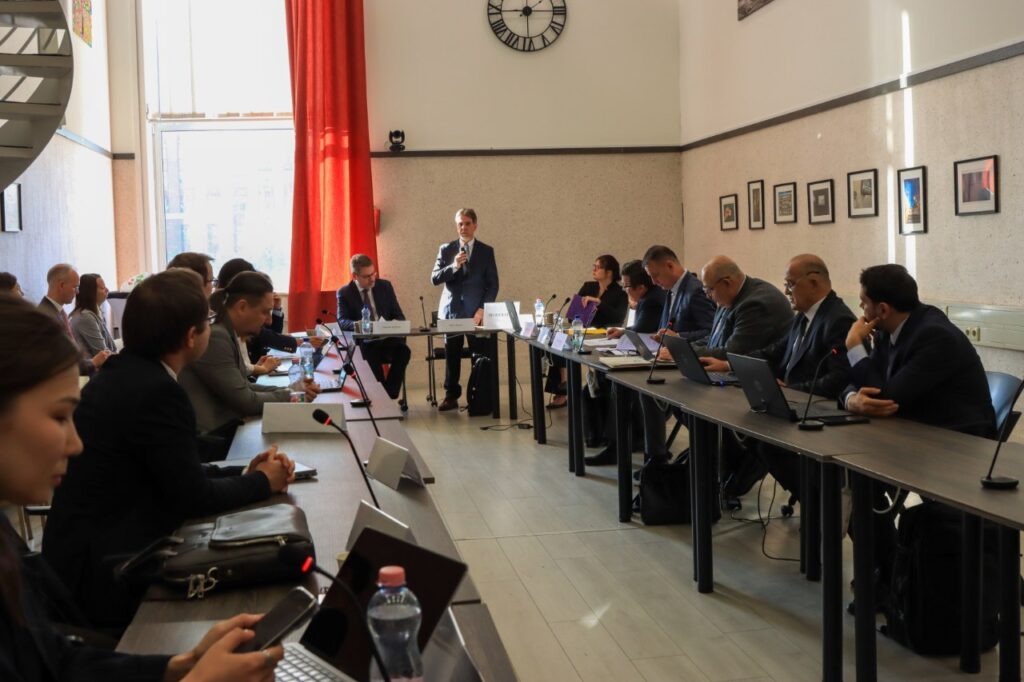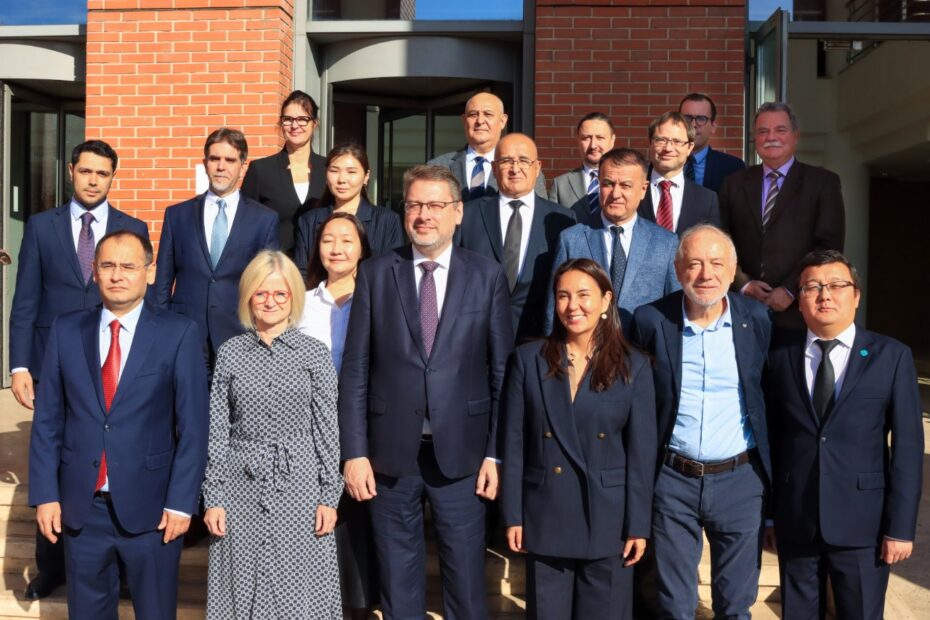
On October 7–8, 2026, an international expert seminar entitled “Strengthening Cooperation between the EU and Central Asia in an Era of Climate Crisis and Policies Disrupting the Established World Order” was held in Budapest. The event was jointly organized by the Central Asia Research Center at Corvinus University and the Central Asia Research Group at Eötvös Loránd University.
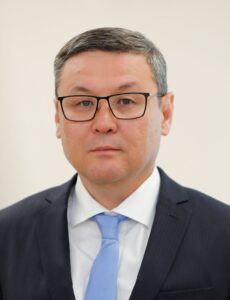
The seminar brought together representatives of think tanks, research institutions, and universities from Hungary, Kazakhstan, and Uzbekistan. Opening remarks were delivered by Eduards Stiprais, the European Union Special Representative for Central Asia; Anel Bakytbekkyzy, Kazakhstan’s Ambassador to Hungary; and Oybek Shakhavdinov, Uzbekistan’s Ambassador to Hungary. Speakers included Dauren Aben, Deputy Director of the Kazakhstan Institute for Strategic Studies under the President of the Republic of Kazakhstan (KazISS), and Aigerim Abdrashitova, Chief Expert of the KazISS Research Department.
Speaking at a session devoted to breakthrough ideas for addressing existential threats to humanity, Dauren Aben emphasized the need to strengthen global water governance amid the climate crisis and growing water scarcity. He noted that the initiative of Kazakhstan’s President Kassym-Jomart Tokayev to establish an International Water Organization under the auspices of the United Nations is intended to improve coordination of international efforts, bring together the capacities of existing institutions, and facilitate a shift from declarations to practical solutions.
Particular attention was paid to opportunities for deeper cooperation between the European Union and Central Asian countries in water security, climate adaptation, the adoption of modern technologies, and the exchange of scientific knowledge. According to D. Aben, joint efforts in water diplomacy could make an important contribution to strengthening multilateral cooperation and international stability.
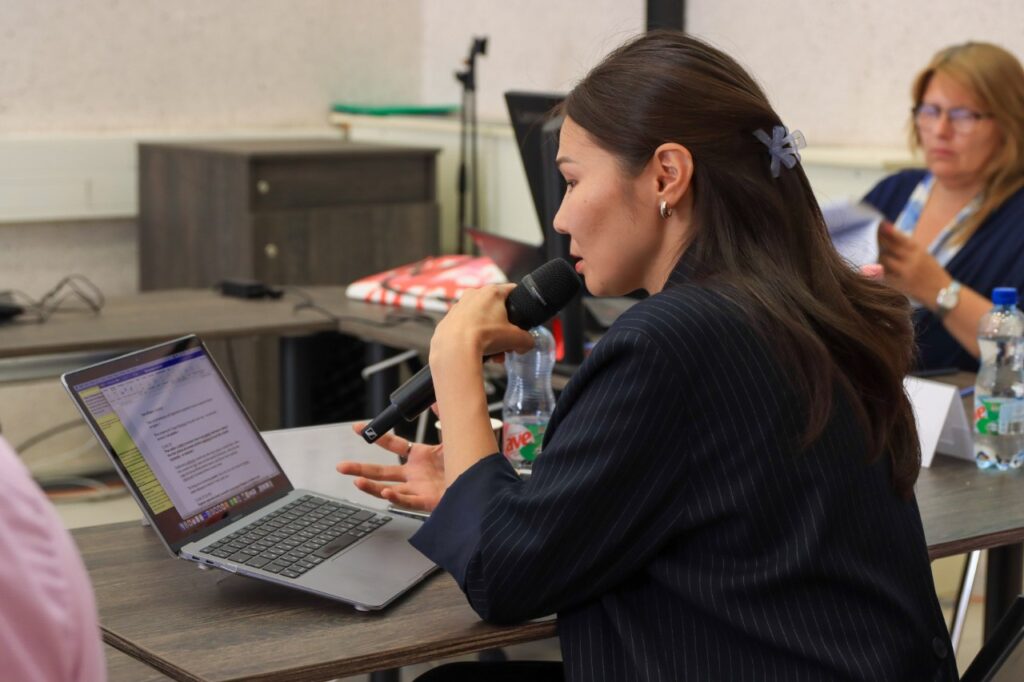
Aigerim Abdrashitova spoke at a session devoted to the role of Hungary and the Visegrád Four in developing cooperation between the European Union and Central Asia. In her remarks, she outlined prospects for deeper regional cooperation in Central Asia, as well as opportunities to draw on the Visegrád Group’s experience in coordinating positions and advancing the common interests of countries in the region.
A. Abdrashitova noted growing demand for practical mechanisms of regional cooperation, particularly in the water-energy and transport sectors. She also emphasized that stronger coordination among the five Central Asian countries would enable them to make more effective use of the C5+1 format and jointly shape the agenda for engagement with external partners.