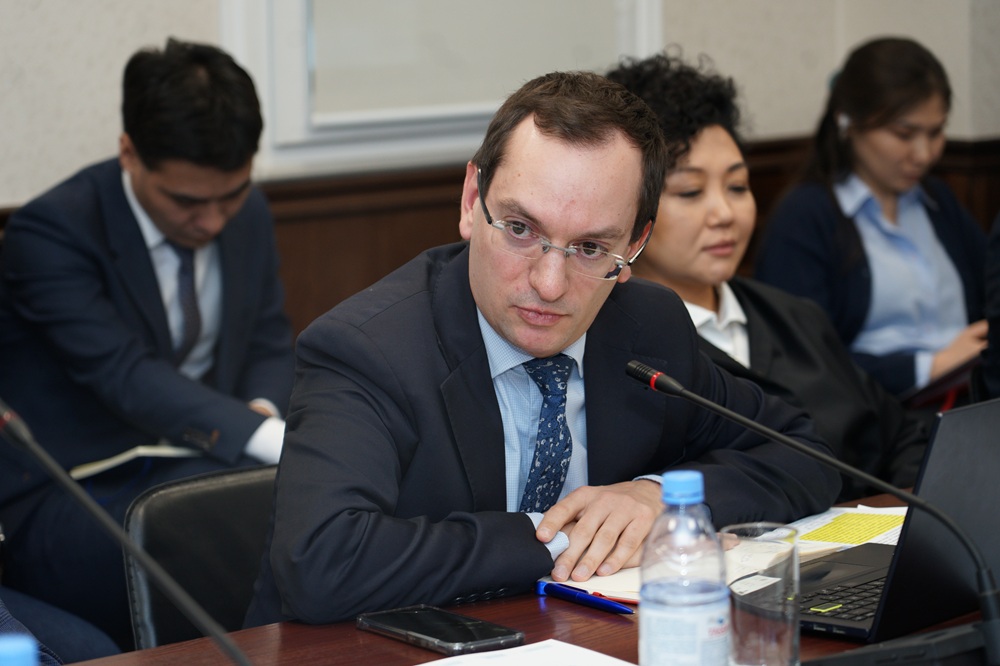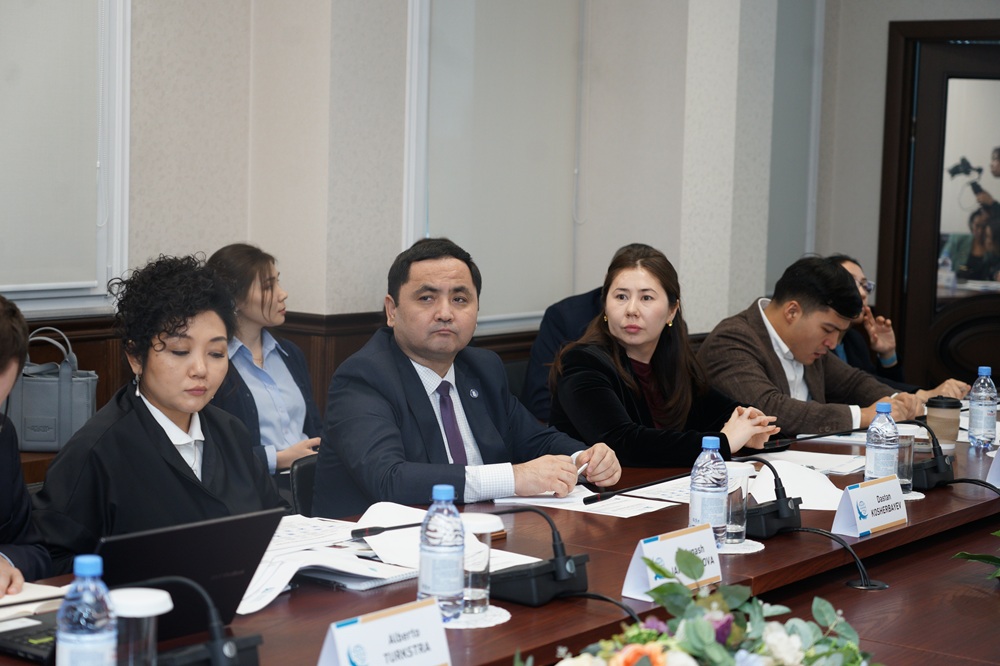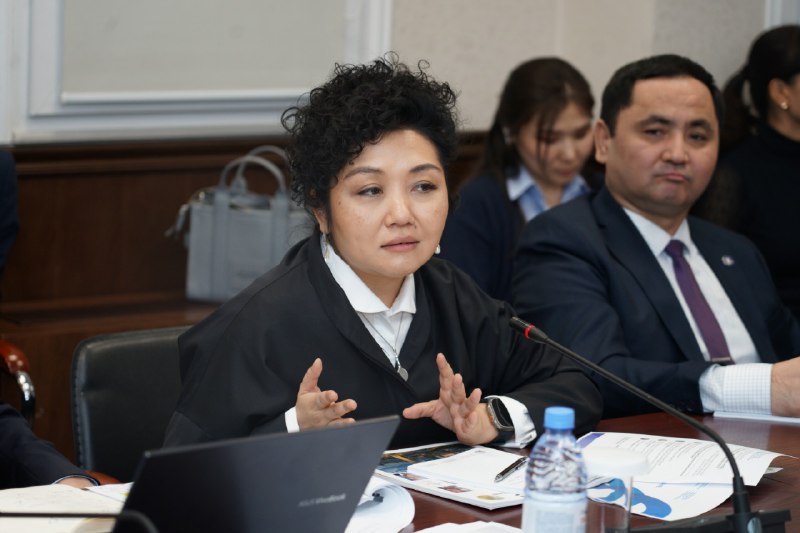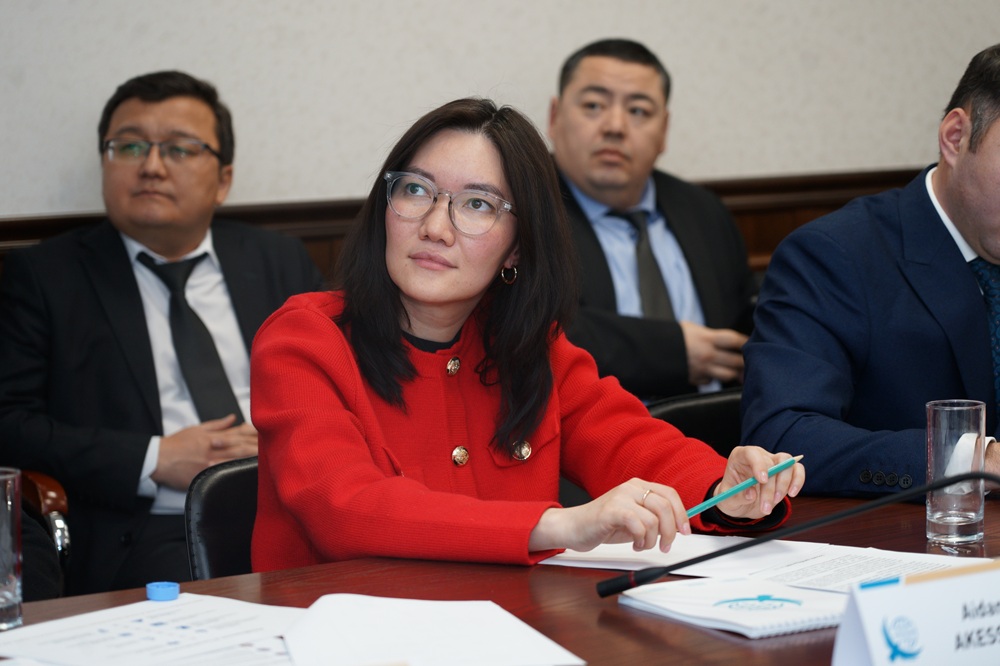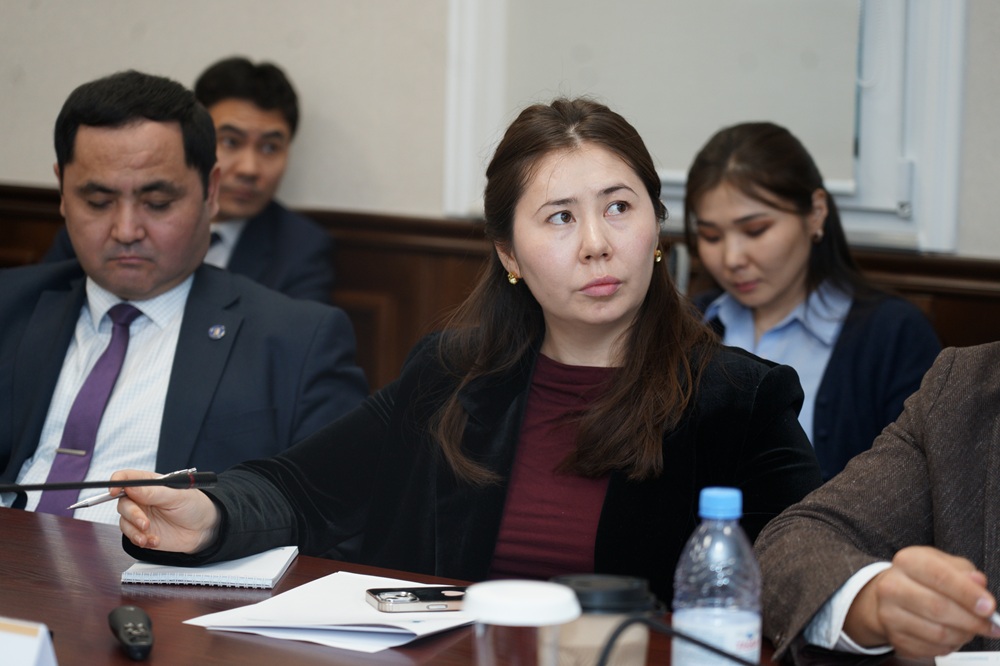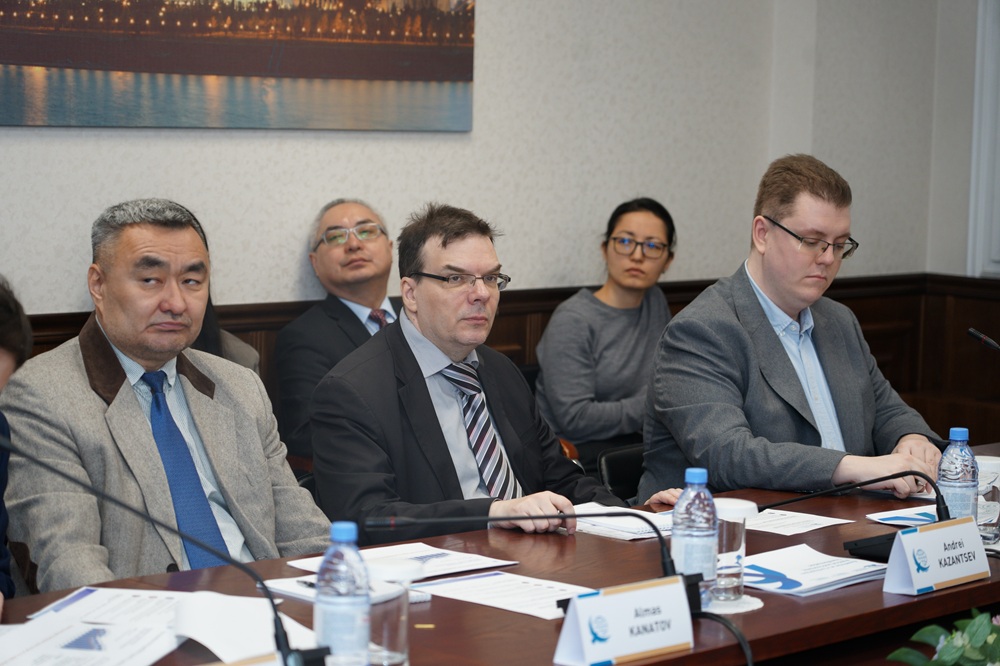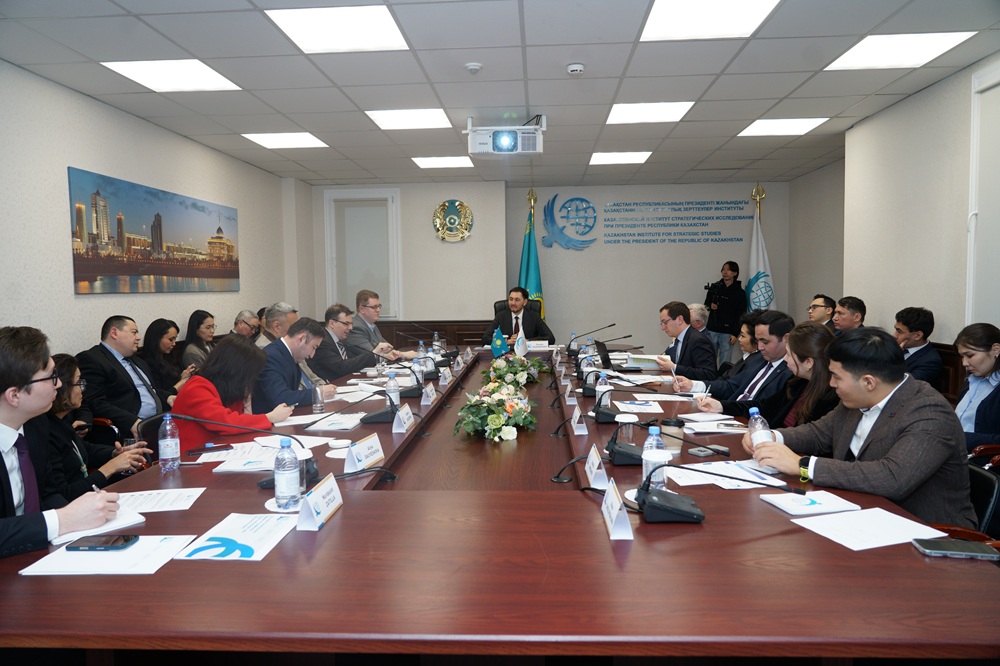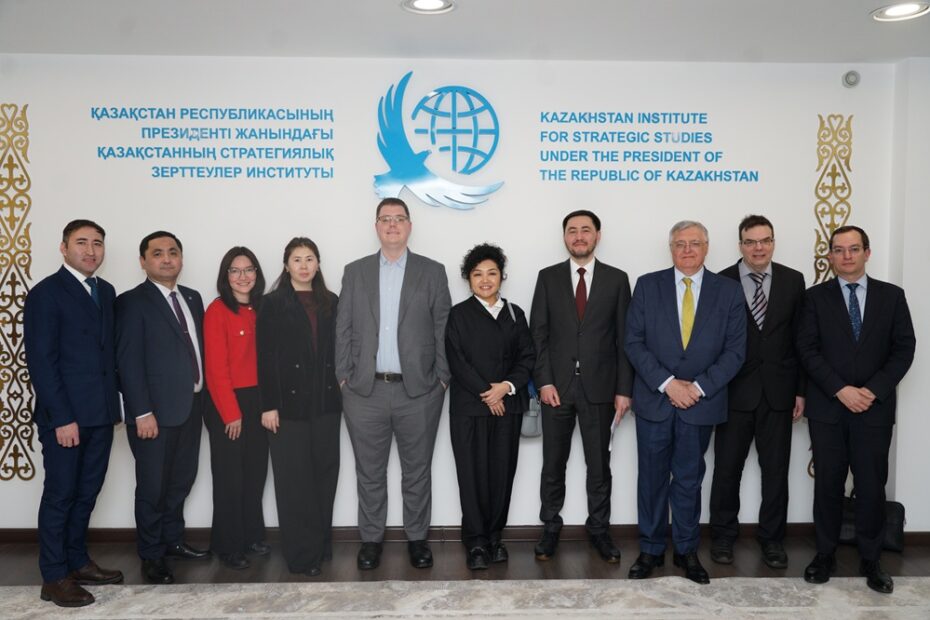
On March 13, 2026, the Kazakhstan Institute for Strategic Studies (KazISS) under the President of the Republic of Kazakhstan, with the participation of foreign experts, discussed a draft analytical report on a new constitutional model of Kazakhstan “Kazakhstan’s new constitutional model: Towards a resilient and modern state”.
The meeting took place in a working format and marked an important stage in preparation of a final version of the analytical report. Participants in the discussion were briefed on main ideas and conclusions of the study.
The authors of the report presented their vision for the development of Kazakhstan’s constitutional model in the context of political and institutional modernization. The report was co-authored by a number of foreign and Kazakhstani experts: Alberto Turkstra, an expert on international relations and analyst on Central Asia; Professor, former Deputy Minister of Foreign Affairs of Georgia, Ambassador Extraordinary and Plenipotentiary David Apciauri; Deputy Director of Energy, Growth and Safety Programme at the International Centre on Tax and Investment (USA) Wesley Alexander Hill; Andrey Kazantsev, Central Asia expert and professor at the University of Economics (Russia); Karlygash Jamankulova, President of the International Freedom of Speech Foundation “Adilsöz”; and others
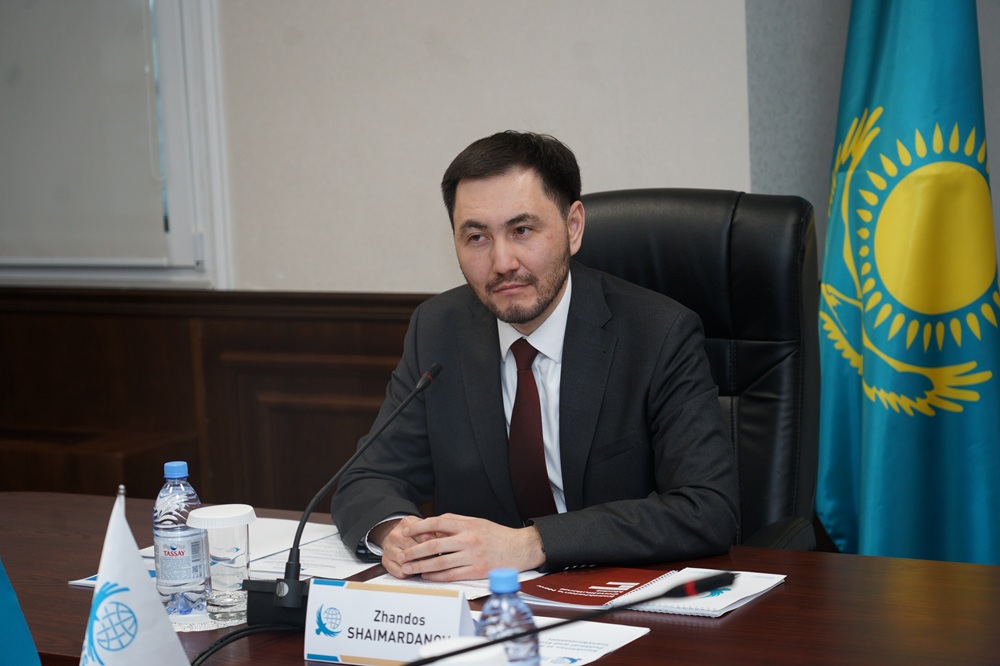
In presenting his report, KazISS Director Zhandos Shaimardanov outlined key approaches to understanding the constitutional reform in the context of the country’s political and institutional modernization. He noted that Kazakhstan is entering a new stage of development, which requires improving the quality of institutions, developing human capital, fostering innovation and strengthening accountable public administration. The presentation paid particular attention to the logic behind the political modernization programme for 2019–2026, as well as the key stages in preparation of a draft new Constitution.
“Together, these reforms form a gradual trajectory of institutional modernization aimed at adapting the Kazakhstan’s political system to the changing expectations of society and a new stage of the country’s development” – Zh. Shaimardanov noted.
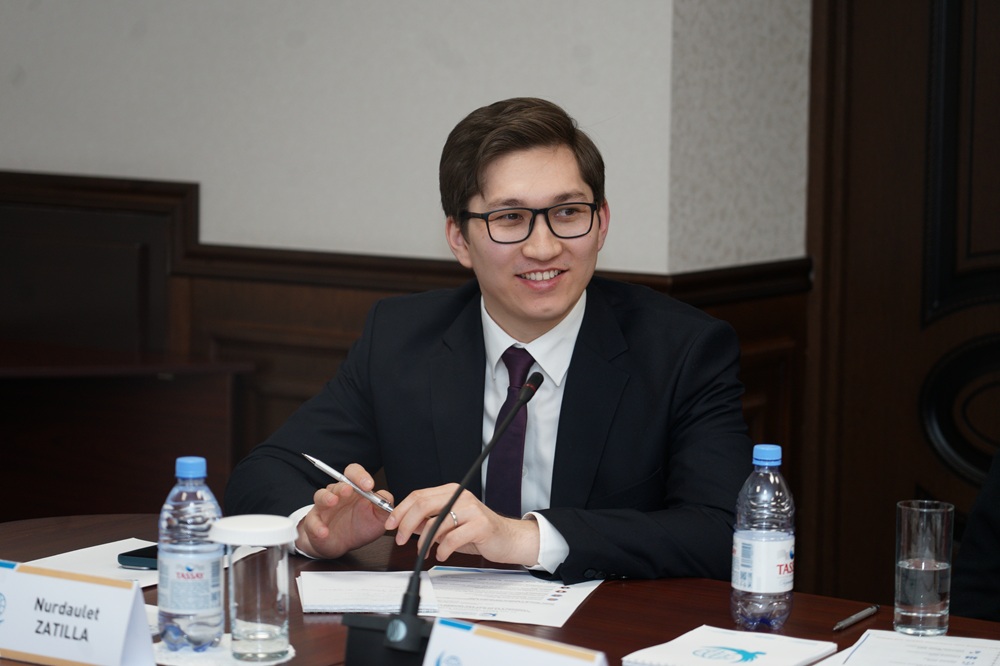
Nurdaulet Zatilla, a leading expert at the KazISS Department of Political Studies, noted that the modern Constitution should be oriented not only to existing legal realities, but also to future challenges.
“According to KazISS research, 30.6% of Kazakh citizens associate the country’s future with digitalization and development of artificial intelligence. In this regard, constitutional guarantees for protection of personal data, digital privacy and security of electronic communications are of particular importance,” said the KazISS expert.
In her speech, the chief expert of Strategic Analysis Department of KazISS, Aidana Akessina, drew attention to value orientations of the constitutional reform. These include education, science, innovation, environmental responsibility, the dignity of work, and supremacy of law. According to her, the consolidation of education, science and innovation as strategic priorities reflects Kazakhstan’s broader transition from a resource-based development model to an economy of knowledge and technology. Amina Urpekova, Head of Department for Work with KazISS regions, presented results of a survey of public perception of the constitutional reform conducted by four sociological services of the country. She noted a high level of public awareness about the draft new Constitution and significant public support for the proposed changes. According to the results of various opinion polls, the proportion of informed citizens ranged from 77.5% and 94.4%.
The participants in the discussion shared their evaluations of the report presented. David Apciauri emphasized the fundamental nature of the draft Constitution and its strategic importance.
The participants in the discussion shared their evaluations of the report presented. David Apciauri emphasized the fundamental nature of the draft Constitution and its strategic importance.
According to him, the proposed reforms are aimed at strengthening internal stability, stimulating economic growth and reinforcing the country’s strong position on the international stage. The expert also noted the need to move from quantity to quality, particularly in economic development.
“Kazakhstan is contributing to the development of a more effective system of public administration, and this experience may be of interest to the international community”, emphasized David Apciauri.
Karlygash Jamankulova noted the analytical depth of the report and stressed that the sustainable development of the state is possible primarily on the basis of internal values of society.
“In the draft of the new Constitution, human values and freedoms occupy a key place – two central sections are devoted to this. The constitutional amendments are based on the idea of human capital development: The Basic Law is primarily focused on the individual and the future of the younger generation”, K. Jamankulova noted.
According to Alexander Hill, one of the important advantages of the draft new Constitution of Kazakhstan is the focus on positive rights, which assume an active organizational role of the state in ensuring economic development and guaranteeing human rights.
“That is why I consider the draft new Constitution of the Republic of Kazakhstan as an attempt to combine the system of positive rights with long–term development goals, and in general I am optimistic about prospects of the new Constitution”, the expert underlined.
Alberto Turkstra noted that the institutional changes stipulated in the draft the new Constitution could contribute to further democratization of the country’s political system. According to him, an important step towards political modernization is the transition to a unicameral parliamentary system.
“The introduction of a proportional electoral system will ensure broader representation of political parties and the full spectrum of public opinion”, the expert noted.
Andrei Kazantsev highlighted the conceptual coherence of the document prepared.
“The report is distinguished by its well-thought-out methodology and clear conceptual vision. In my view, the title itself – “Towards a Sustainable State” – deserves particular attention, as it accurately reflects the strategic focus of the proposed changes”, – he noted.
During the discussion, foreign and Kazakhstani experts exchanged views on possible directions for further development of the Kazakhstan’s constitutional model. The comments and proposals made during the discussion will be taken into account in the further substantive finalization of the document, which is due to be presented on March 17.