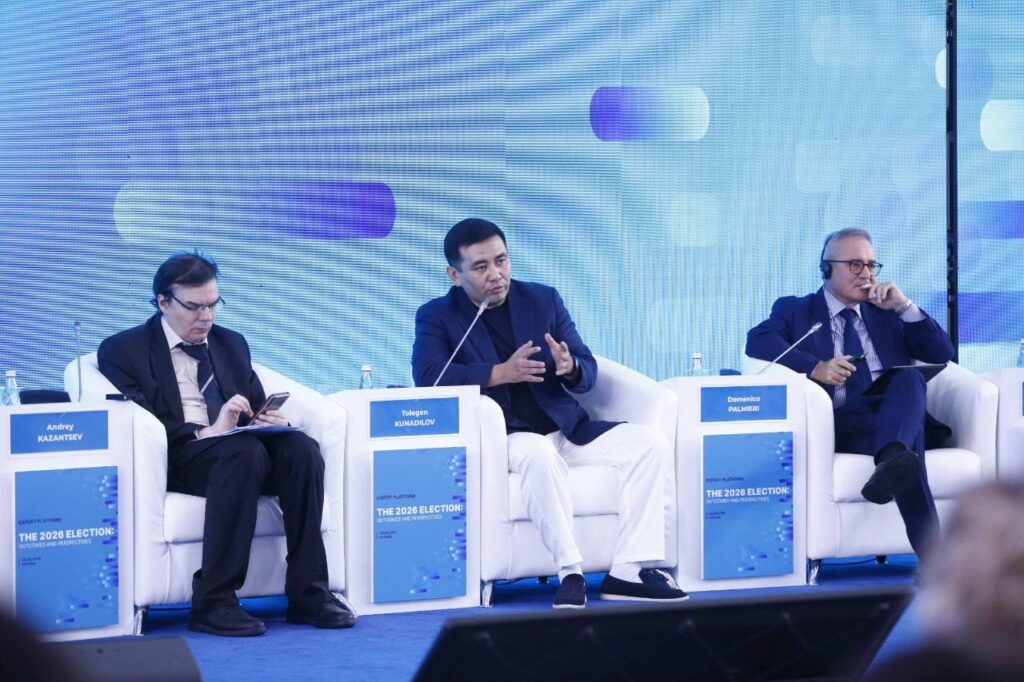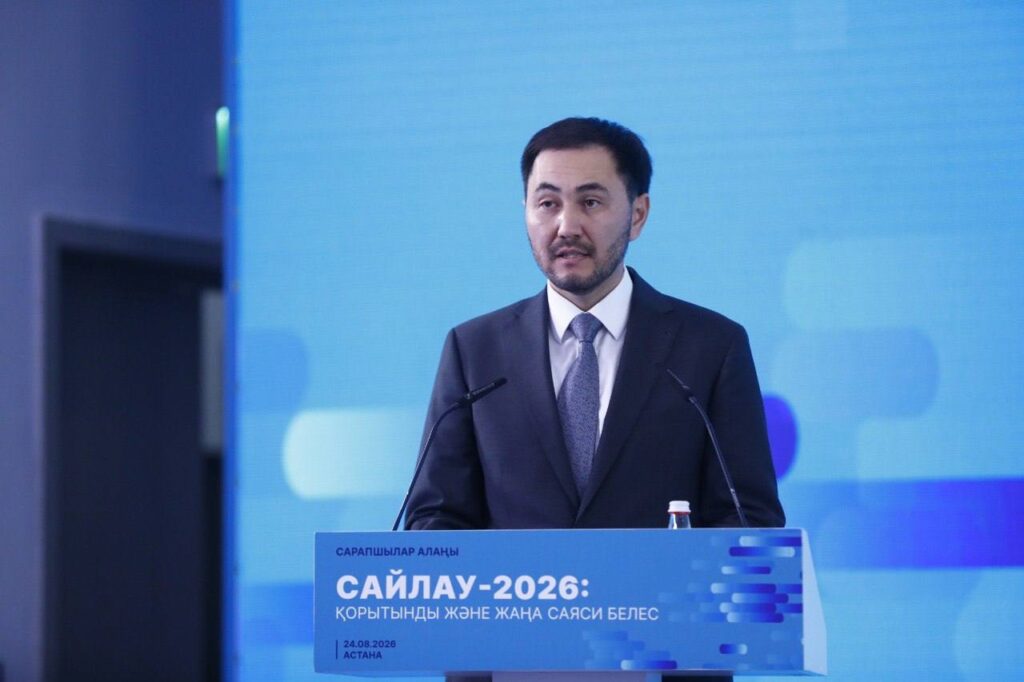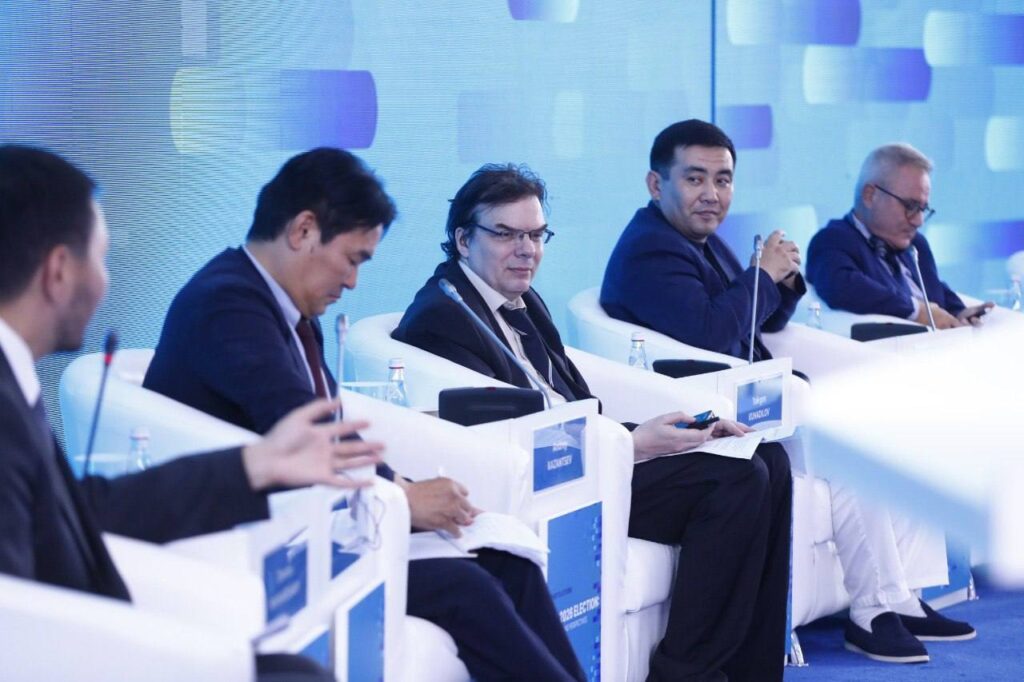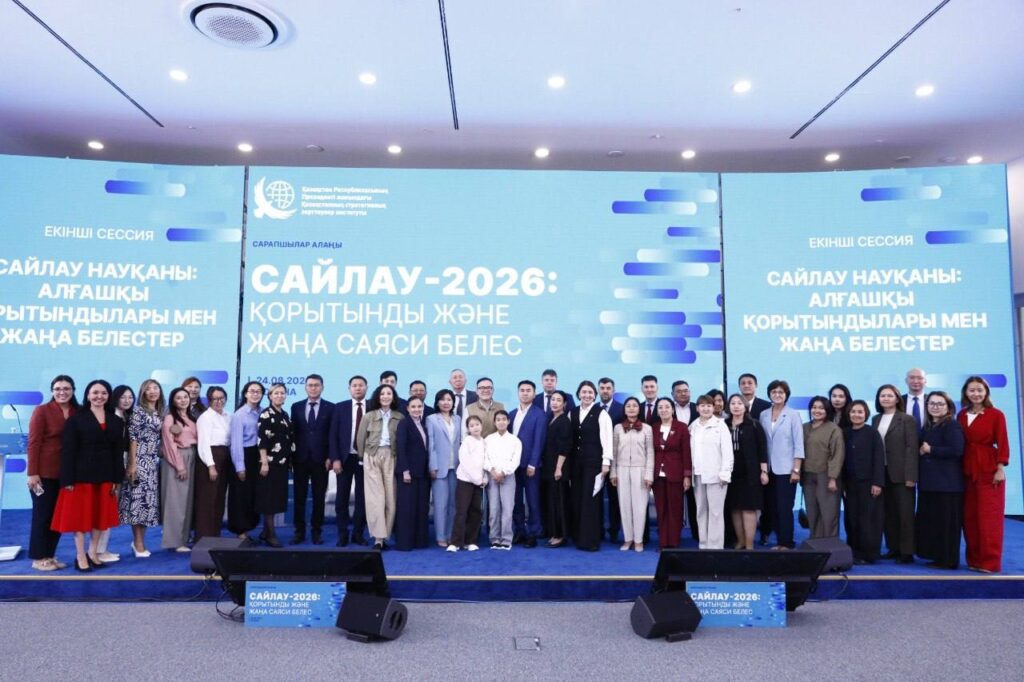
“The 2026 Election: Outcomes and Perspectives” was held in Astana. The meeting focused on the results of the first Kurultai elections and the further institutional transformation of Kazakhstan’s political system. The platform was organized by the Kazakhstan Institute for Strategic Studies under the President of the Republic of Kazakhstan.
The discussion was attended by political scientists from Kazakhstan and abroad, experts in electoral processes, representatives of research centers, public observers, and political communications specialists.
Platform participants noted that the August 23 elections were the first nationwide vote since the new Constitution came into force and a crucial stage in the practical implementation of constitutional reform. For the first time, Kazakhstani citizens directly elected the entire new unicameral Kurultai, based on party lists, within a single national electoral district.
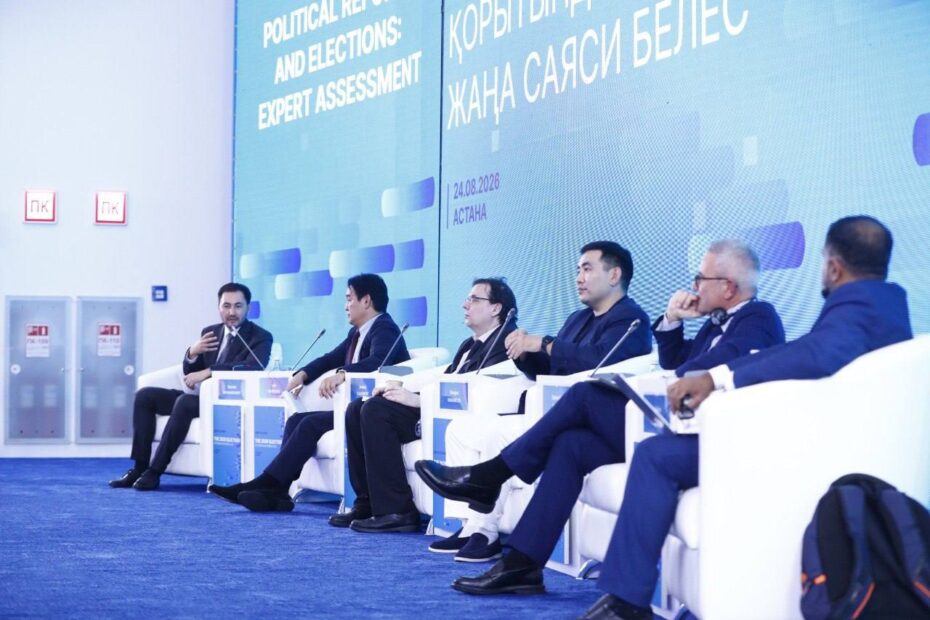
The expert platform’s work was organized into two thematic sessions. Participants in the first session, “Political Reforms and Elections: Expert Assessment”, discussed the results of public and international observation, the dynamics of electoral activity, the specifics of the campaign, and its significance for the country’s further political modernization.
Opening the expert discussion, Zhandos Shaimardanov, Director of the Kazakhstan Institute for Strategic Studies under the President of the Republic of Kazakhstan, noted that the recent elections should be viewed in the broader context of the implementation of constitutional reform and Kazakhstan’s transition to a new political and institutional model.
According to Zhandos Shaimardanov, the high voter turnout reflects the strong support among the Kazakhstani public for President Kassym-Jomart Tokayev’s political agenda.
“Almost three-quarters of voters participated in the formation of the new Kurultai. Now it’s important to understand how this electoral choice will be translated into the work of the new Kurultai, legislative priorities, and the day-to-day activities of political parties,” emphasized Zhandos Shaimardanov.
Tolegen Kunadilov, Chairman of the “Dauys” coalition of Public Observers, presented an assessment of the recent vote from the perspective of public observation. He discussed the main findings of monitoring the electoral process in the country’s regions, voter turnout, and the specifics of voting organization. He focused on compliance with established electoral procedures and standards, as well as enhancing the role of public observation as a tool for ensuring openness and transparency in elections.
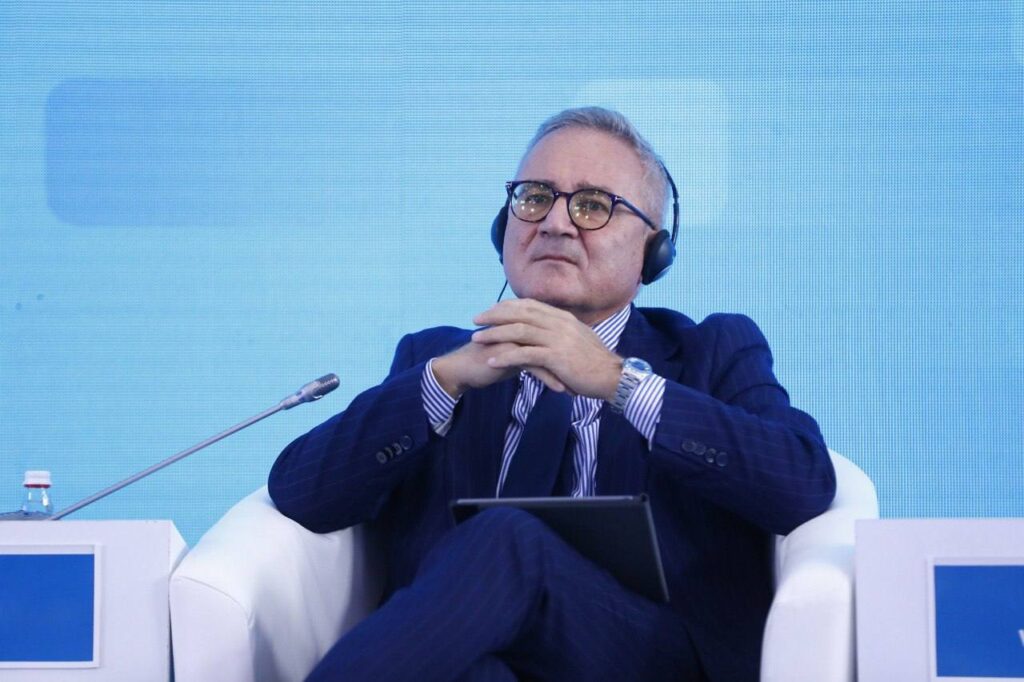
Domenico Palmieri, Secretary General of the Italian Institute for Asia, presented an international assessment of the elections. This is his third time observing elections in Kazakhstan, following the 2022 and 2023 campaigns. He assessed the high level of voter participation as one of the key indicators of the current campaign.
“The turnout rate of over 70% demonstrates a high degree of citizen electoral engagement and public interest in the formation of representative institutions. From a comparative perspective, this figure is particularly interesting: many European countries have seen a trend toward declining citizen participation in electoral processes. In this regard, Kazakhstan demonstrates a high level of political mobilization among voters,” noted D. Palmieri.
Particular attention was paid to the high level of electoral activity among citizens. Professor at Narxoz University Commenting on the turnout, which exceeded 74%, Andrey Kazantsev considered it in the context of public interest in political processes and citizens’ attitudes toward the ongoing transformations in the country. He believes the current elections must be analyzed as part of a broader transition from one institutional order to another.
“We are witnessing not just a change in the composition of Parliament, but a transition from one institutional order to another. The new constitutional model strengthens the role of political parties as key intermediaries between society and the state. Now, parties will have to compete on the content of their programs, offer alternative approaches to the country’s development, and represent real public interests,” noted A. Kazantsev.
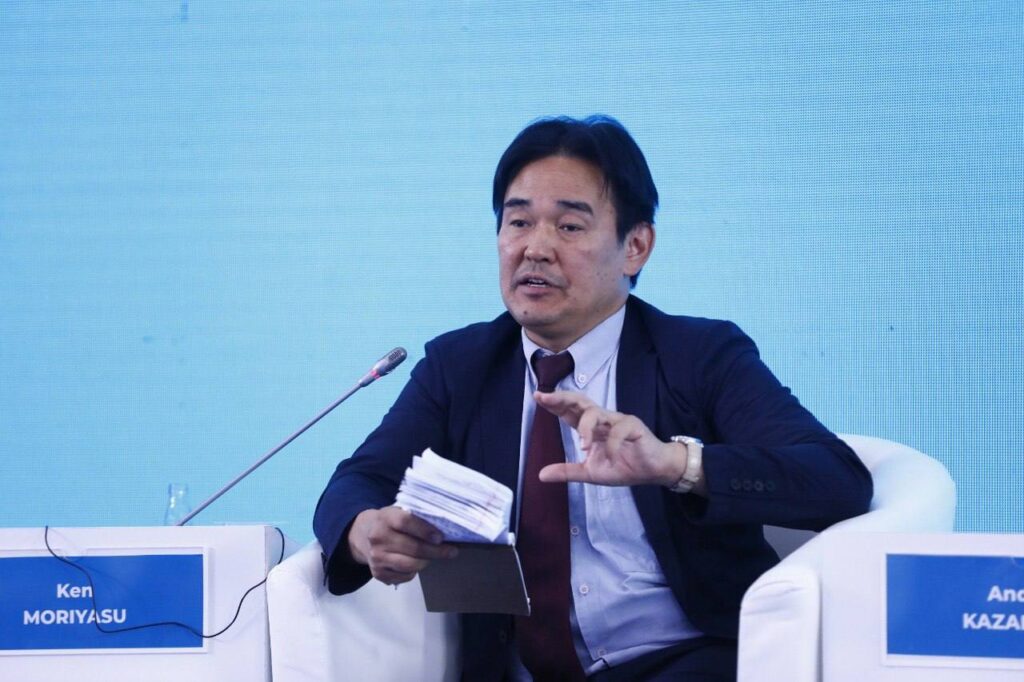
Ken Moriyasu, a Senior fellow at the Hudson Institute, examined the recent elections within a broader geopolitical context, characterized by intensifying competition and tensions between the world’s leading powers and the growing strategic importance of Central Asia. He believes that, as the international system transforms, a state’s ability to ensure domestic political stability while simultaneously pursuing a balanced foreign policy is particularly crucial.
Concluding the first session, the Editor-in-chief of The Geneva Times, an Expert in International Relations and Human Rights, Muiz Wahabdeen examined the recent elections from the perspective of Kazakhstan’s future institutional development. He believes that the democratic process is not limited to election day itself: its sustainability is determined by the level of public trust, the effectiveness of political representation institutions, and the existence of ongoing mechanisms for constructive dialogue between citizens and the state.
The expert placed particular emphasis on engaging young people in political processes and developing an understanding among the new generation of their potential to participate in the country’s development.
Following the first session, experts noted that the elections were an important stage in Kazakhstan’s institutional transformation. High electoral turnout and the development of political representation create the foundation for strengthening public trust, the sustainability of political institutions, and the country’s further modernization.
The second session, “Election Campaign: Preliminary Results and New Horizons,” focused on the voting results, citizens’ electoral choices, political party strategies, and the challenges facing the new Kurultai.
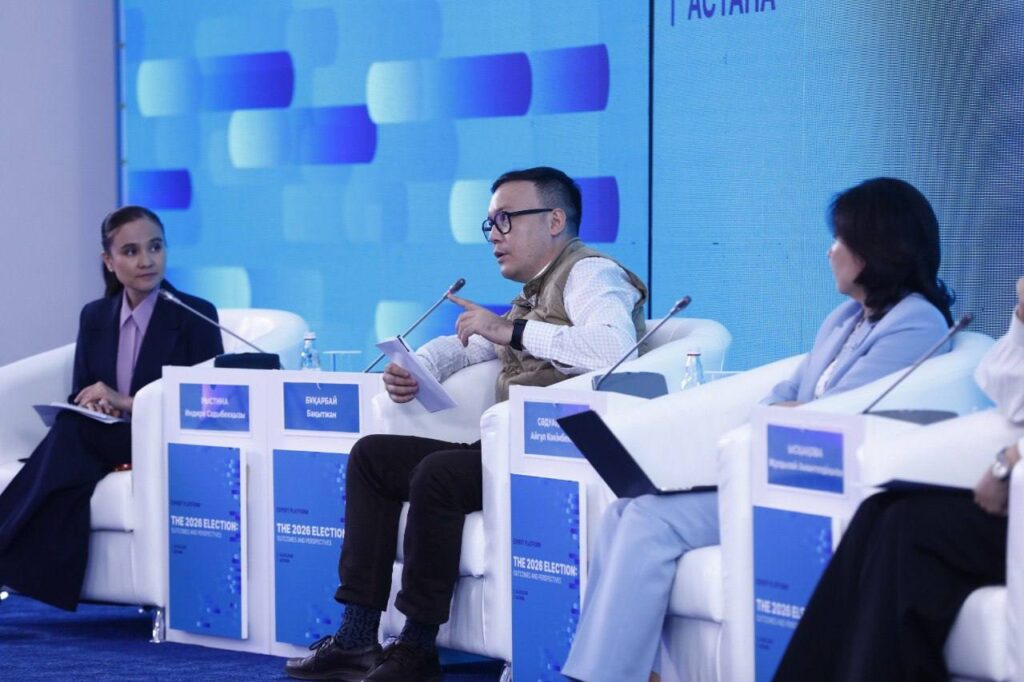
The session was moderated by political scientist, Vice-Rector and Member of the Management Board of the L.N. Gumilyov Eurasian National University Indira Rystina.
Political scientist, Founder of AmalBooks Publishing House Bakytzhan Bukharbay emphasized that the current campaign marks the transition from constitutional renewal to the practical implementation of a new state architecture based on increased government accountability, public participation, and the political agency of citizens.
“The unicameral Kurultai, the new system for its formation, the office of the Vice President, and the Kazakhstan People’s Council create a more balanced architecture of government based on a clear division of powers and mutual checks and balances,” noted B. Bukharbay.
Andrey Chebotaryev, Director of the “Alternativa” Center for Current Researches, outlined the key legislative priorities of the new Kurultai. He assessed that one of the systemic tasks will be further aligning national legislation with the provisions and standards of the new Constitution. Along with the legislative package inherited from the previous Majilis, an important focus will be the practical implementation of the election platforms of the political parties represented in the Kurultai. The expert highlighted judicial reform and the further development of local self-government as among the most significant areas.
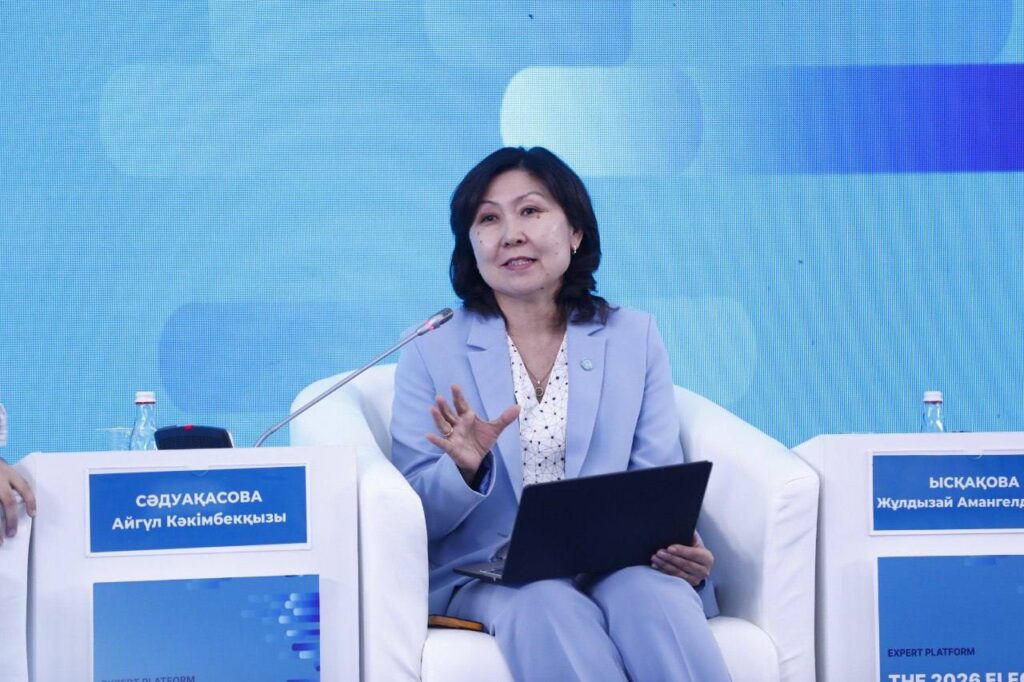
Aigul Sadvokasova, General Director of the Institute of Philosophy, Political Science, and Religious Studies, analyzed the logic of the electoral choice, comparing the dynamics of party ratings during the campaign with preliminary voting results. She noted that the current campaign took place in fundamentally new political conditions and was accompanied by several waves of sociological research. With the Adilet party firmly in the lead, the main intrigue centered on the distribution of subsequent positions and which political forces would overcome the 5% threshold. Meanwhile, the share of undecided voters steadily declined during the campaign.
Zhuldyzai Iskakova, Chairperson of the Management Board of the Kazakhstan Institute of Public Development, discussed the election results in the context of the transition to a proportional system and the further institutionalization of parties.
“The transition to a proportional system creates the preconditions for further strengthening political parties as key institutions representing public interests. The new model places higher demands on the parties themselves – on the quality of their party lists, the renewal of their leadership, and the professionalism of their candidates. Ultimately, the effectiveness of the proportional system will be determined by the quality and professionalism of the representation in the new Kurultai,” noted Zh. Iskakova.
A separate section of the discussion was devoted to the information dimension of the elections.
Mikhail Komissarov, Director of the Center for Analysis and Monitoring, noted that one of the key principles of information support for the election campaign was ensuring equal access of political parties to the media. The expert expressed hope that the equal conditions for media representation of parties will be appropriately assessed by international observers.
“One of the most notable features of the current campaign has been the unprecedented use of artificial intelligence technologies in electoral communications. This has not only expanded the possibilities of political communication but also highlighted new information risks, primarily those associated with the spread of deepfakes,” noted M. Komissarov.
Ruslan Bekarslanov, Head of the Center for Combating Disinformation at Central Communications Service under the President of the Republic of Kazakhstan, presented an analysis of fakes and manipulative content disseminated during the election campaign. He stated that a database of disinformation was created to systematically monitor the information space, enabling the identification of the main types and mechanisms of dissemination of false information.
“Deepfakes have been present in the information space, but at the same time, we’re seeing an increase in digital and media literacy among citizens. Users are increasingly recognizing the signs of manipulative content and critically assessing the information being disseminated,” noted R. Bekarslanov.
Following the expert discussion, participants noted that the first Kurultai elections served not only as a mechanism for forming a new legislative body but also as an important stage in the practical implementation of the new constitutional model. The campaign demonstrated new formats of party competition, public monitoring, political communication, and voter engagement.