On August 13 in Almaty, as part of the expert platform “Sailau-2026: The Nature of the Political Process,” an interactive QR survey was conducted, with participants at the Almaty meeting and representatives from the regions taking part.
The survey was organized by the Kazakhstan Institute for Social Development in accordance with its accreditation by the Central Election Commission. It allowed for the collection of assessments from the expert community directly during the meeting and for comparing them with the points raised during the presentations and discussion.
The results of the survey conducted during the first session were presented by the moderator of the expert platform, political scientist and publisher Bakytzhan Bukharbay.
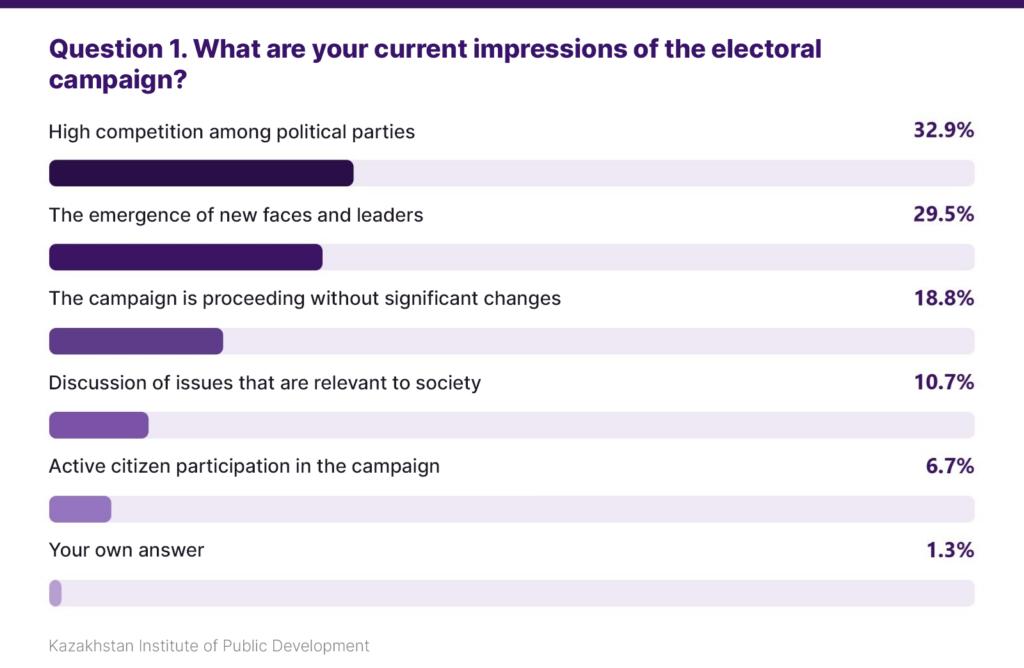
In response to the question “What are your current impressions of the election campaign?”, participants most frequently cited the high level of competition among parties – 32.9%. Another 29.5% noted the emergence of new faces and leaders.
18.8% believe that the campaign is proceeding without any noticeable changes. 10.7% of participants highlighted the discussion of issues relevant to society, while 6.7% cited active citizen participation in the campaign. Another 1.3% provided their own response.
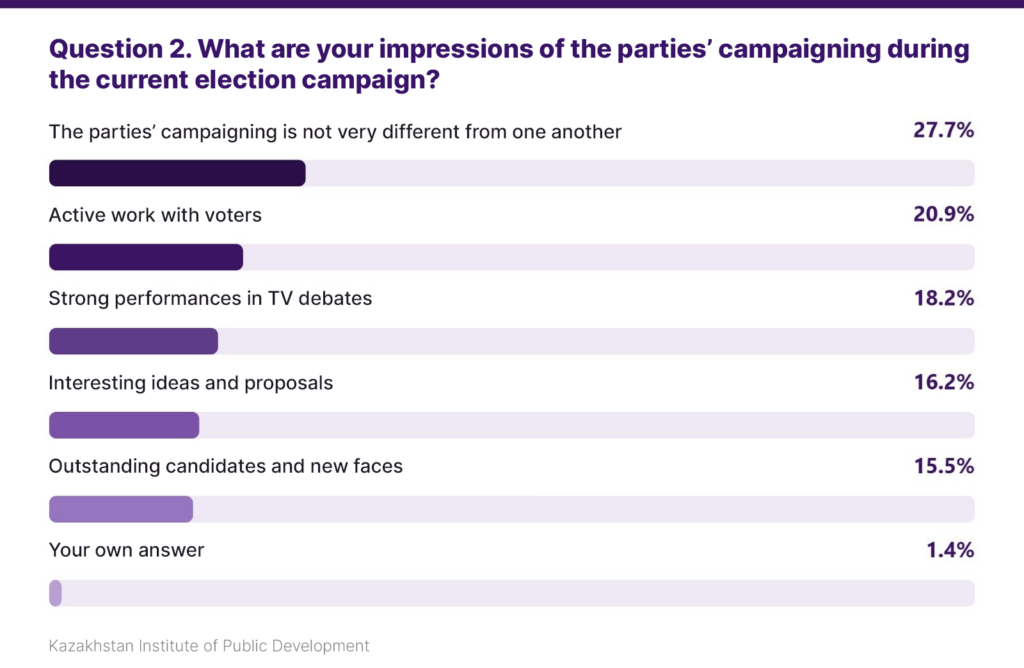
In response to the second question – “What are your impressions of the parties’ campaigning during the current election campaign?” – 27.7% of participants said that the parties’ campaigns differ little from one another. Active engagement with voters was noted by 20.9%, strong performances in debates by 18.2%, interesting ideas and proposals by 16.2%, and charismatic candidates and new faces by 15.5%. 1.4% chose their own answer option.
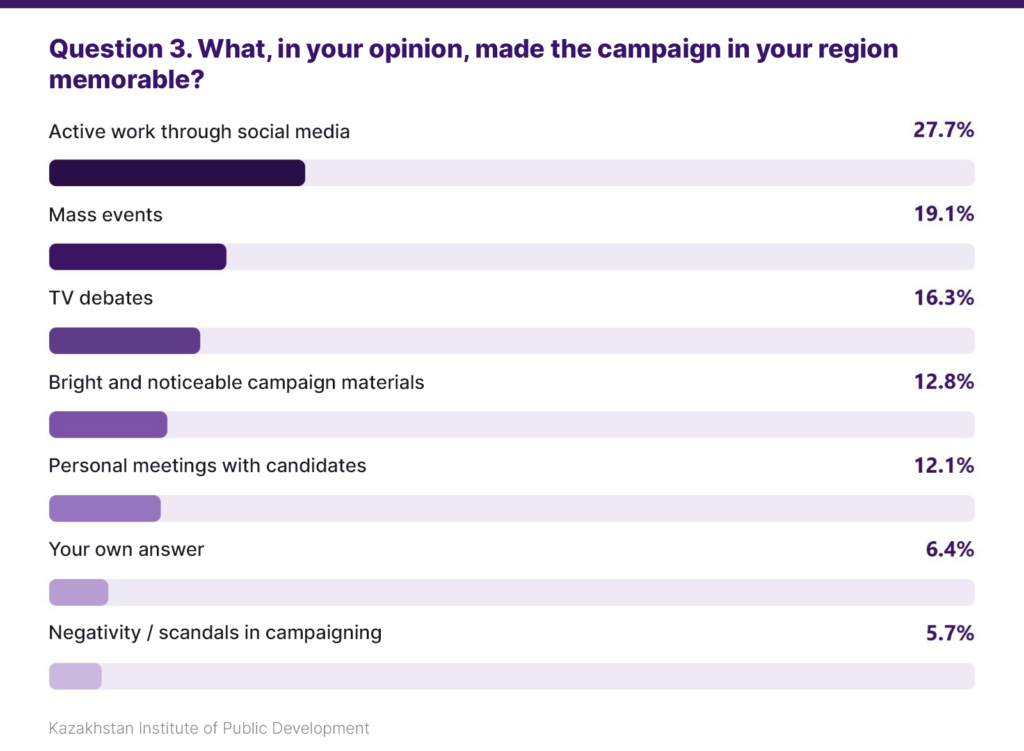
A separate question focused on what aspects of the campaign participants remembered most in their own regions. Active engagement on social media ranked first here – it was cited by 27.7% of respondents.
Another 19.1% noted mass events, 16.3% cited televised debates, 12.8% pointed to vivid and eye-catching campaign materials, and 12.1% mentioned personal meetings with voters. Negative campaigning and scandals were cited by 5.7%, while 6.4% offered their own response.
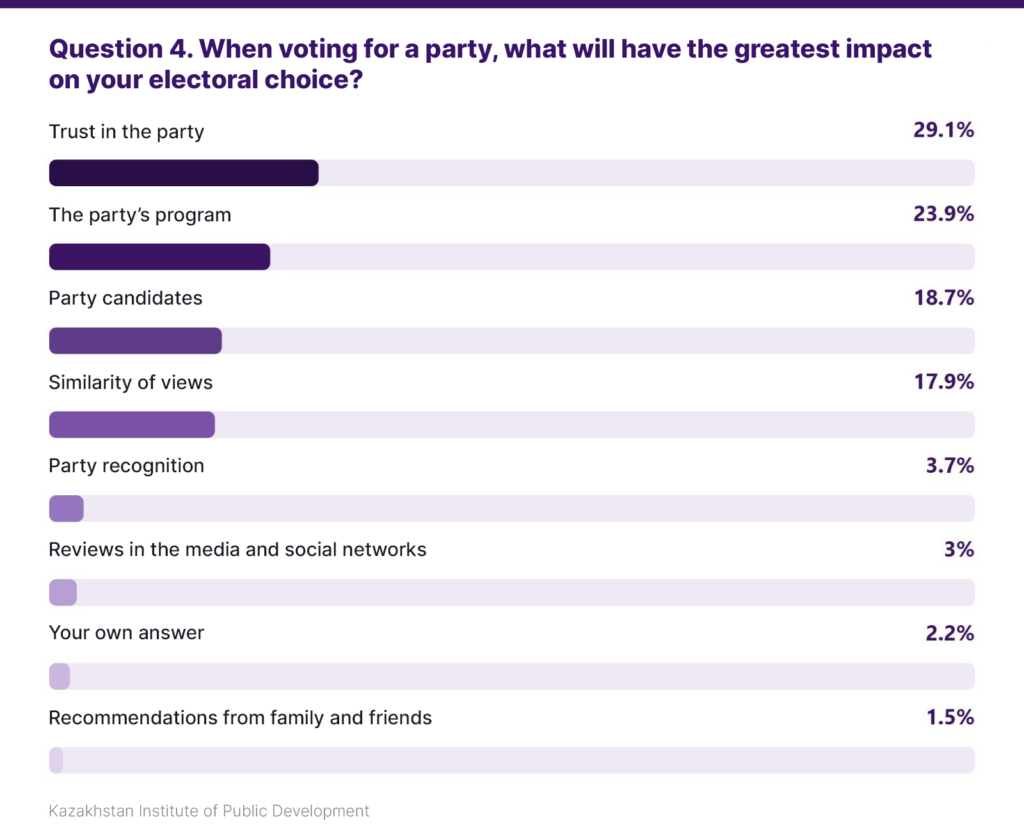
The fourth question focused on the factors that most influence voters’ choice when voting for a party. Trust in the party ranked first, at 29.1%. The party’s platform was cited as the main factor by 23.9% of participants, the party’s candidates by 18.7%, and shared views by 17.9%.
Participants cited party recognition much less frequently – 3.7% – as well as media and social media coverage – 3% – and recommendations from family and friends – 1.5%. Another 2.2% selected their own answer.
The survey results highlighted several distinctive features of the current campaign. Among these, respondents noted intense competition between parties, the emergence of new faces, and active engagement with voters. At the regional level, social media has become the most prominent campaign channel, alongside mass rallies, televised debates, and one-on-one meetings. At the same time, trust in the party, its platform, its candidates, and the alignment of views are the primary factors influencing voters’ choices.