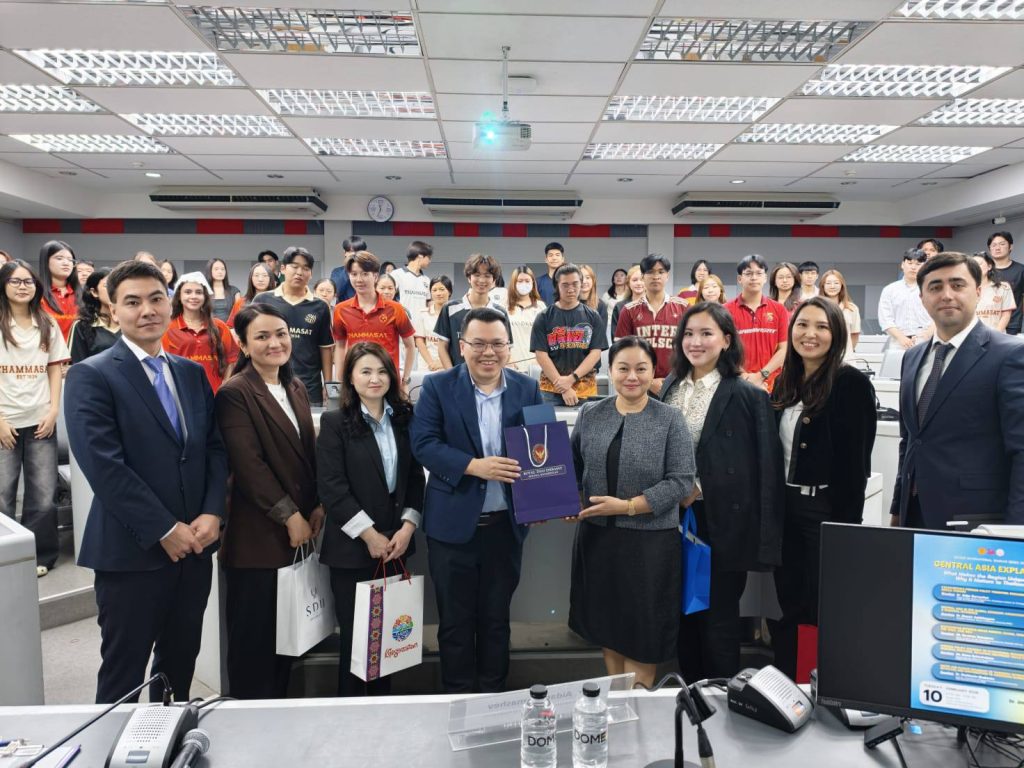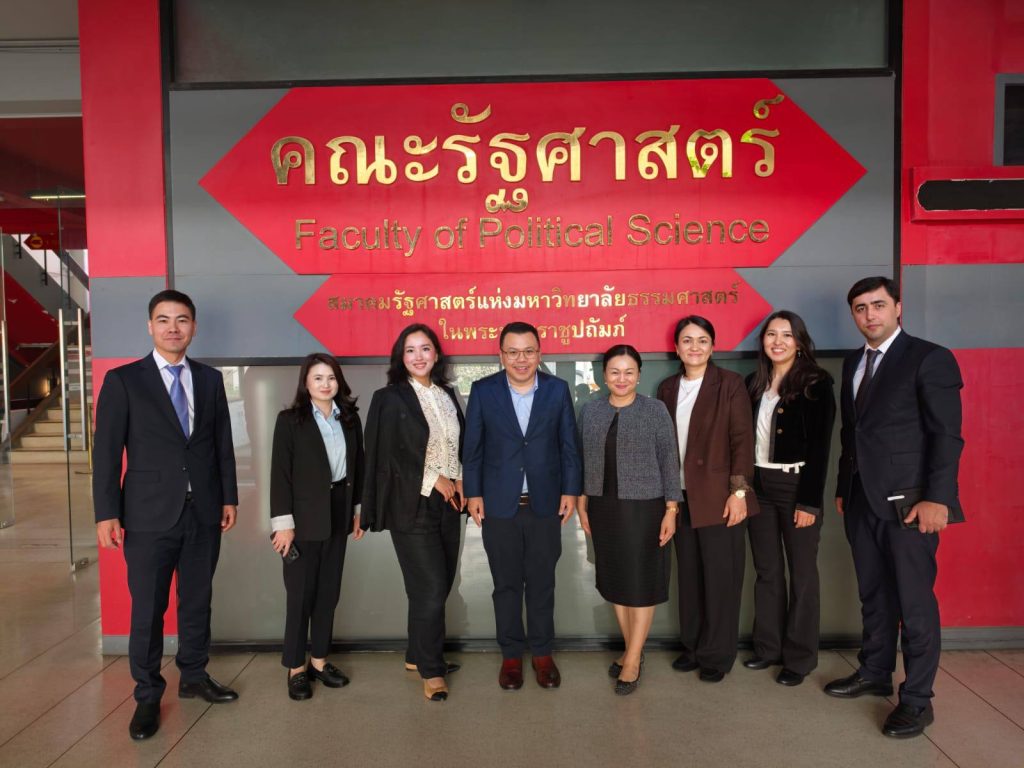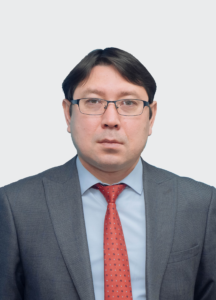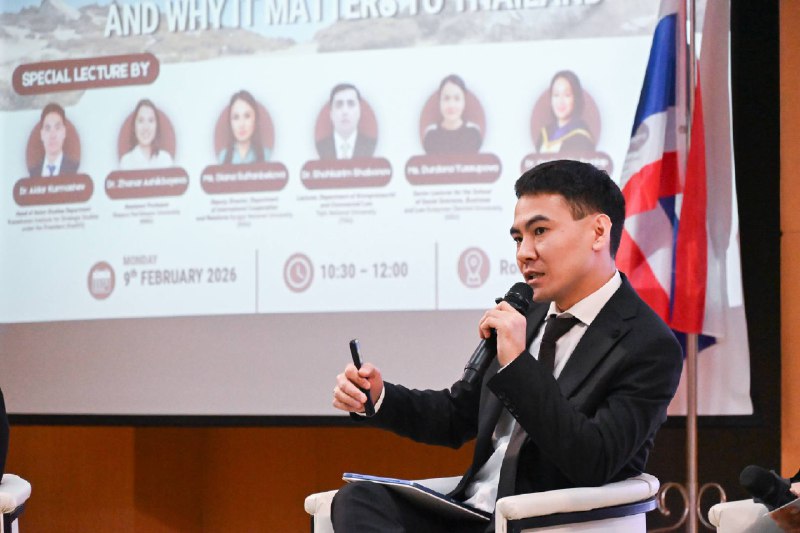
As part of a working visit to Thailand, undertaken at the invitation of the Ministry of Foreign Affairs of the Kingdom of Thailand, Aidar Kurmashev, Head of the Asian Studies Department at the Kazakhstan Institute for Strategic Studies under the President of the Republic of Kazakhstan (KazISS), delivered a series of lectures and expert presentations at several leading universities in the country and took part in a thematic expert roundtable with representatives of Thai academic and analytical centers.
The presentations focused on key priorities of Kazakhstan’s foreign policy, the transformation of Central Asia from a post-Soviet space into an emerging region with growing agency, and the role of middle powers in a fragmenting global order. Particular attention was paid to the logic of “selective engagement” and institutional hedging, which characterizes the foreign policy strategies of both Kazakhstan and Thailand.
During the university lectures, participants discussed demographic and socio-economic trends in Central Asia, regional risks and cooperation priorities, as well as prospects for expanding ties between Central Asia and Southeast Asia in education, science, logistics, and humanitarian exchanges. Thai students and faculty expressed strong interest in Kazakhstan’s experience as a state pursuing a balanced and pragmatic foreign policy among competing centers of power.
The presentations also addressed issues of Kazakhstan’s political modernization. Mr. Kurmashev outlined the key parameters of the constitutional reforms being implemented in the country, emphasizing their importance for strengthening checks and balances, expanding representative institutions, and enhancing the resilience of public governance. It was noted that these reforms are aimed at institutional renewal and the development of a more inclusive and balanced political system, which is of interest for comparative research within the Asian academic community.
As part of the expert roundtable with representatives of Thai research institutes and universities, an in-depth exchange of views took place on the role of middle powers in the international system, interactions between Eurasia and the Indo-Pacific region, and potential avenues for expanding Kazakhstan–Thailand academic and expert cooperation.
Following the meetings, the parties reaffirmed their mutual interest in developing sustainable professional contacts, conducting joint research, and organizing future expert events.
KazISS views academic and expert diplomacy as an important element in promoting Kazakhstan’s analytical and intellectual presence in Asia and strengthening dialogue with key partners in the region.