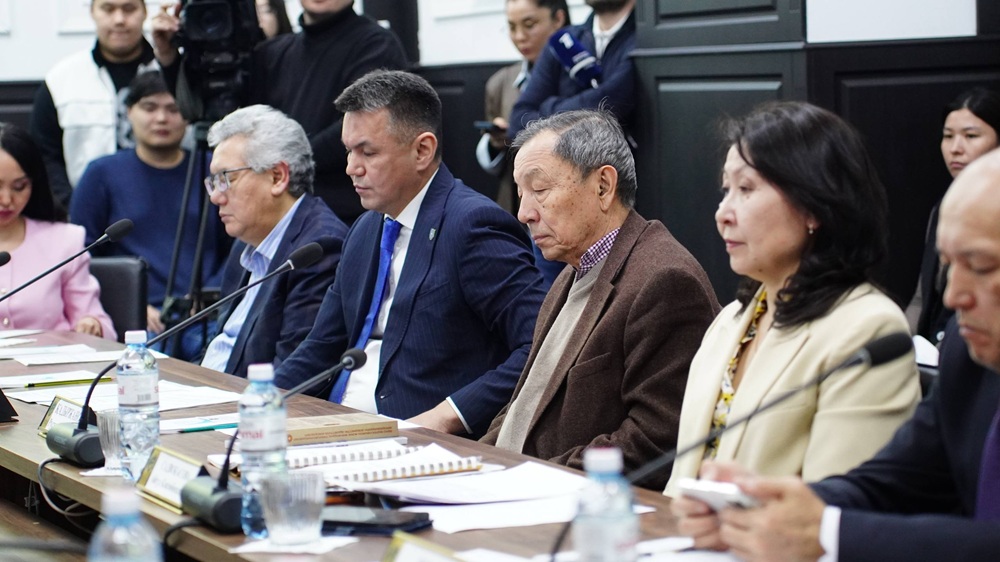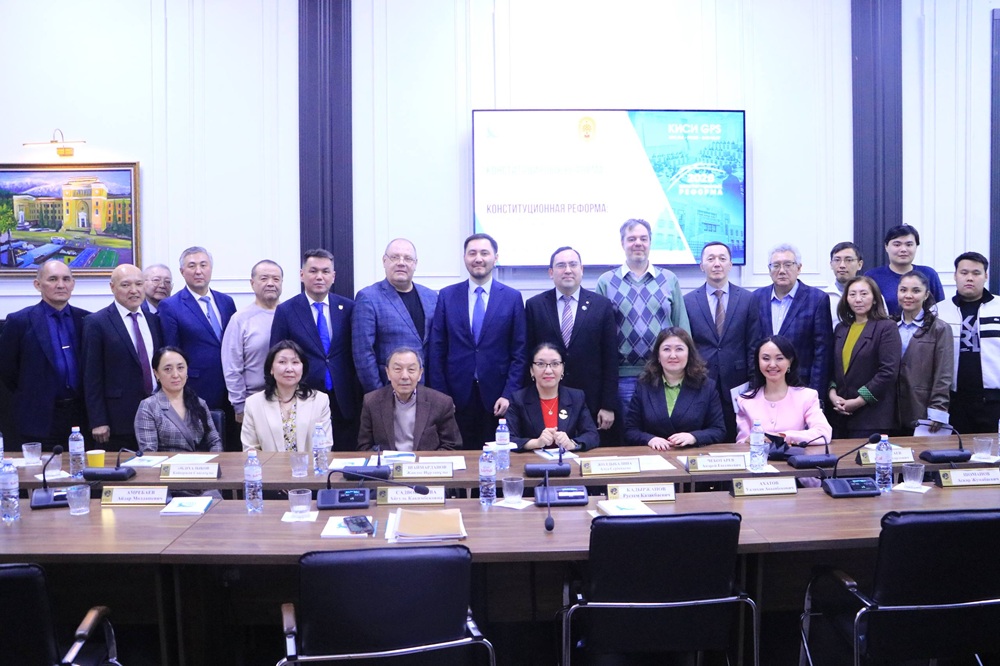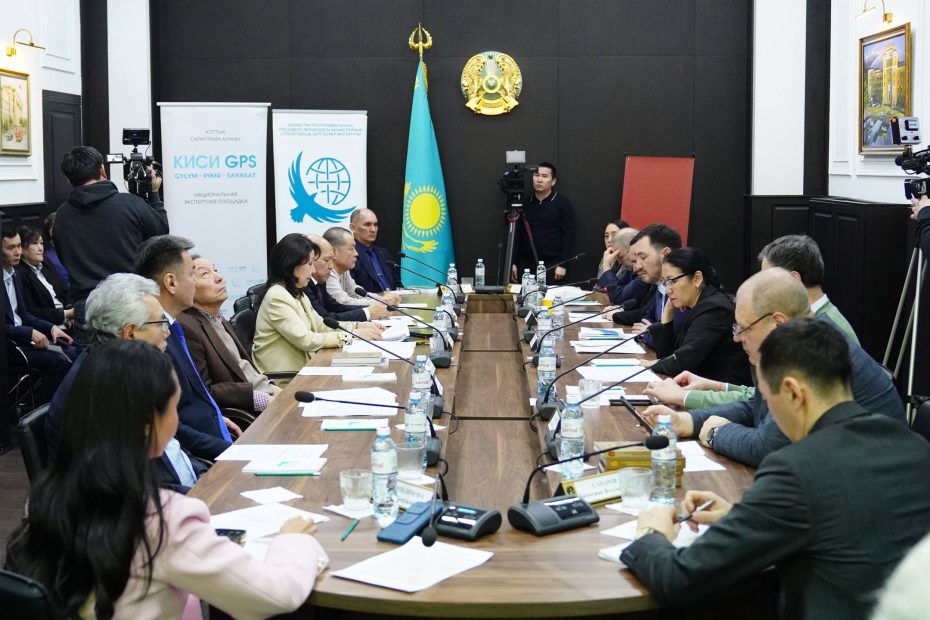
A discussion on the draft new Constitution and its significance for further transformation of the state took place in Almaty at the National Expert Platform “KazISS GPS: Gylym. Pikir. Sayasat”.
The discussion was organized by the Kazakhstan Institute for Strategic Studies (KazISS) under the President of the Republic of Kazakhstan and the Institute of Philosophy, Political Science and Religious Studies (IPPRS) of the Science Committee of the Ministry of Science and Higher Education of the Republic of Kazakhstan. The discussion was moderated by Alua Zholdybalina, Deputy Director of KazISS under the President of the Republic of Kazakhstan.
The expert discussion focused on key provisions of the draft new Constitution, their impact on strategic priorities and the value framework of the state and society.
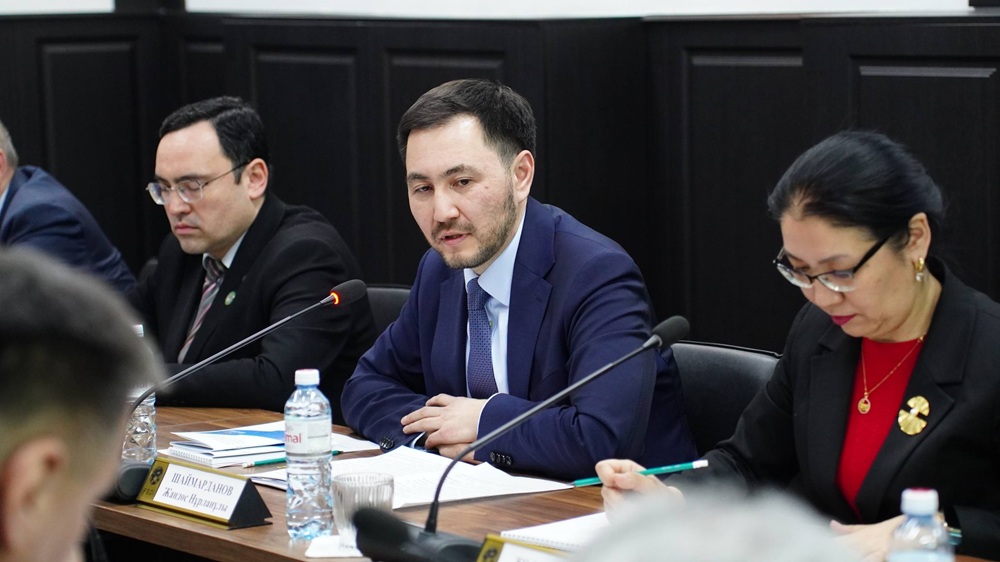
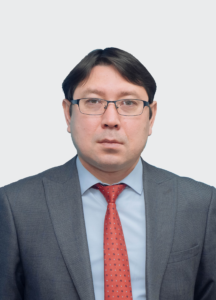
Zhandos Shaimardanov, Director of KazISS, underlined that the draft Constitution was a result of in-depth professional expertise and broad public dialogue. As a member of the Constitutional Commission, he noted a high level of transparency in its work: during 12 open sessions, which were broadcast live, more than 10,000 proposals from citizens were reviewed.
Zh. Shaimardanov pointed out that the draft new Constitution is aimed at strengthening the people-centred nature of the state.
“The current stage of Kazakhstan’s constitutional development marks a transition to a fundamentally new model of a people-centred state. In the Preamble, human rights and freedoms are stipulated as the highest priority and the core principle of the Constitution. The concepts of Justice, Law and Order, as well as respect for nature, have been granted direct constitutional status, which sets new benchmarks for law enforcement practice”, noted the director of KazISS.
He also underlined that a number of key provisions were a direct response to the demands of civil society. At the initiative of the public, provisions on the status of national currency – tenge – have been included in the text, the position of the state language has been strengthened, and mechanisms for the accountability of public authorities have been fixed, including guarantees of compensation for harm caused by unlawful decisions, actions or omissions of state bodies.
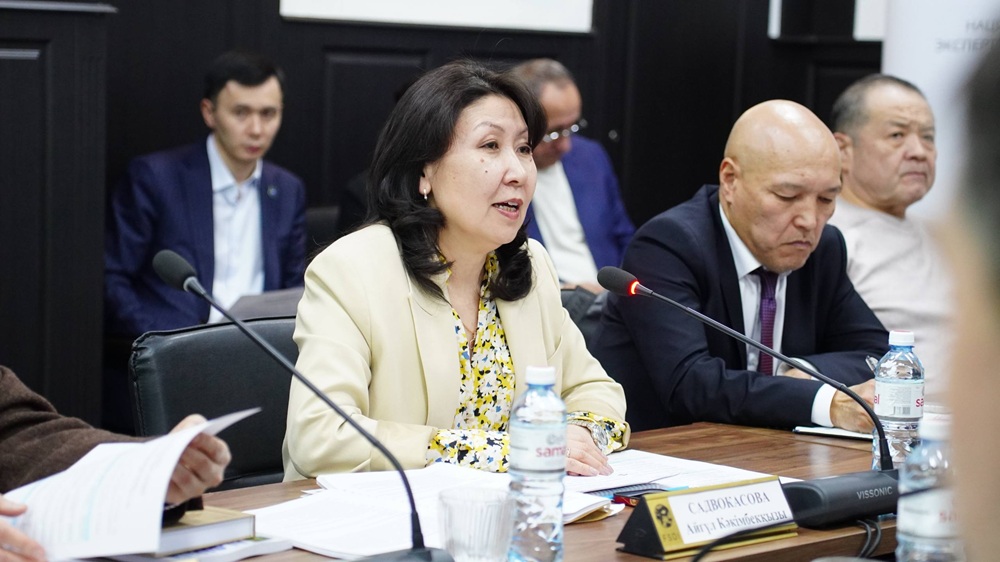
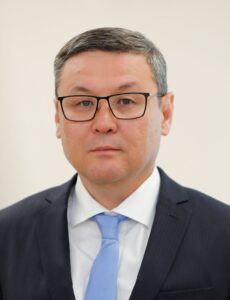
Aigul Sadvokasova, General Director of the Institute of Philosophy, Political Science and Religious Studies, noted that enshrining the secular nature of education in the constitution is an important step towards strengthening the rule of law.
According to her, the education system shall remain a neutral and open environment where priority is given to scientific knowledge, academic freedom and development of critical thinking.
“In today’s world, it is education and science that shape a nation’s intellectual potential, foster innovative development and enhance the country’s competitiveness. Enshrining these principles in the constitution will ensure the sustainability of education policy, protect the rights of students and teachers, and create conditions for development of scientific research,” underlined A. Sadvokasova.
She also highlighted the importance of a people-centred approach: public policy shall place the individual at its heart – their dignity, freedom of choice, access to quality education and opportunities for self-fulfilment.
In her view, education and science are key instruments for unlocking human potential and fostering a responsible civil society.
Andrei Chebotarev, Director of the Alternativa Centre for Contemporary Studies, noted that developing the draft new Constitution was a logical continuation of President Kassym-Jomart Tokayev’s course towards political modernization.
He reminded that on September 6, 2019, at the first meeting of the National Council of Public Trust, the Head of State outlined the sequence and phasing of reforms.
“The new Constitution will be adopted by a national referendum. This marks a new stage in the development of Kazakhstani society and the state, the quality of which will largely depend on participation of the majority of citizens and interaction between them and the state,” the expert remarked.
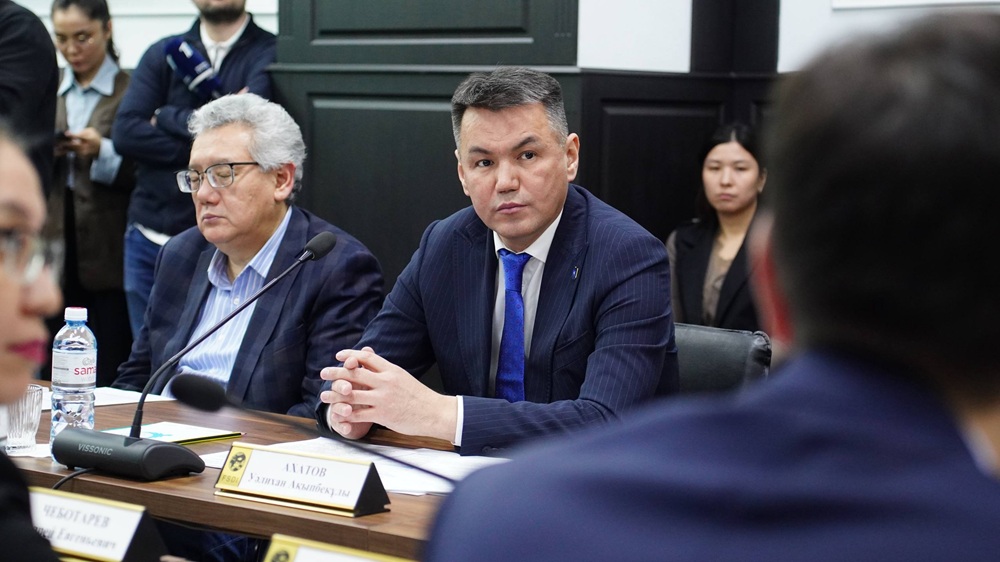
Ualikhan Akhatov, Dean of the Faculty of Law at Al-Farabi Kazakh National University, highlighted the draft’s value-based and institutional innovations.
“One of the key innovations is the creation of Halyk Kenesy (People’s Council), which is intended to serve as a ‘golden bridge’ between the people and the state. Citizens’ appeals and proposals will be reviewed from a legal perspective, formalized through appropriate mechanisms and forwarded to the relevant authorities. This is in line with the concept of a “responsive state”, noted U. Akhatov.
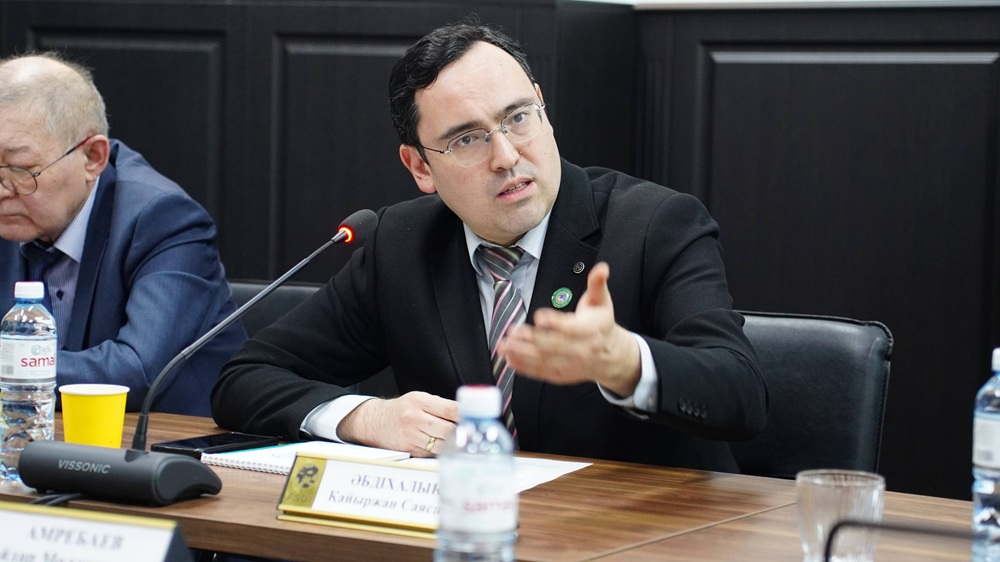
Kayrzhan Abdyhalykov, Chairman of the Almaty Civic Alliance, also highlighted the significance of the Halyk Kenesy (People’s Council) institution expressing the view that it has the potential to become a body of genuine popular representation.
“It is important that, alongside the right to initiate legislation, the Halyk Kenesy (People’s Council) will be granted a constitutional status. This takes the public consultative body to a qualitatively new level,” noted K. Abdyhalykov.
Aidar Amrebayev, Head of the Centre for Comparative Political Studies at the Institute of Philosophy and Law, underlined the openness and inclusivity of the process of drafting the new Constitution.
“Whilst the 1995 Constitution was drafted by a small group of legal experts, we have now reached a stage of maturity where society is involved in shaping the Basic Law. This gives the new version of the Constitution a truly popular character,” noted A. Amrebayev.
In conclusion of the discussion, the participants agreed that the draft new Constitution reflects not only institutional changes, but above all a renewal of the value foundation of statehood. A people-centred approach, the priority of rights and freedoms, secularism, development of science and innovation shape the course of a mature state.