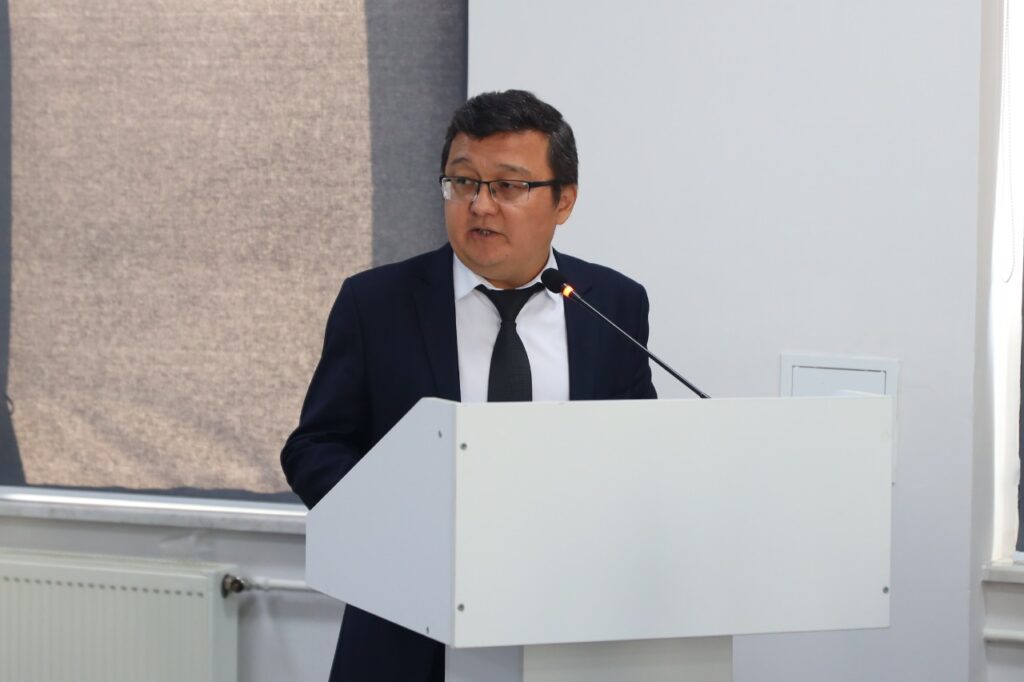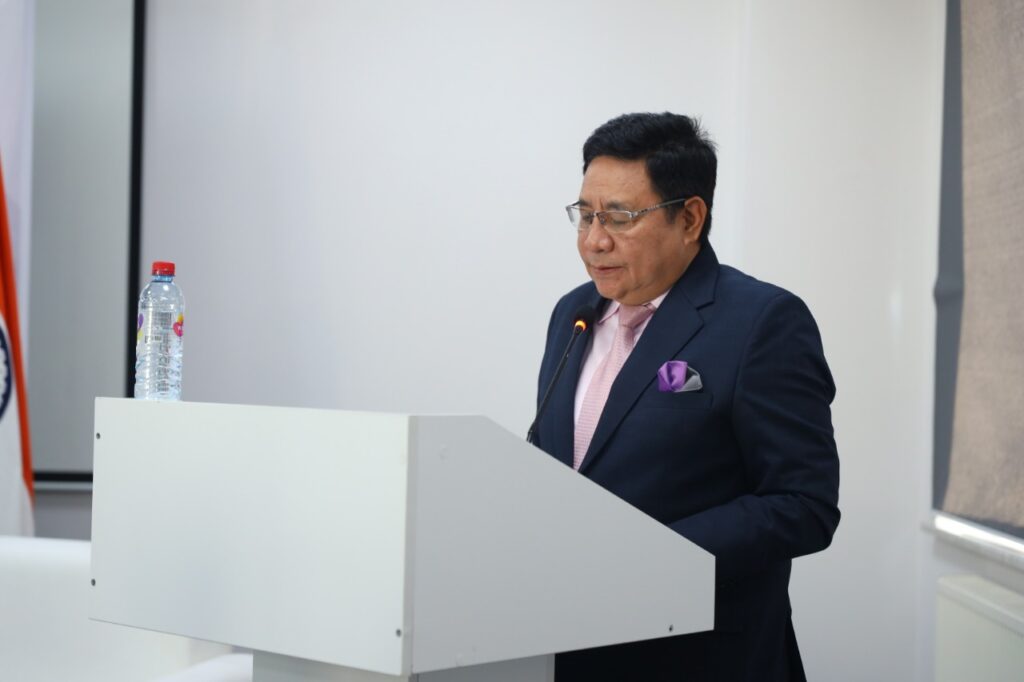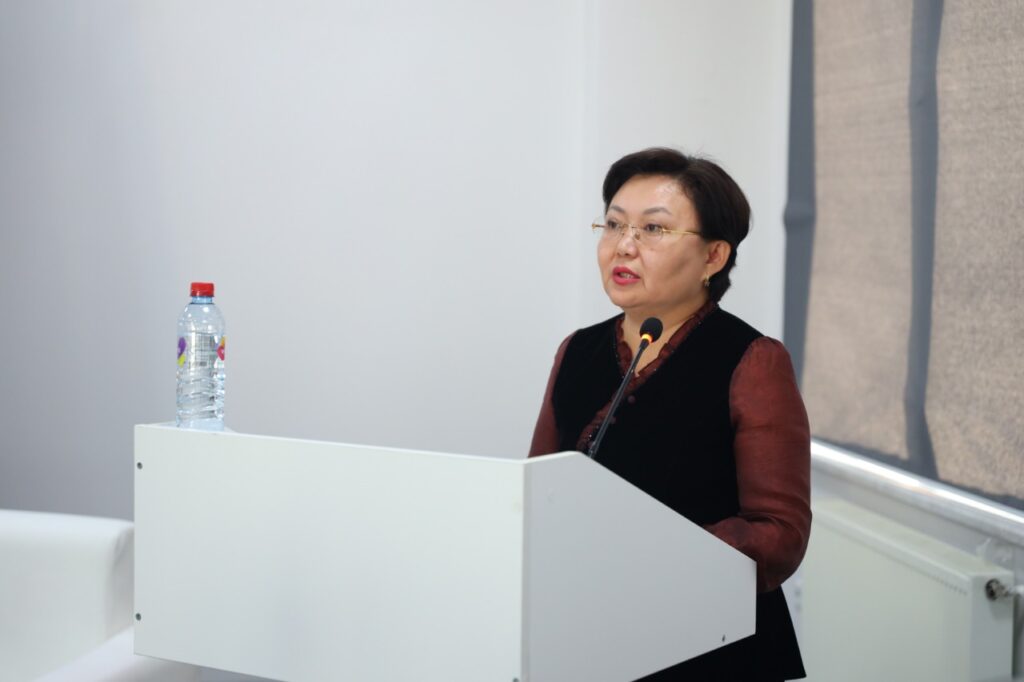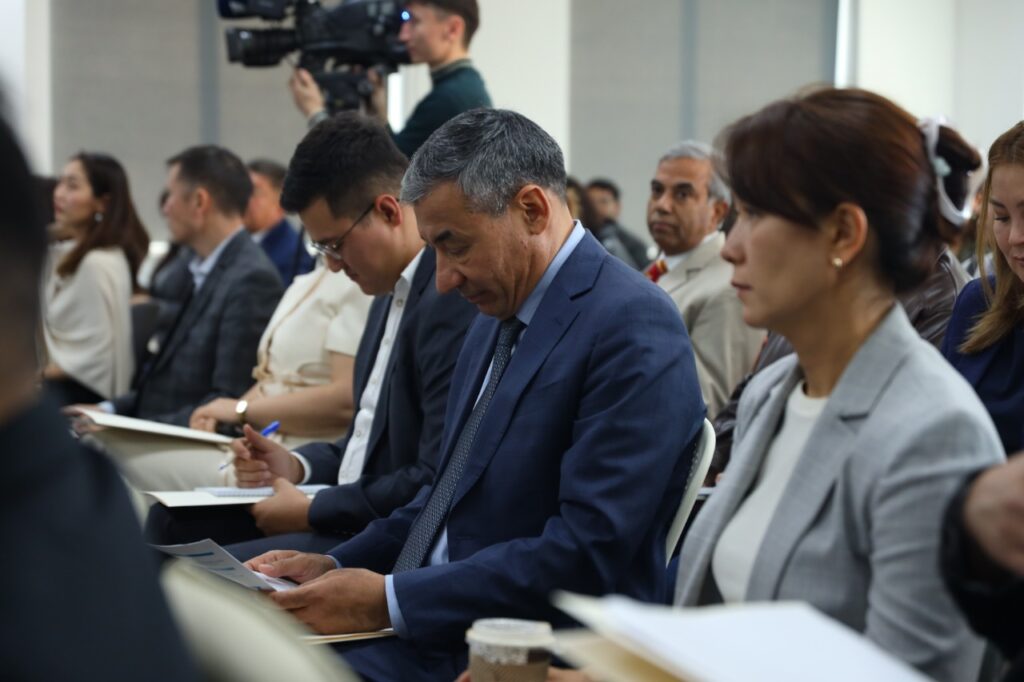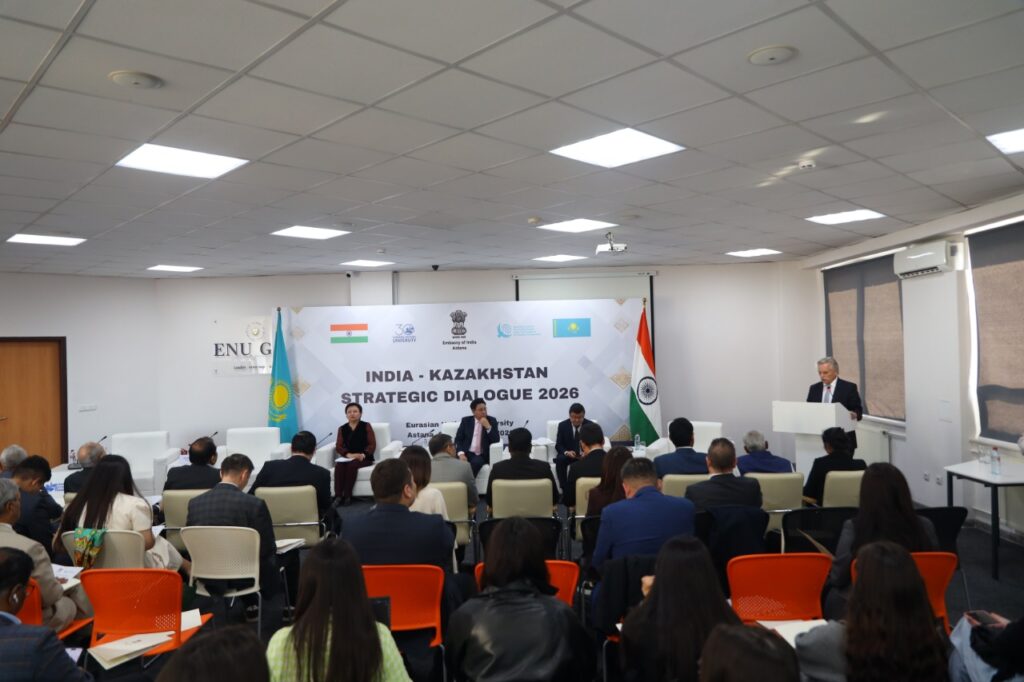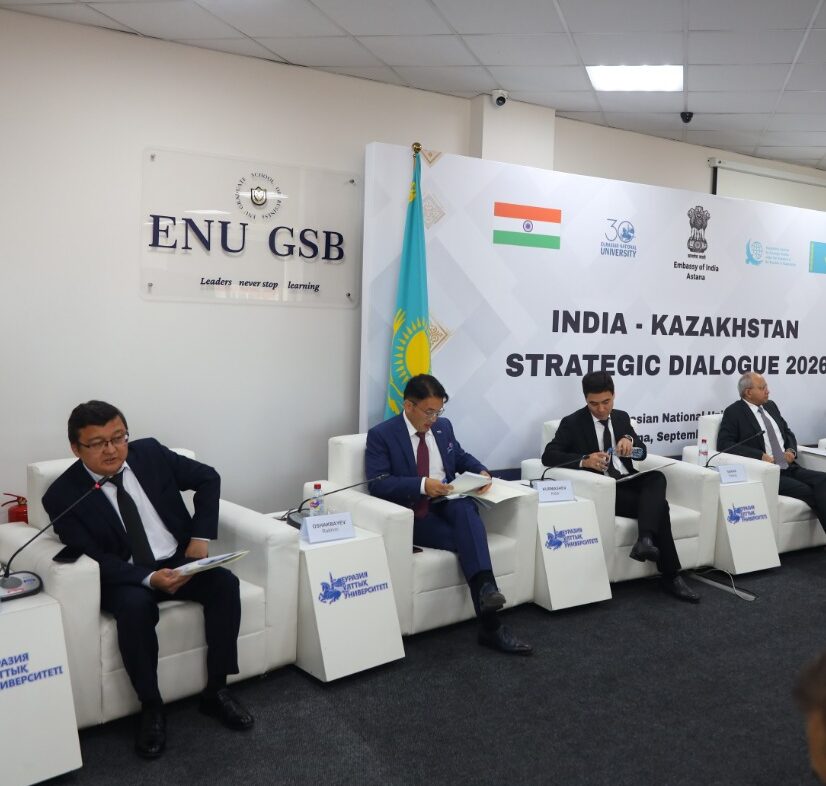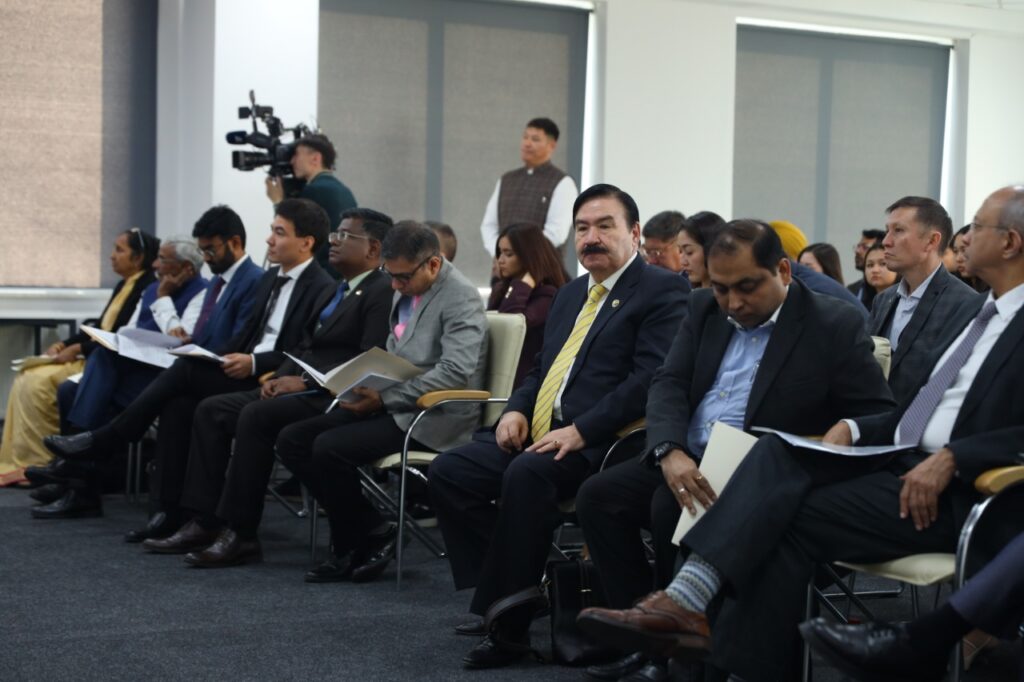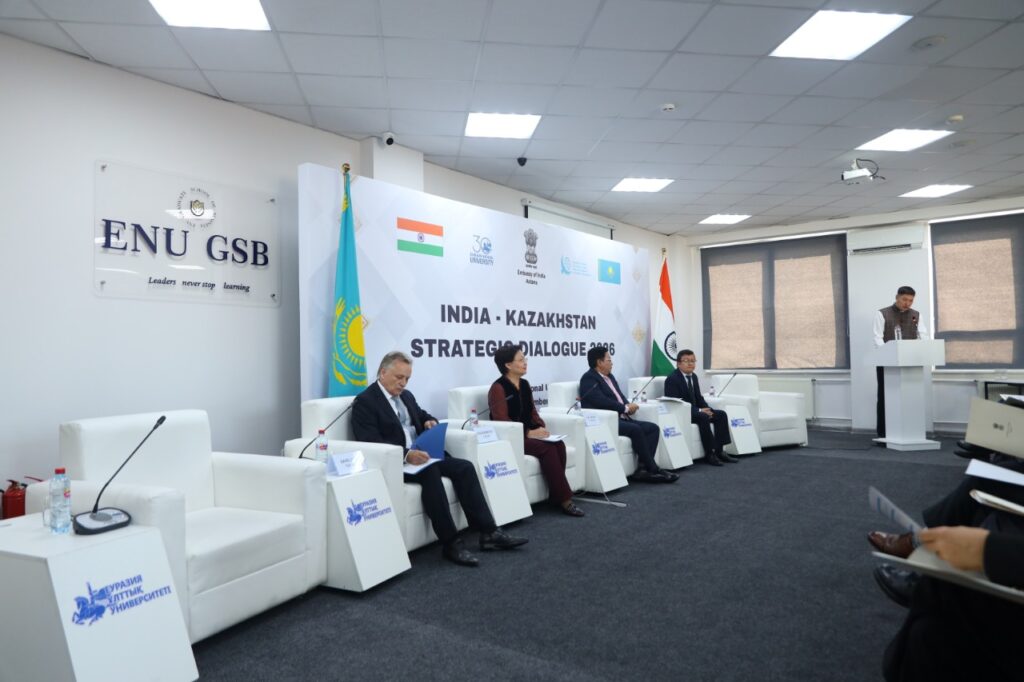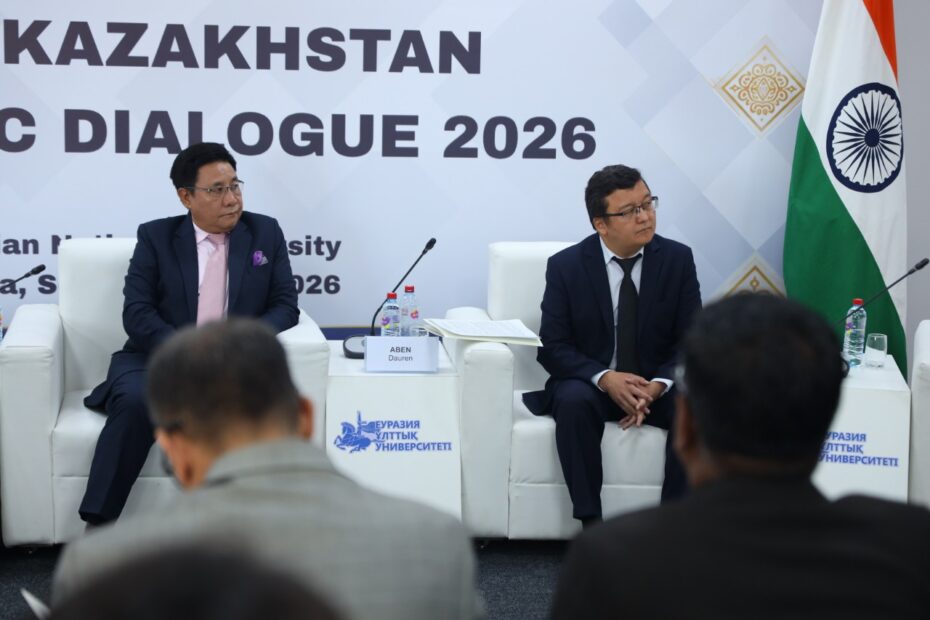
On September 24, 2026, Astana hosted the Kazakhstan–India Strategic Dialogue 2026, organized by the Embassy of the Republic of India in the Republic of Kazakhstan. The event was co-organized by the Kazakhstan Institute for Strategic Studies under the President of the Republic of Kazakhstan (KazISS) and L.N. Gumilyov Eurasian National University (ENU), which hosted the event. The dialogue brought together diplomats, experts from think tanks, and representatives of the academic communities of the two countries.
The opening remarks were delivered by H.E. Mr. Sailas Thangal, Ambassador Extraordinary and Plenipotentiary of India to Kazakhstan; Dauren Aben, Deputy Director of KazISS; Lyazzat Tolegenkyzy, Member of the Management Board and Vice-Rector for Social and Infrastructure Development of ENU; and Sergey Savelyev, representative of the Foreign Policy Research Institute of the Ministry of Foreign Affairs of the Republic of Kazakhstan.
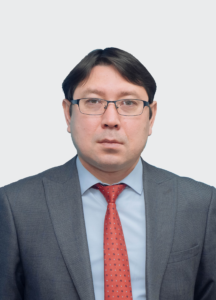
In his remarks, Dauren Aben emphasized the strategic importance of Kazakhstan–India relations amid the transformation of the international system and the need to translate the high level of political engagement into more extensive economic cooperation. Particular attention was paid to expanding transport and logistics connectivity, diversifying trade, cooperation in energy, critical minerals and emerging technologies, as well as strengthening humanitarian and interregional ties. He noted that Kazakhstan and India can make a significant contribution to strengthening links between Central and South Asia and to building a more resilient and inclusive Eurasian space.
The first session focused on the role of the two countries in strengthening regional stability and economic integration in a multipolar world. Experts discussed the outcomes of more than three decades of bilateral partnership, cooperation within multilateral institutions, the role of expert diplomacy, joint peacekeeping activities, and factors affecting trade and investment ties.
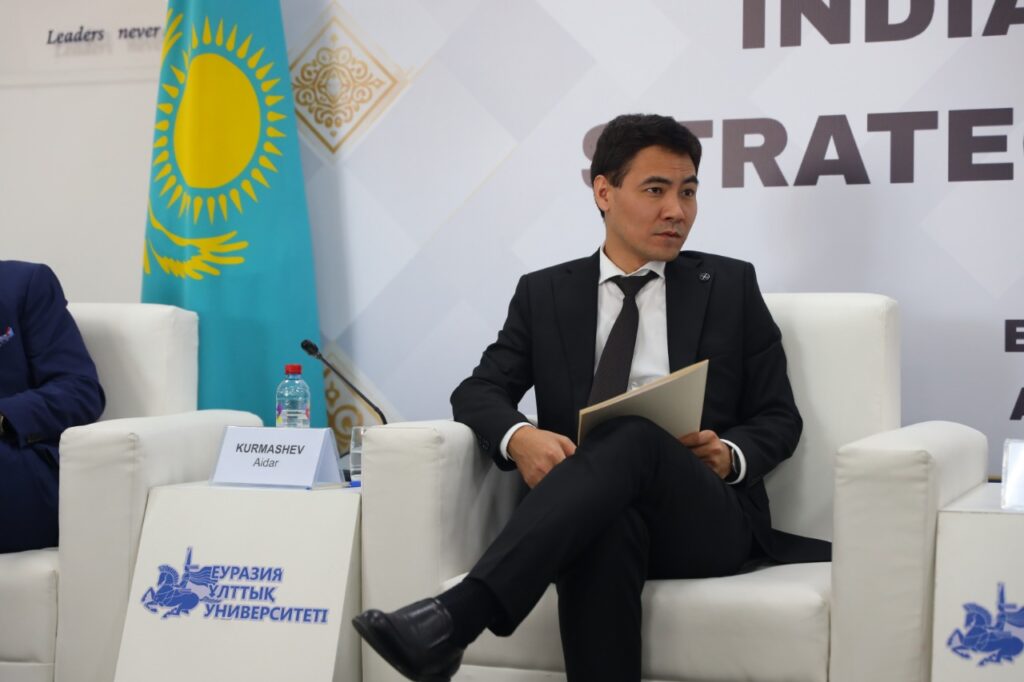
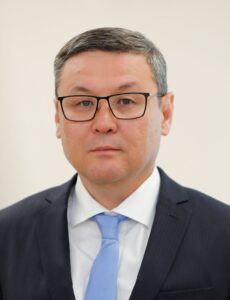
Aidar Kurmashev, Head of the Asian Studies Department at KazISS, highlighted the opportunities and limitations of expert diplomacy, stressing the need to distinguish expert-level discussions from formal intergovernmental coordination. He also proposed developing a dedicated track for thematic meetings between researchers and business representatives aimed at addressing practical issues related to trade, financial settlements and logistics.
The second session examined practical aspects of the partnership, including the prospects for transport corridors, cooperation in energy and critical raw materials, the potential of tourism and public diplomacy, and the role of the media in strengthening bilateral relations.
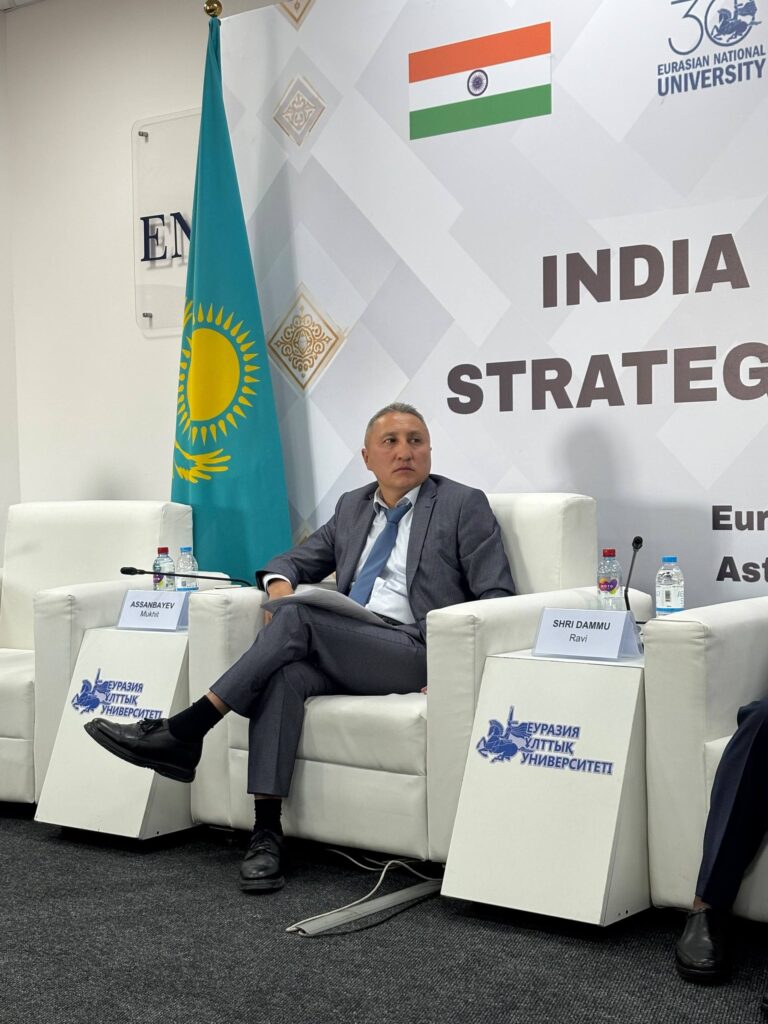
Speaking at the session, Mukhit Assanbayev, Chief Expert at the International Security Department of KazISS, noted that the trajectory of the two countries’ partnership over the next five to ten years will depend largely on removing infrastructure, tariff and payment-related constraints. As long as high transit costs, lengthy delivery times and sanctions regimes remain in place, he said, growth in bilateral trade will be driven primarily by major resource-related contracts.
At the conclusion of the discussions, participants highlighted the significant potential for further development of Kazakhstan–India cooperation and the need for closer engagement among the expert, academic and business communities of the two countries. The Kazakhstan–India Strategic Dialogue provided a platform for an exchange of views on key areas of the bilateral agenda and for discussing practical opportunities to further deepen the partnership.