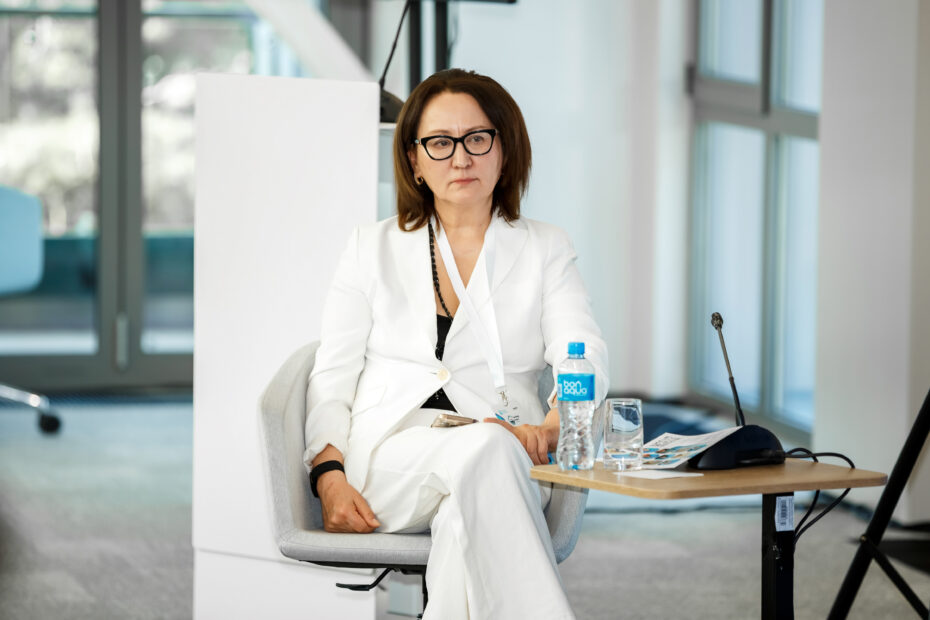

Aigul Zabirova,
Chief Research Fellow at the Kazakhstan Institute
for Strategic Studies under the President of the Republic of Kazakhstan
How personal ties across regions help Kazakhstanis feel part of one country
Republic Day invites us to reflect not only on how Kazakhstan’s statehood took shape but also on what unites people living in different parts of the country. We share one state, yet we live in different cities and regions, with different habits, living conditions and daily routines. So, what helps us feel part of one society? And what role do ordinary human relationships play in this?
Many Kazakhstanis have relatives or friends in other regions. Someone went to study in Almaty and stayed. Someone moved to Astana for work. Someone started a family in another city. People visit one another, meet at family celebrations and keep in touch across the distance. This is how thousands of personal stories come to bind different parts of the country together. But how far does having relatives or friends in another region strengthen a person’s sense of commonality with the people who live there? In one of the surveys commissioned by KISI, respondents were asked, ‘With residents of which regions of Kazakhstan, in your view, do people in your region have much in common?’[1].
When People Grow Closer
The results were striking. When a person has relatives or friends in another region, in almost one case out of three (29.9%) they believe that residents of the two regions have much in common. Without such ties, the figure is only 6.9%, more than four times lower. Of course, we cannot claim that relatives and friends are what create a sense of national belonging. Perhaps it is simply easier to maintain relationships with those ones already sees as close. Yet the link between the two is clear. People with relatives or friends in another region are far more likely to see its residents as close to themselves.
And this is not only about neighboring regions. Among residents of Astana who have relatives or friends in Almaty, 60.9% say the two cities have much in common. Among Almaty residents with loved ones in Shymkent, 49% think so, compared with just 17.2% among those without such ties. These three cities have very different histories, rhythms of life and social environments. Yet distance does not stop people from staying in touch and seeing what they share. A sense of commonality may, of course, also depend on other factors, such as language environment, cultural habits and life experience. Still, personal relationships remain an important part of the picture.
For a country as vast as Kazakhstan, this matters a great deal. Family ties and friendships connect cities and regions, help people get to know one another, find common ground and feel part of one society. It is from such everyday relationships that the human closeness which strengthens the nation’s unity is built.
Different, but Never Strangers
Ties do not make people the same. Those with relatives in another region notice differences almost as often as everyone else. The answer ‘little in common’ appears in 13.3% of their cases, compared with 11.6% among those without such ties. But they sense commonality twice as often as they sense difference. A tie erases nothing. It adds. And there is no contradiction in this. One can know that relatives in another city live at a different pace, with other habits and their own sense of what matters, and still travel to their family celebrations, call them on holidays and wait for them to visit. Closeness does not require sameness. People keep their ties while seeing the differences, and that is exactly why these ties are strong. They do not fall apart when differences come into view.
The People Themselves Unite the Country
Our country’s unity rests on shared citizenship, state institutions, laws and symbols. But it is also woven from everyday relationships between people. From families whose members live in different regions. From friendships that last long after university. From acquaintances and connections made through moving, work and study. Each of these ties exists on its own. A person calling relatives or visiting friends does not think about national identity or a shared passport. Yet together these relationships form an everyday foundation on which a sense of belonging to one society can grow stronger. Our data do not allow us to claim that personal ties automatically produce a national identity. But they do show that such ties go hand in hand with a stronger sense of commonality and shared identity with people in other regions. This is an important resource for Kazakhstan. As in a family, a country’s unity rests not on sameness but on different people never becoming strangers to one another. Perhaps this is one of the deeper meanings of Republic Day. We celebrate not only the existence of a common state but also our belonging to a society that people themselves hold together.
[1] The public opinion survey was commissioned by KazISS and conducted from 3 October to 5 November 2025. The sample comprised 8,000 respondents aged 18 and over from 17 regions and the 3 cities of republican significance, Astana, Almaty and Shymkent.