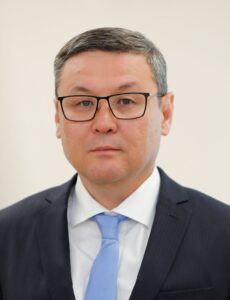

Aigul Zabirova,
Chief Research Fellow,
Kazakhstan Institute for Strategic Studies under the President of the Republic of Kazakhstan
Kazakhstan is experiencing one of the most significant social shifts in its modern history. The historic nature of this moment lies in the fact that Kazakhstan, a country with deep rural roots, is gradually becoming an urban society. Just a few decades ago, a substantial share of the population lived in rural areas, whereas today cities have become centers of education, employment, and economic activity. Demographic statistics clearly reflect the growth of the urban population. Thus, the share of urban residents in Kazakhstan has been steadily increasing: as of the beginning of 2025, two-thirds of the country’s population (63%) already lived in cities.
When urbanization is discussed, the focus is often placed on the burden on schools and hospitals, transport infrastructure, and the need to create jobs. What is often overlooked is that urbanization represents a natural stage in the development of modern society. It is precisely this process that shapes human capital, fosters entrepreneurship, and creates new economic opportunities. Across the world, cities serve as engines of economic growth. According to estimates by international organizations, more than half of the global population now lives in urban areas, and this share continues to rise. UN experts project that by 2050 the proportion of urban residents could reach 70% of the world’s total population. It is in cities that universities, research centers, enterprises, and new labor markets are concentrated. The urban environment creates conditions for knowledge exchange, the emergence of new professions, and the development of entrepreneurship. Kazakhstan is gradually becoming part of this global trend.
The history of urbanization in Kazakhstan has its own specific features. During the Soviet period, migration to cities was significantly restricted by various mechanisms, including the system of residential registration. After independence, changes in the agricultural sector played a key role, reducing the need for a large labor force in rural areas. As a result, the country became more mobile, and the population began migrating to cities where new employment opportunities were available. However, while in the early years of independence moving from a village or a small town to a large city was primarily associated with job search, migration mobility strategies are now evolving.
Today, for many families, moving to a city is more often an investment. Cities provide access to education, diverse labor markets, and professional environments. Parents seek to give their children opportunities that will allow them to secure a more stable position in the future. This is why cities attract young people striving to obtain education and professional skills. At the beginning of 2025, 3,666,998 people aged 14–28 were living in Kazakhstan’s cities, while the number of students increased from 575.5 thousand in 2020 to 624.5 thousand at the beginning of the 2024/2025 academic year. Clearly, urbanization is becoming an important family strategy for many Kazakhstanis.
The economic structure of Kazakhstan’s cities has also undergone changes over recent decades. In the 1990s, markets and small-scale trade became a means for the population to adapt to the transition to a market economy, stimulating the development of entrepreneurship. Later, Kazakhstan’s cities gradually shifted to a service-oriented economy, in which services, education, healthcare, and small businesses began to play an increasingly important role. Today we are witnessing the emergence of platform-based urbanization. The development of digital technologies, marketplaces, and online services is creating new forms of entrepreneurship and employment. Thus, urbanization in Kazakhstan has passed through three stages, from the bazaar economy of the 1990s to a service economy, and to the platform-based urban economy that is now taking shape.
It should be noted that urbanization does not imply a decline in the importance of rural areas. Kazakhstan possesses significant land resources and favorable conditions for the development of crop production and livestock farming. In terms of agricultural land area, the country ranks among the largest agrarian states in Eurasia. Amid global population growth and rising demand for food, the agricultural economy is becoming one of the strategic sectors of the global economy. Kazakhstan is located near the world’s largest Asian markets, home to billions of people. This creates considerable potential for agricultural exports. Therefore, the development of cities and the modernization of agriculture are complementary processes. Urbanization changes the geography of our lives, but it does not diminish the importance of the rural economy.
If current trends persist, Kazakhstan’s cities will play an increasingly important role in the country’s economic and social development in the coming decades. Further growth of major urban agglomerations, expansion of the service economy, and a stronger role of digital platforms in organizing employment and entrepreneurship can be expected. At the same time, cities will continue to serve as key centers of education, innovation, and human capital formation. This is where young people, professional communities, and new sectors of the economy will concentrate. In this sense, urban development is gradually becoming one of the main factors of the country’s long-term competitiveness.
Thus, urbanization is not a temporary phenomenon. It is a long-term process through which a new economic and social structure of the country is being formed. In this regard, the development of cities is becoming one of the key resources for Kazakhstan’s future.