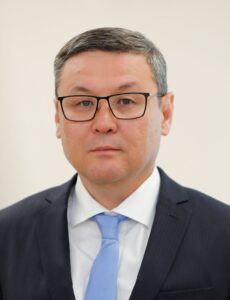
Aidar Kurmashev,
Head of the Department of Asian Studies
KazISS under the President of the Republic of Kazakhstan
President Kassym-Jomart Tokayev’s address at the Baku Summit gave new substance to the transformation of the Conference on Interaction and Confidence Building Measures in Asia (CICA) into a fully fledged international organization. The decision adopted in Astana in 2022 is now being translated into practical measures through proposals on conflict prevention, technological cooperation, and the development of cross-border connectivity. The President outlined functions that would enable CICA to play a direct role in addressing challenges shared across Asia.
The “CICA spirit” he invoked implies a willingness to work toward a secure and prosperous Asia while respecting differences among states. The membership itself demonstrates the value of a platform that allows countries with profound political disagreements to maintain contact. Laos’s accession confirms continued interest in this format. As the President noted, CICA member states cover almost 90% of Asia’s territory and account for more than half of the world’s population. The proposed preventive diplomacy mechanism could give this broad representation greater practical value through regular consultations and timely discussion of emerging risks.
The proposal to make artificial intelligence the sixth dimension of CICA reflects changes in the very nature of security. Trust between states increasingly depends on the protection of digital infrastructure and the predictability of how new technologies are used. Discussions of AI within the Conference could therefore encompass the exchange of information on risks, agreement on principles for responsible use, and the training of specialists. For countries with differing technological capabilities, such work would help them better understand their partners’ actions and respond jointly to cross-border threats.
The Asia-Pacific Digital Solutions Centre for Sustainable Development of the United Nations Economic and Social Commission for Asia and the Pacific (ESCAP), now being established in Almaty, could provide a practical foundation for digital cooperation. Kazakhstan plans to open the Centre in 2027, drawing on international experts and the experience of countries across the region. The scale of the challenge is illustrated by data from the International Telecommunication Union: in 2025, approximately 2.2 billion people worldwide still did not use the internet. Given this divide, the dissemination of advanced technologies requires targeted support. Participation by CICA countries in the Centre’s work could facilitate the adaptation of digital solutions to national circumstances and broaden access to essential expertise.
CICA’s strategy for transport connectivity has considerable potential for integration. The proposal to consider the Middle Corridor, the North–South route, the Belt and Road Initiative, and TRIPP within a common framework lays the groundwork for coordinating infrastructure priorities. The economic benefits of such coordination could be substantial. According to a World Bank report dated 28 September 2026, investment in developing the Middle Corridor could generate around 2 million additional jobs across nine countries by 2040. The Bank links the realization of this potential to removing infrastructure bottlenecks and improving transport efficiency. This opens up a concrete area of work for CICA: helping states harmonize border procedures, digital documentation, and cooperation among transport operators. It is through such measures that transit can generate demand for production and services along the routes.
The President’s proposals on water address shortcomings in interstate coordination. According to UN data for 2024, only 43 of the 153 countries sharing transboundary water resources had operational cooperation arrangements covering at least 90% of those resources. The proposed CICA Water Partnership could promote technology exchange and joint research. An International Water Organization within the UN system is intended to address the broader task of coordinating global efforts. These two avenues complement each other: practical experience in regional cooperation can serve as a foundation for international solutions.
The promotion of the global water initiative already has a consistent history. Tokayev put it forward in Ashgabat in December 2025 and announced the first round of international consultations at the Regional Environmental Summit in April 2026. In September, he sought support from participants in the SCO Plus and BRICS Plus formats. At the Baku Summit, the next step was proposed: jointly advancing the initiative by the countries of Central Asia and Azerbaijan, with the possibility of other CICA states joining. In my view, this represents a gradual expansion of the circle of co-sponsors. For our region, this approach makes it possible to translate its own experience of transboundary water use and Caspian Sea protection into proposals for international water governance.