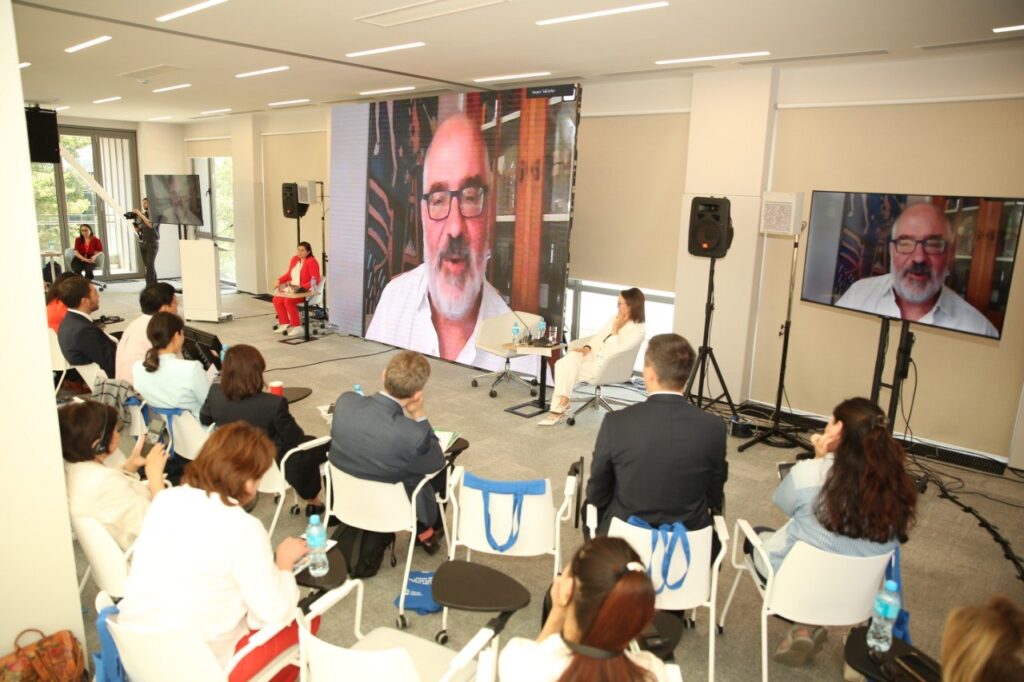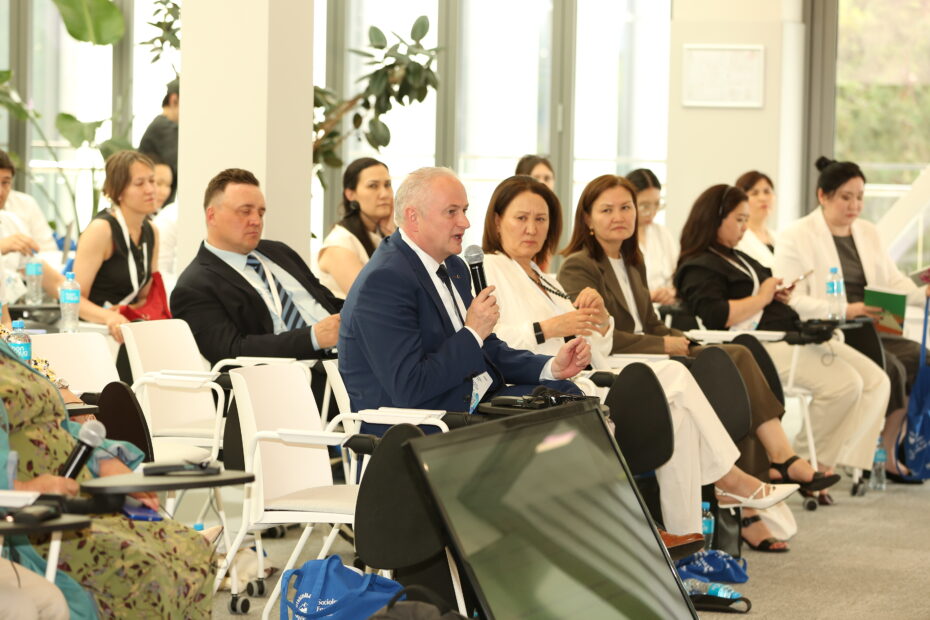
As part of the Sociological Forum “Social Research in the Digital Age: Trends and Challenges,” organized by the Kazakhstan Institute for Strategic Studies under the President of the Republic of Kazakhstan (KazISS) in partnership with Narxoz University, thematic sessions were held focusing on public opinion research in the context of digitalization and the development of contemporary research approaches.
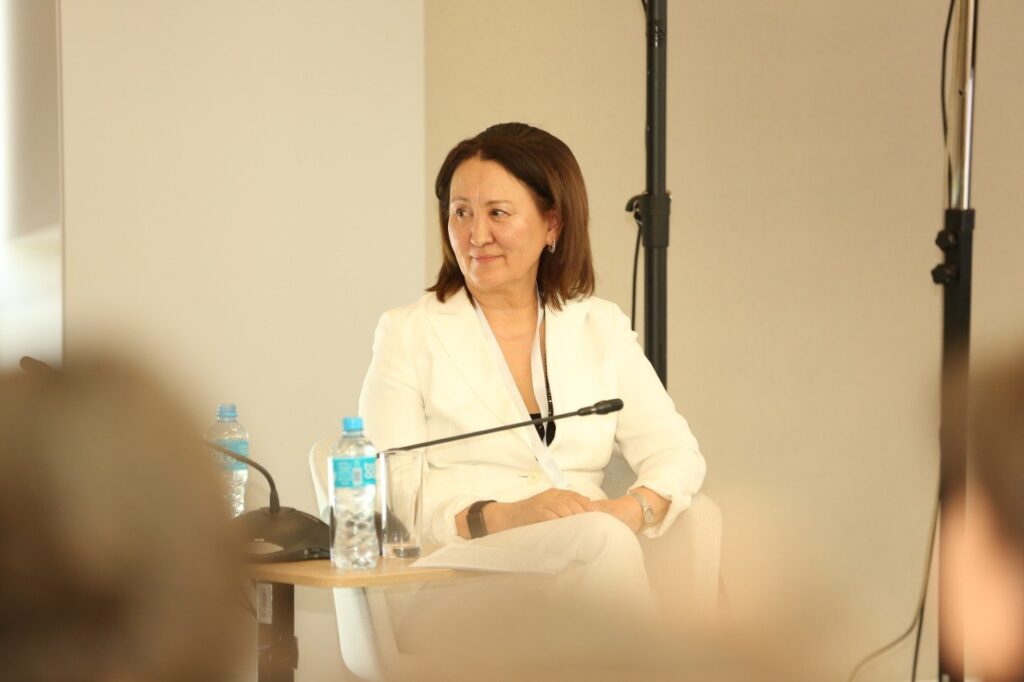
The second session was moderated by Tatiana Karabchuk, Associate Professor at the United Arab Emirates University (UAEU) and member of the Executive Committee of the World Association for Public Opinion Research (WAPOR). Opening the discussion, she noted that digital transformation creates new opportunities for sociology while simultaneously raising the standards for data quality and research methodology.
One of the key speakers was Theodore Gerber, Professor at the University of Wisconsin–Madison (USA), who presented a comparative analysis of social stratification and mobility in Central Asia. He emphasized the need for greater inclusion of the region in international studies of social inequality and stressed that the quality of institutions remains one of the most important factors influencing social mobility and societal development.
Aigul Zabirova, Chief Research Fellow at KazISS and Doctor of Sociology, delivered a presentation on the methodological conditions for the transition to digital sociology. According to her, digital traces and traditional surveys measure different levels of social reality and should be viewed as complementary tools. The future of sociological research lies not in abandoning classical methods but in creating a hybrid research architecture that combines surveys, digital data, administrative statistics, and artificial intelligence tools.
The forum’s third session focused on the changing global context of mass surveys. The session was moderated by Aigul Beimisheva, Director of the School of Humanities at Narxoz University and PhD in Sociology.
The keynote presentation was delivered by Tatiana Karabchuk, who shared findings from a study of life satisfaction factors based on data from the international Gallup World Poll project. The research showed that in Central Asian countries, the main determinants of subjective well-being are living standards, income, health, social connections, and digital inclusion.
Particular attention was drawn to the findings on Kazakhstan. According to the study, internet access has a more pronounced impact on life satisfaction than in many other countries, while mutual assistance and social solidarity constitute important elements of social capital. In the researcher’s view, this reflects the ongoing social and technological transformation of Kazakhstani society.
International experience in measuring subjective well-being was presented by Francesco Sarracino, Deputy Director of Luxembourg’s National Institute of Statistics and Economic Studies (STATEC). He noted that the contemporary research agenda is increasingly shifting away from an exclusive focus on economic indicators toward a comprehensive assessment of quality of life, life satisfaction, and citizens’ perceptions of their future.
The fourth session focused on the challenges and trends facing Kazakhstani sociology in the 21st century. The session was moderated by Saltanat Yermakhanova, Head of the Public Opinion Monitoring Department at the Kazakhstan Institute for Strategic Studies under the President of the Republic of Kazakhstan (KazISS) and Candidate of Sociological Sciences.
Opening the session, the moderator noted that Kazakhstani sociology today faces the need to modernize its methodology, expand data sources, and strengthen the connection between research and practical decision-making in public administration, business, and social policy.
Alexander Ruzanov, President of BRIF Research Group and Academician of the Academy of Sociology of Kazakhstan, presented the research case study “Youth of Kazakhstan: Trends and Images of the Future.” He discussed a method of studying young people through their perceptions of their personal future, which makes it possible to understand not only their behavior but also the motivations, values, and life strategies underlying their choices.
The study demonstrated that traditional segmentation by age, gender, region, or income no longer adequately explains the real differences within the youth population. For a deeper analysis, researchers identified value-based groups and research “personas” – generalized profiles representing different youth audiences. According to the speaker, this approach helps translate sociological data into practical solutions for communications, educational programs, business, and public administration.
Natalia Ospanova, Head of the Alvin Market research group and President of the Kazakhstan Association of Professional Public Opinion and Market Researchers, delivered a presentation on the robotization of telephone surveys and the CATI-to-Web methodology as an alternative to online panels.
She noted that traditional field research methods are experiencing a serious crisis: household and telephone surveys are becoming increasingly difficult to conduct, public trust in calls from unknown numbers is declining, and online panels still do not provide full representativeness. Under these circumstances, hybrid models that combine automated calls, interviewer support, and respondent transition to web-based surveys are emerging as a promising solution.
According to Natalia Ospanova, telephone surveys in Kazakhstan remain relevant; however, the method of conducting them requires modernization. Automated systems can perform initial contact, language routing, callback management, and the identification of willing participants, while interviewers retain the crucial role of establishing trust and maintaining meaningful communication with respondents.
Aliya Sarsekeyeva, Head of the Kazakhstan Sociology Lab School of Sociologists, presented a report on the development of Computational Social Science in Kazakhstan. She emphasized that digitalization, the growing volume of data, and the demand for evidence-based policymaking are shaping a new research ecosystem in which traditional surveys are complemented by administrative data, digital traces, text corpora, geospatial data, and machine learning methods.
The speaker stressed that Computational Social Science does not replace traditional sociology but rather expands its methodological toolkit. Among the most promising directions, she highlighted social network analysis, natural language processing, machine learning, agent-based modeling, and quasi-experimental methods. She also presented research case studies in the fields of labor markets, education, public health, and culture.
Konstantin Starkov, Head of Big Data at Kcell JSC, spoke about the potential use of mobile operator data in social research. According to him, telecommunications operators can serve both as communication channels for reaching respondents and as sources of anonymized analytical data.
Such data make it possible to build more accurate samples, achieve broader population coverage, and analyze anonymized patterns of population mobility. This is particularly important for studying urban environments, citizens’ responses to infrastructure changes, and the dynamics of everyday behavior.
Participants in the session emphasized that the development of Kazakhstani sociology in the 21st century is closely linked to the transition toward hybrid research models that combine classical methodologies, digital technologies, big data, and applied analytics. At the same time, preserving methodological rigor, ethical standards, and a focus on generating practical value for society, government, and business remains a fundamental requirement.