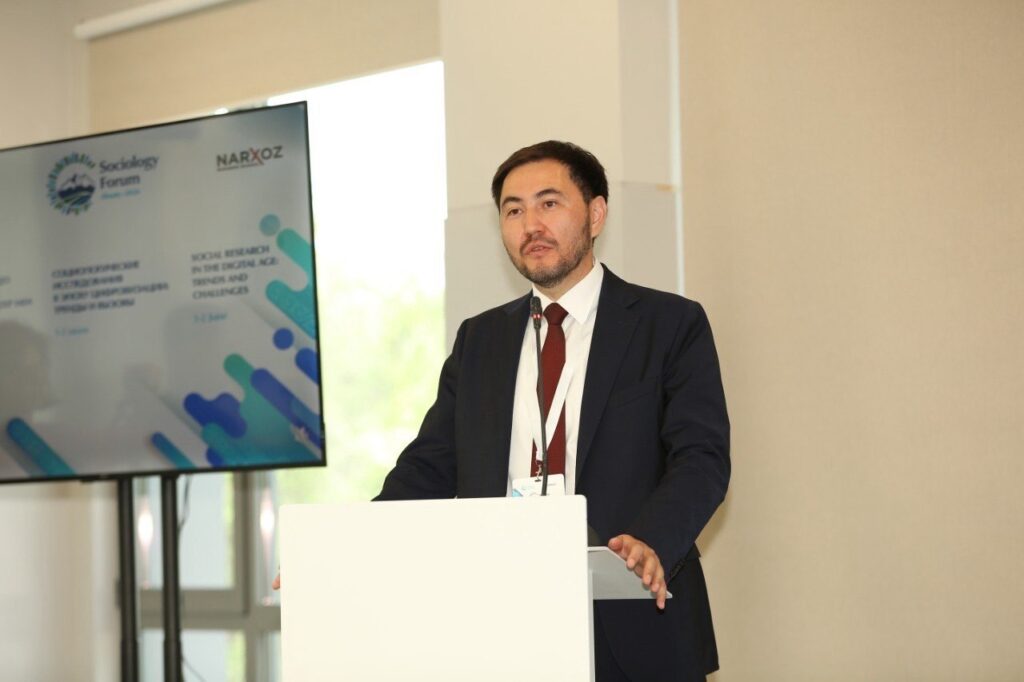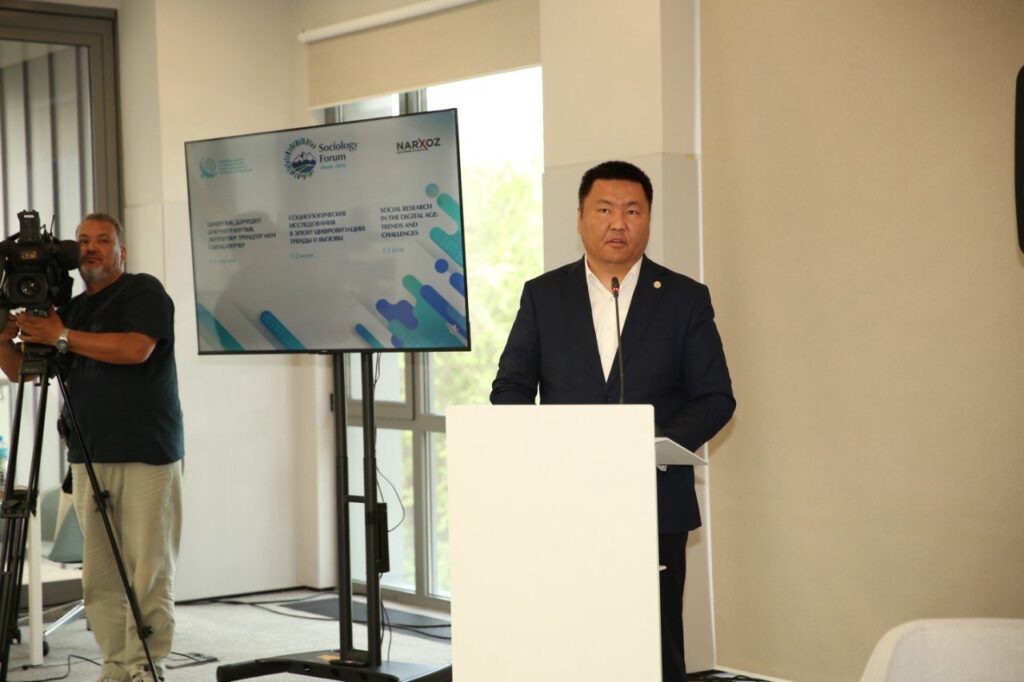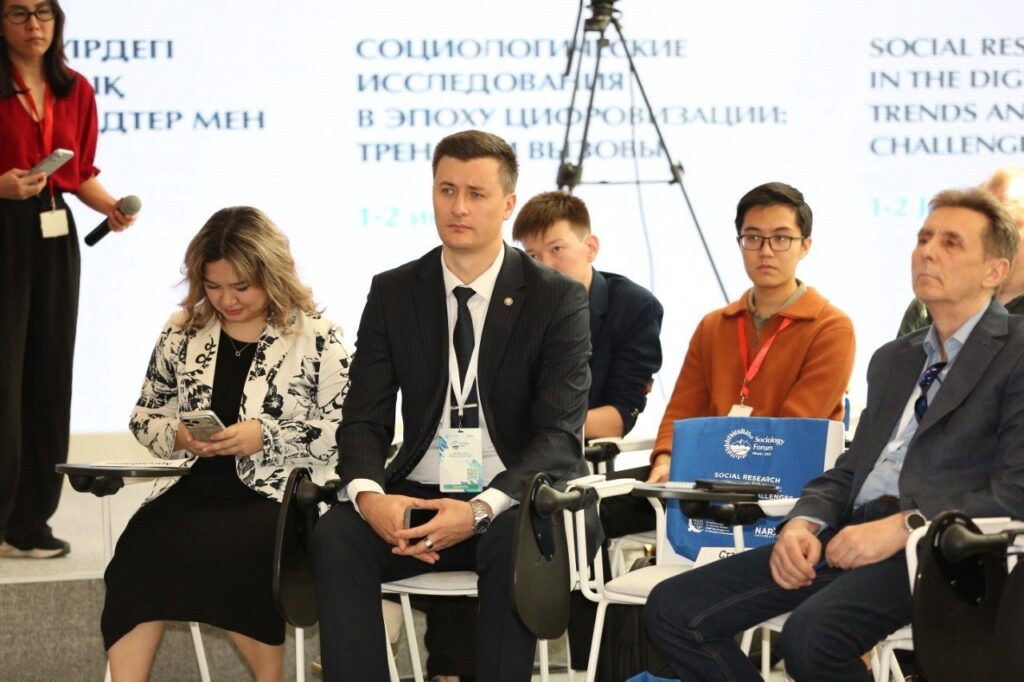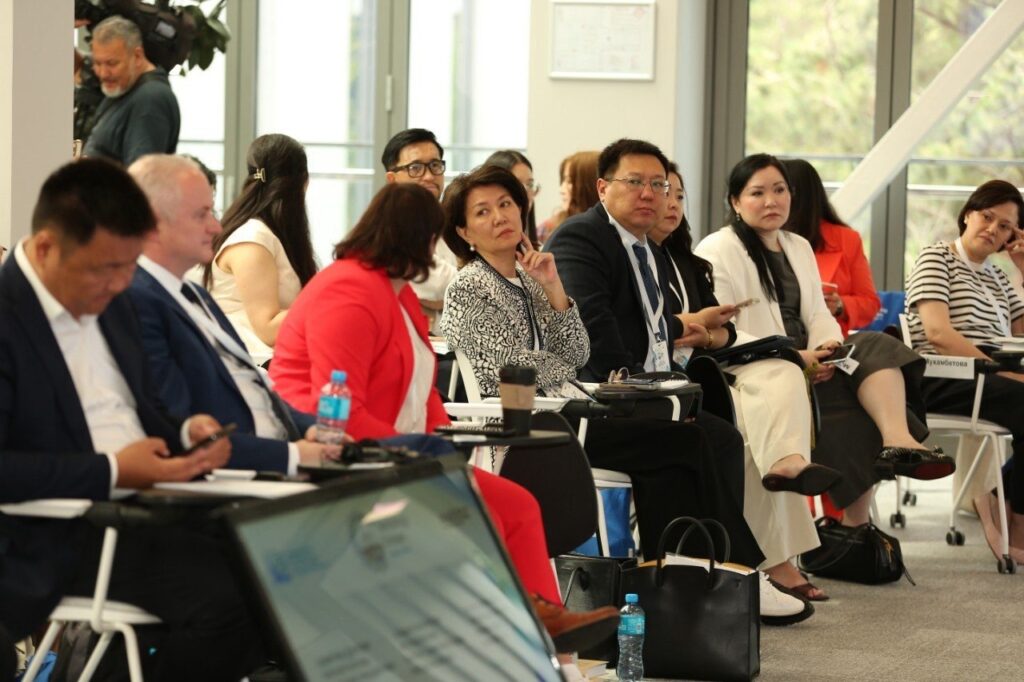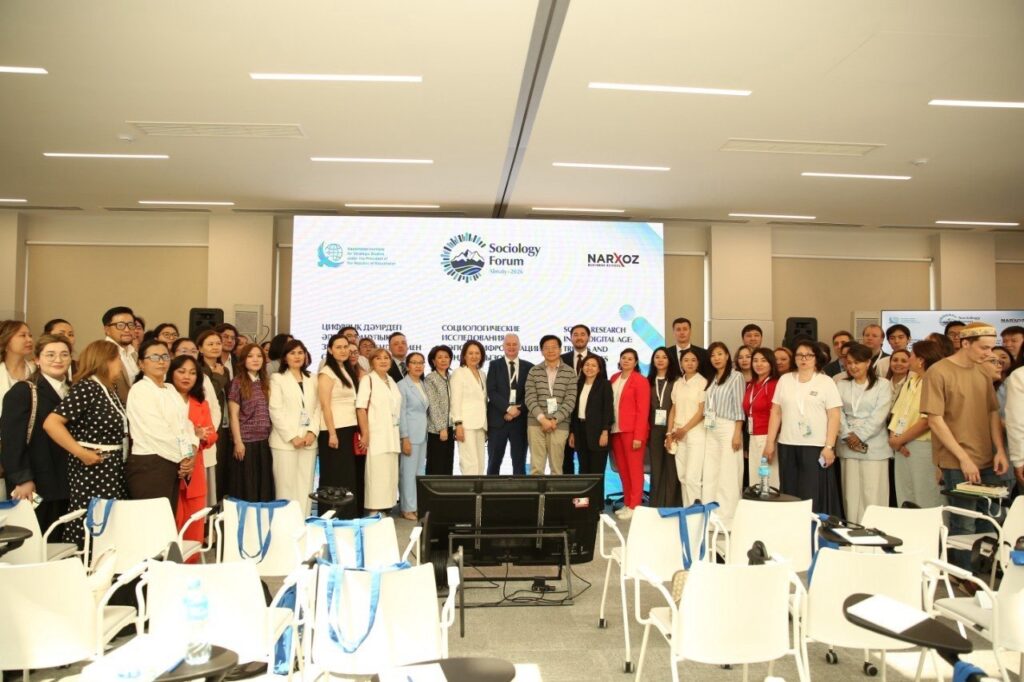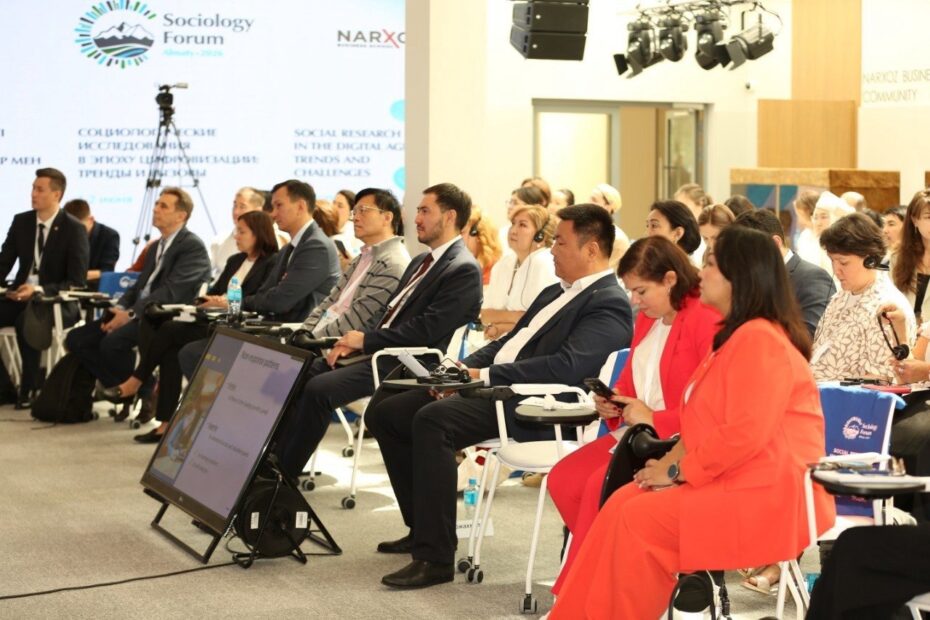
On June 1, 2026, the Sociological Forum «Social Research in the Digital Age: Trends and Challenges» commenced in Almaty. The event is organized by the Kazakhstan Institute for Strategic Studies under the President of the Republic of Kazakhstan (KazISS) in partnership with Narxoz University.
The forum has brought together representatives of research centers, academia, government institutions, and international experts to discuss the key challenges facing contemporary sociology. The discussions focus on research methodology, data quality, the development of panel studies, and the use of digital tools and artificial intelligence in the study of social processes.
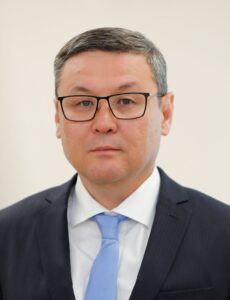
Opening the forum, President of Narxoz University Kanat Kozhakhmet emphasized the growing role of sociology amid rapid technological change and the digitalization of public life.
“Artificial intelligence poses significant challenges for sociology as well. Today, sociology is no longer limited to traditional surveys and large datasets. Its key task lies in the ability to explain data, interpret it, and generate conclusions that serve as the basis for managerial decision-making and business development,” said Kanat Kozhakhmet.
According to him, in an environment dominated by social media and the rapid spread of superficial interpretations, there is an increasing public demand for professional analysis of social processes and a deeper understanding of ongoing societal changes. The President of Narxoz University also highlighted the high quality of sociological education at the university and the substantial contribution of its faculty to the development of sociological science.
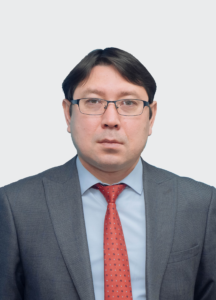
Director of the Kazakhstan Institute for Strategic Studies under the President of the Republic of Kazakhstan, Zhandos Shaimardanov, addressed the participants with welcoming remarks, noting that sociology occupies a special place in the institute’s work and is by no means a new area of professional activity for KazISS.
“Having conducted a kind of diagnosis of the current state of the field, my colleagues and I at KazISS concluded that these issues should be discussed jointly with the entire professional community. This is how the idea of organizing this forum was born. The choice of Almaty as the venue was not accidental. It is here that one of the country’s most active academic and expert communities is concentrated, capable of becoming a driving force for professional discussion on the future of sociology,” said the Director of KazISS.
Zhandos Shaimardanov emphasized that the forum was conceived not as a traditional academic conference, but as a practical platform for developing solutions to the challenges faced by research centers, universities, and analytical institutions.
“Today, together with colleagues and experts, we would like to discuss the challenges facing research organizations, academia, and the expert community, develop approaches, and identify opportunities for joint solutions. When preparing this event, our main goal was to make it as practical and useful as possible for all participants. We expect the forum to become not only a platform for sharing experience, but also a space for shaping a common vision of the future of Kazakhstani sociology in the face of new technological and societal challenges,” said the Director of KazISS.
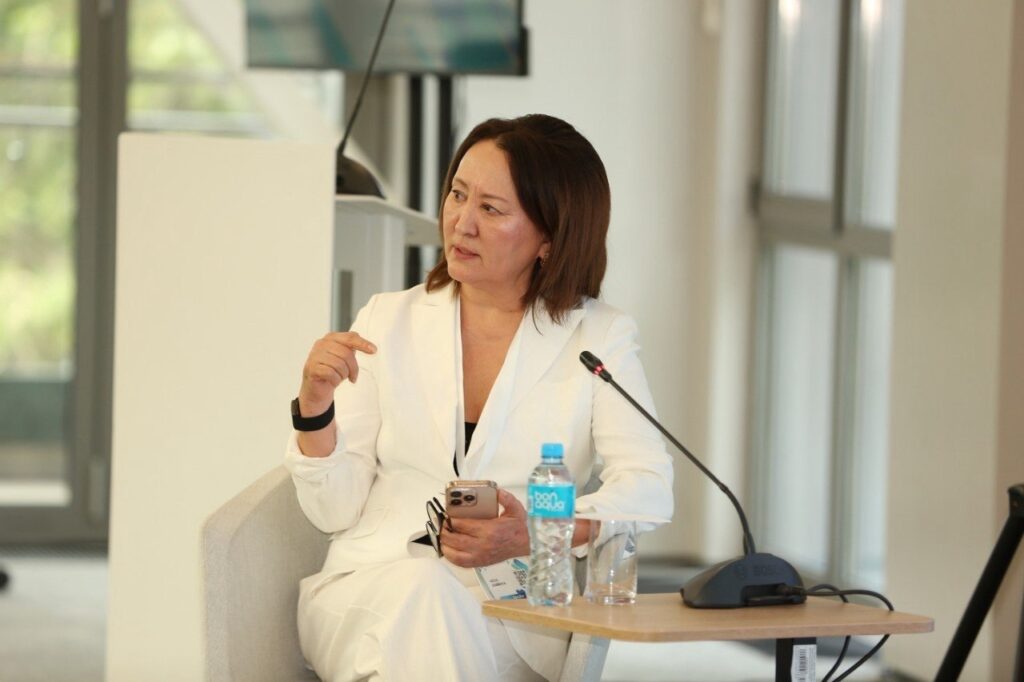
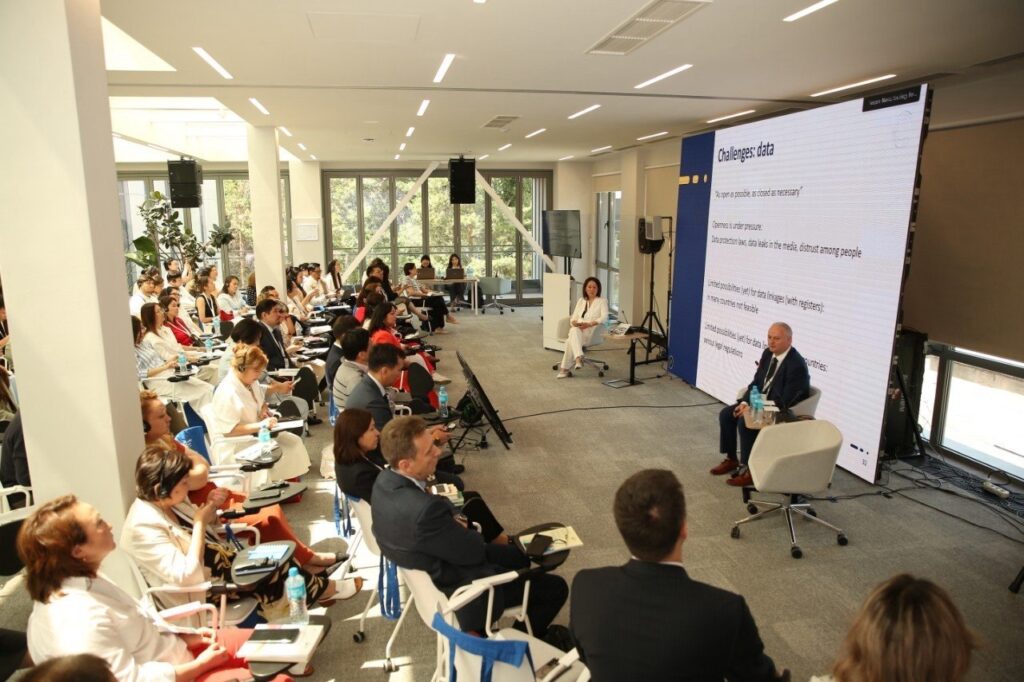
The forum’s first panel session was devoted to the development of panel studies in the 21st century. The session was moderated by Aigul Zabirova, Chief Research Fellow at KazISS and Doctor of Sociology.
Opening the discussion, she noted that contemporary sociology is undergoing a period of profound transformation.
“Today, sociological research finds itself in a situation where familiar tools no longer provide the same level of reliability, while new approaches have yet to receive full methodological consideration. Declining response rates, respondent fatigue, and increasing difficulties in reaching audiences are changing the logic of research practice. At the same time, the volume of digital data continues to grow, creating new analytical opportunities. We are not talking about isolated changes, but about a gradual transformation of the entire research landscape,” emphasized Aigul Zabirova.
She also stressed that the expert community faces the task not of mechanically copying foreign experience, but of finding solutions that best correspond to Kazakhstan’s specific conditions and societal characteristics.
During the first panel, international experts presented leading global practices in conducting panel studies.
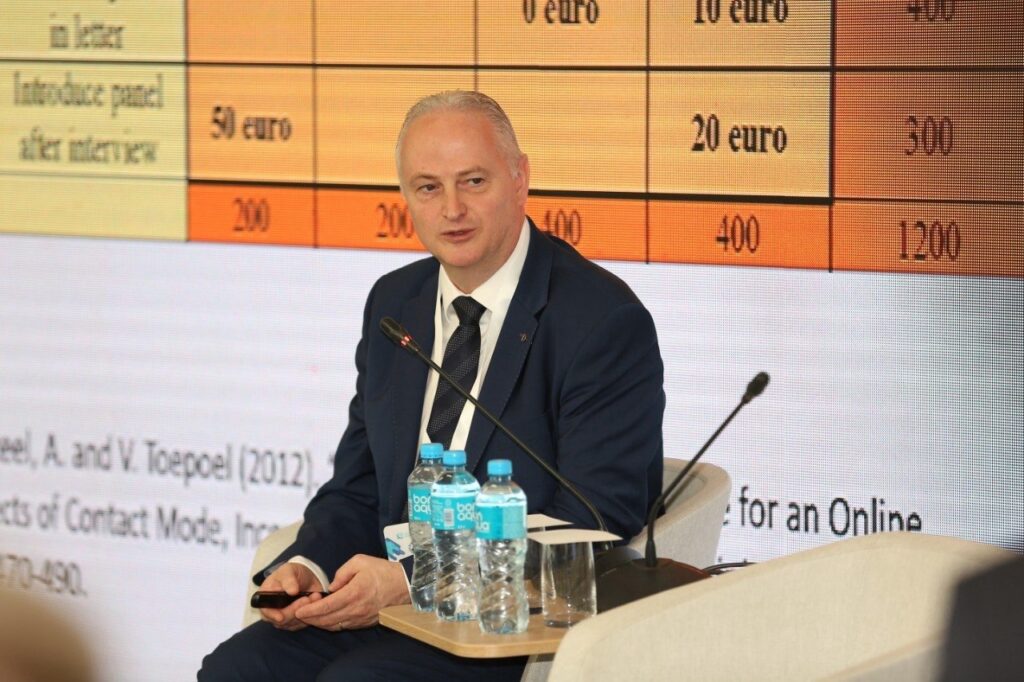
Marcel Das, Head and Developer of the Dutch LISS Panel and researcher at Centerdata, shared the experience of one of the world’s most authoritative probability-based online panels. He discussed sampling principles, respondent retention mechanisms, and the integration of panel survey data with government administrative registers.
Particular attention was paid to issues of sample representativeness in the context of the growing prevalence of online research, as well as methods for addressing self-selection bias and nonresponse.
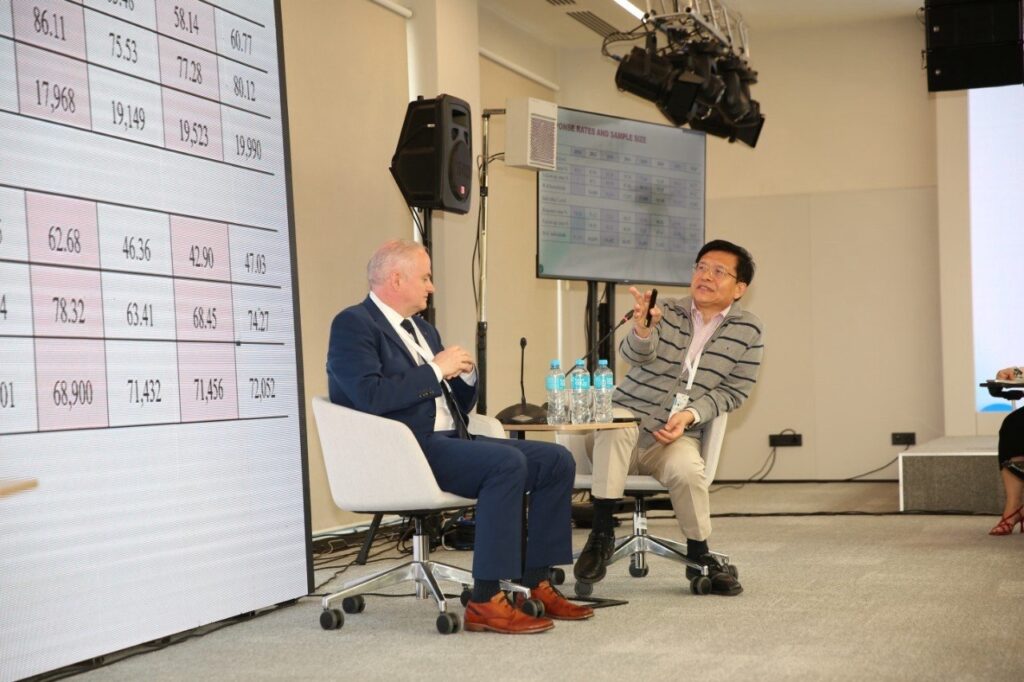
Professor of Sociology at Princeton University and Scientific Director of the China Family Panel Studies (CFPS), Yu Xie, shared the experience of China’s largest longitudinal family study.
In his presentation, he discussed the principles of longitudinal research design, household sampling methods, and the study of intergenerational relations in a rapidly changing society.
According to the scholar, the study covers approximately 20,000 households and makes it possible to track the dynamics of social change over many years. Special attention is given to combining traditional face-to-face interviews, telephone surveys, and online data collection tools, as well as the use of artificial intelligence algorithms for data processing and verification.
The forum will continue on June 2. During the subsequent sessions, participants will discuss the state of sociological science in Kazakhstan, contemporary research practices, and the prospects for the development of sociological research in the context of the digital transformation of society. In addition, KazISS will present a number of its own analytical and academic publications during the forum.